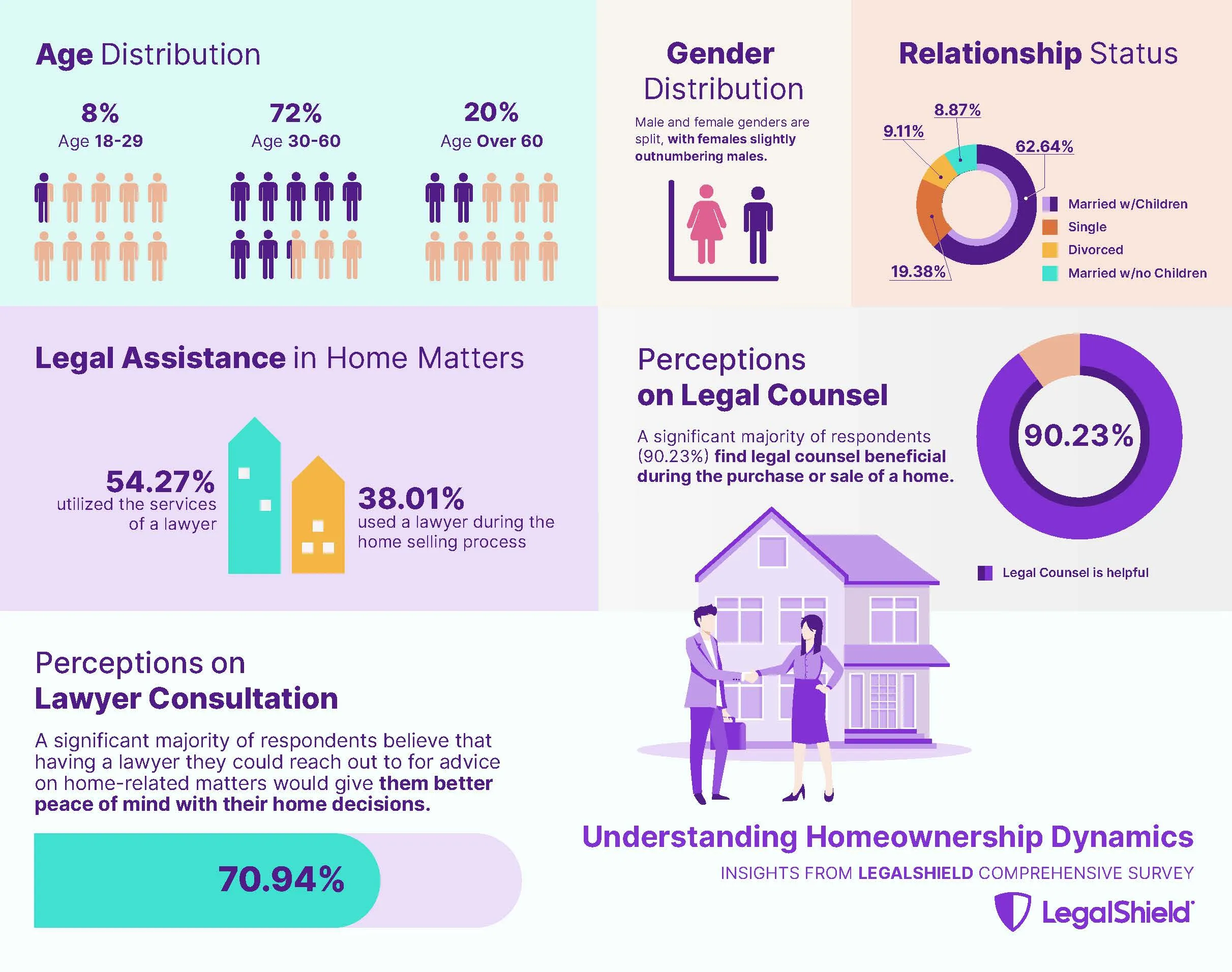
Navigating homeownership involves decisions ranging from financial considerations to legal matters. Our goal was to help unravel the intricacies of homeownership. We uncovered insights into age distribution, gender dynamics, relationship status, legal assistance use, and perceptions regarding legal counsel and realtor sufficiency.
In our LegalShield survey conducted April 2024, we surveyed 1,218 adults, ages 18 and older who live in the United States. The sample was balanced by age, among other demographic variables, according to the U.S. Census. Let's delve into our research findings and explore how these insights can inform your journey as a homeowner.
Age distribution
The survey paints a nuanced picture of age demographics among homeowners, revealing a predominant presence of middle-aged individuals, with significant representation from older age groups. This underscores the evolving nature of homeownership preferences across different life stages. Below is a percentage breakdown of our findings:
Most respondents, comprising approximately 72%, fall within the 30-44 and 45-60 age brackets. This suggests that middle-aged individuals are more prevalent among homeowners participating in the survey.
Those aged over 60 make up nearly 20% of respondents, indicating a significant presence of older homeowners in the survey.
Individuals aged 18-29 constitute around 8% of the population surveyed.
Gender distribution
Gender diversity among homeowners emerges as a notable aspect, with a relatively balanced representation between males and females. However, the absence of non-binary or other gender identities warrants further exploration into inclusivity within homeownership surveys. Below is a percentage breakdown of our findings:
Respondents are primarily split between male and female genders, with females slightly outnumbering males. This suggests a balanced gender distribution among homeowners participating in the survey.
Non-binary or other genders are not represented among the respondents who answered this question, indicating a binary gender representation in the survey responses. Additionally, nobody chose the option to prefer not to answer.
Relationship status
Families constitute a substantial proportion of homeowners, emphasizing the role of homeownership in providing stability and security for households. The varying relationship statuses among respondents shed light on the diverse circumstances under which individuals embark on homeownership journeys.
Most respondents, comprising approximately 62.64%, are married with children.
Around 19.38% of respondents are single, indicating a sizable proportion of unmarried individuals among homeowners.
Additionally, 8.87% of respondents are married with no children, while 9.11% are divorced. These categories represent smaller segments of respondents, but they provide additional nuances regarding the relationship status of homeowners participating in the survey.
Legal assistance in home matters
The prevalence of legal assistance sought by homeowners underscores the complexities inherent in property transactions and homeownership-related legalities. From contract negotiations to navigating the intricacies of property laws, legal guidance proves indispensable for ensuring smooth transactions and safeguarding interests. Below is a percentage breakdown of our findings:
Most respondents (54.27%) have utilized the services of a lawyer for matters related to their home. This indicates a sizable portion of homeowners have encountered situations where legal assistance was necessary or beneficial, such as dealing with contracts, buying, or selling homes, addressing repairs, or handling warranties.
Furthermore, 38.01% of respondents have used a lawyer during the home selling process.
Reasons for not seeking legal assistance
A lack of awareness, financial constraints, and self-reliance emerge as primary factors influencing homeowners' decisions regarding legal assistance. Addressing these barriers necessitates initiatives to enhance awareness about the importance of legal counsel and explore avenues for making legal services more accessible and affordable. Below is a percentage breakdown of our findings:
The primary reasons for not seeking legal assistance varied among respondents. Nearly half (49.39%) cited a lack of awareness about the necessity for legal help, indicating a potential gap in understanding the importance of legal guidance in home-related matters.
Around a quarter (24.32%) mentioned cost or financial concerns as a barrier to seeking legal assistance, highlighting the financial considerations that homeowners face when deciding whether to engage legal services.
Approximately a third (27.52%) expressed confidence in handling legal matters themselves, indicating a level of self-reliance among homeowners in managing legal aspects of homeownership independently.
Perception on legal counsel
Homeowners overwhelmingly perceive legal counsel as beneficial during home transactions, highlighting the value they attribute to professional expertise in navigating legal complexities and mitigating risks. Below is a percentage breakdown of our findings:
Over half (52.71%) consider it somewhat helpful, while around a third (37.52%) perceive it as very helpful.
Only a small percentage view it as not helpful.
Perception on realtor sufficiency
While confidence in realtors' capabilities remains high, it is essential to recognize the complementary roles of real estate agents and legal professionals in ensuring comprehensive support throughout the homeownership journey. Below is a percentage breakdown of our findings:
Most respondents (72.99%) believe that having a realtor is sufficient to handle the needs in buying or selling a home, including tasks such as handling contracts/paperwork, negotiations, inspections, appraisals, and financing.
Perception on lawyer consultation
The desire for access to legal advice reflects homeowners' quest for informed decision-making and peace of mind. Establishing channels for consultation with legal experts can empower homeowners to navigate uncertainties and make well-informed choices. Below is a percentage breakdown of our findings:
A significant majority of respondents (70.94%) believe that having a lawyer they could reach out to for advice on home-related matters would give them better peace of mind with their home decisions.
Wrapping up
As the landscape of homeownership continues to evolve, understanding the dynamics shaping homeowners' preferences, challenges, and perceptions becomes paramount.Informed decision-making lies at the heart of a fulfilling homeownership journey.
By leveraging the insights gleaned from our comprehensive survey, we’re aiming to help homeowners equip themselves with additional knowledge and resources needed to navigate the complexities of property transactions confidently.
¿Necesitas un poder notarial pero te preocupa el costo? Es natural preocuparse por pagar servicios legales, pero es importante no quedarse atrapado/a en dólares y centavos. Después de todo, no le puedes poner precio a la tranquilidad, y eso es exactamente lo que ofrece un poder notarial.
En Estados Unidos, un divorcio sin oposición generalmente cuesta al menos $1,500, mientras que un divorcio con oposición puede empezar en $5,000 y superar los $20,000 en casos complejos. El costo total depende de los honorarios de abogados, los costos judiciales y el nivel de conflicto entre los cónyuges.
A veces la gente tiene reacciones emocionales fuertes a la palabra "prenupcial" porque sienten que su pareja no confía en ellos. Pero un contrato prenupcial trata de establecer confianza y justicia. Puede ser una forma prudente y cariñosa de comenzar un matrimonio. Un contrato prenupcial es una manera en que dos personas resuelven cómo manejarán el dinero y los bienes antes de decir "acepto".
La mayoría de nosotros sabemos que deberíamos tener un testamento. Simplemente seguimos encontrando razones para posponerlo. Si eso te suena familiar, no estás solo/a. Sigue leyendo para aprender qué puedes hacer al respecto.
Planificar el futuro de tu familia toma tiempo y reflexión. Una herramienta que puede ayudar es el fideicomiso familiar: un arreglo legal que te permite decidir cómo se administra y se comparte tu propiedad con las personas que te importan.
Decidir tramitar el divorcio ya es bastante difícil sin tener que preguntarte si estás llenando el formulario correcto. Cada estado maneja el proceso de manera un poco distinta, y es normal sentir dudas acerca de dónde empezar. Reunimos información sobre lo que puede suceder durante el trámite, incluyendo perspectivas de una abogada de verdad, para darte más claridad en este camino.
Prepararse para un divorcio implica reunir documentos financieros y personales, hacer un presupuesto de tus gastos mensuales, asegurar tus cuentas digitales e inventariar tus bienes. También es importante decidir qué tipo de divorcio se adapta a tu situación y consultar con un abogado antes de presentar la petición para proteger tus derechos.
Saber qué tipo de abogado necesitas depende del asunto legal que enfrentas: derecho de familia para divorcio o custodia, planificación patrimonial para testamentos, derecho laboral para conflictos en el trabajo, derecho tributario para impuestos, entre otras áreas. Consultar con un abogado de práctica general o una firma proveedora de LegalShield te puede ayudar a identificar la especialidad correcta.
•
13 min de lectura
*See your plan contract for details. Additional fees, limitations, and waiting periods may apply.