Owning a property is one of life’s greatest achievements. However, there are situations in which you may need to transfer that property to someone or protect it through an entity.
When this happens, you can transfer the property title directly to the beneficiary or a trust using a legal document known as a quitclaim deed. In this guide, we will explore this approach to property title transfer and how you can take advantage of this solution. You’ll learn what a quitclaim deed is, when and how you can use it, its risks, and possible tax benefits.
What is a quitclaim deed?
In simple terms, a quitclaim deed lets a property owner or stakeholder (grantor) transfer their property rights or interest to a beneficiary (grantee). They basically “quit their claim” on that property, handing over the property ownership rights to the beneficiary.
This basically makes the beneficiaries the new owners of the property, or of their stake in it. Done correctly, a quitclaim deed lets you transfer property rights to another party, such as a trust, without extra steps.
How does a quitclaim deed work?
A quitclaim deed allows property owners or individuals with a stake in a property to transfer their property rights or title to someone else. Basically, a property owner removes their name from the title and replaces it with the recipient’s name, which may include a buyer, family member, spouse, or even a trust.
However, the deed comes without any warranties or guarantees.
This means that there is no protection for a beneficiary, unlike a warranty deed, which guarantees the validity of a property title. So, if the grantor has no real rights or claim to the property, grantees may be left “holding the bag” after taking ownership.
Quitclaim deeds vs. warranty deeds
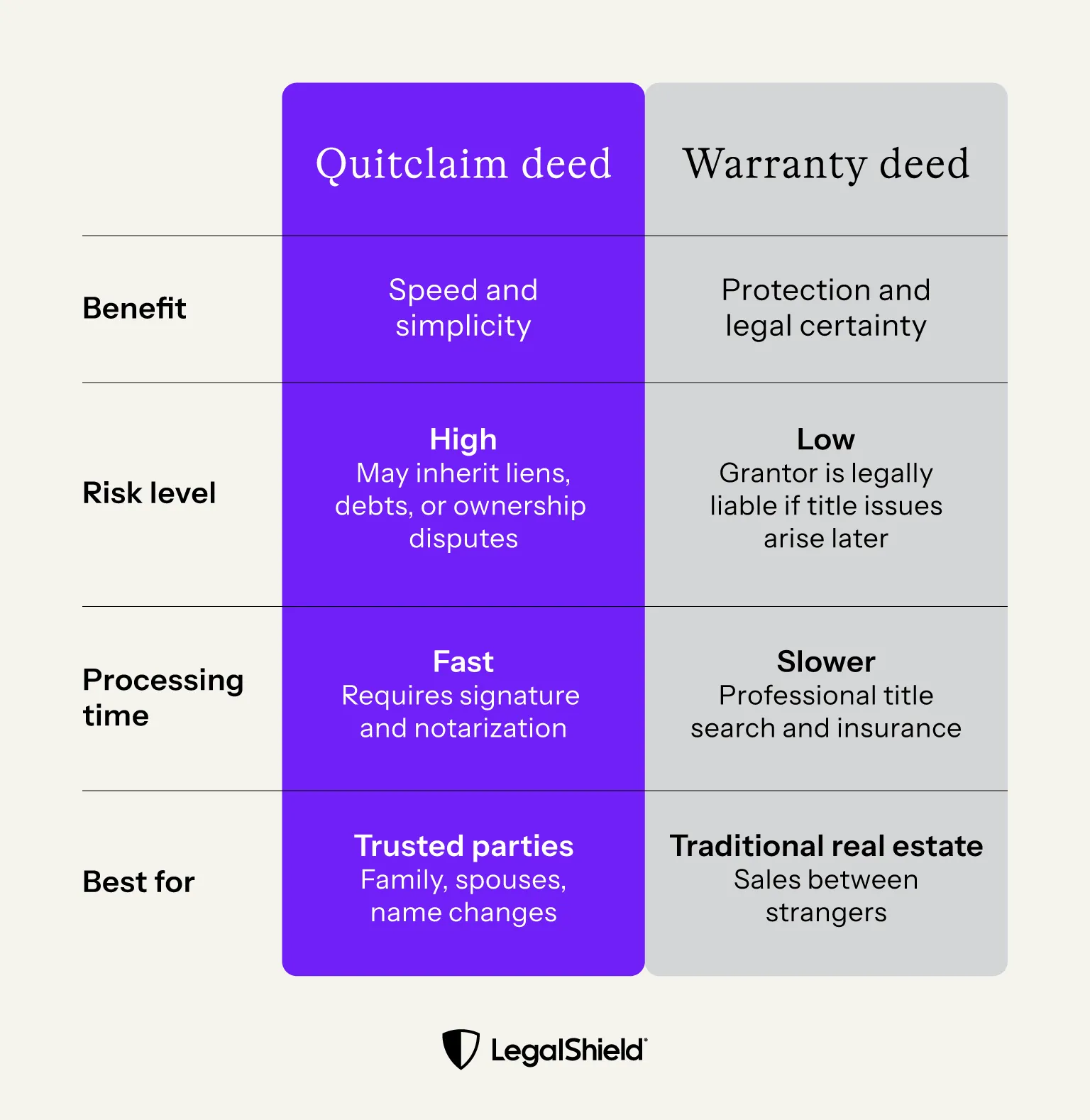
When transferring property rights, property owners or stakeholders have two options: a quitclaim deed or a warranty deed. Both of these options have their pros and cons:
Quitclaim deeds allow for fast title transfer, but the beneficiary has no guarantee that the title they receive is valid. It works best for low-risk title transfers between people who have implicit trust in each other, such as family members, spouses, or close friends.
General warranty and special warranty deeds provide more protection, but the process takes longer. However, it may be right for people who would rather be sure that the stake or property title is valid and the grantor has real rights to sell or gift that property. So, this is best for when someone wants to buy a property.
Bottom line, people who want to transfer property rights or a stake without any hassle or red tape will benefit from a quitclaim deed. Those who want assurances that the person transferring the property actually has the right to do so will enjoy the guarantees of a warranty deed.
When to use a quitclaim deed
The best time to use a quitclaim deed is when a property owner needs to quickly transfer property title to one or more of the following:
Family members, e.g., when a father gifts their children or other relatives a property
A spouse, during a divorce, as part of the settlement
A trust or an LLC
Also, a property owner can use it to clear or fix title defects (clouds), such as name or spelling errors, and to clarify any ownership issues. Additionally, it is a great option for people seeking ways to transfer property without probate after they die.
When not to use a quitclaim deed
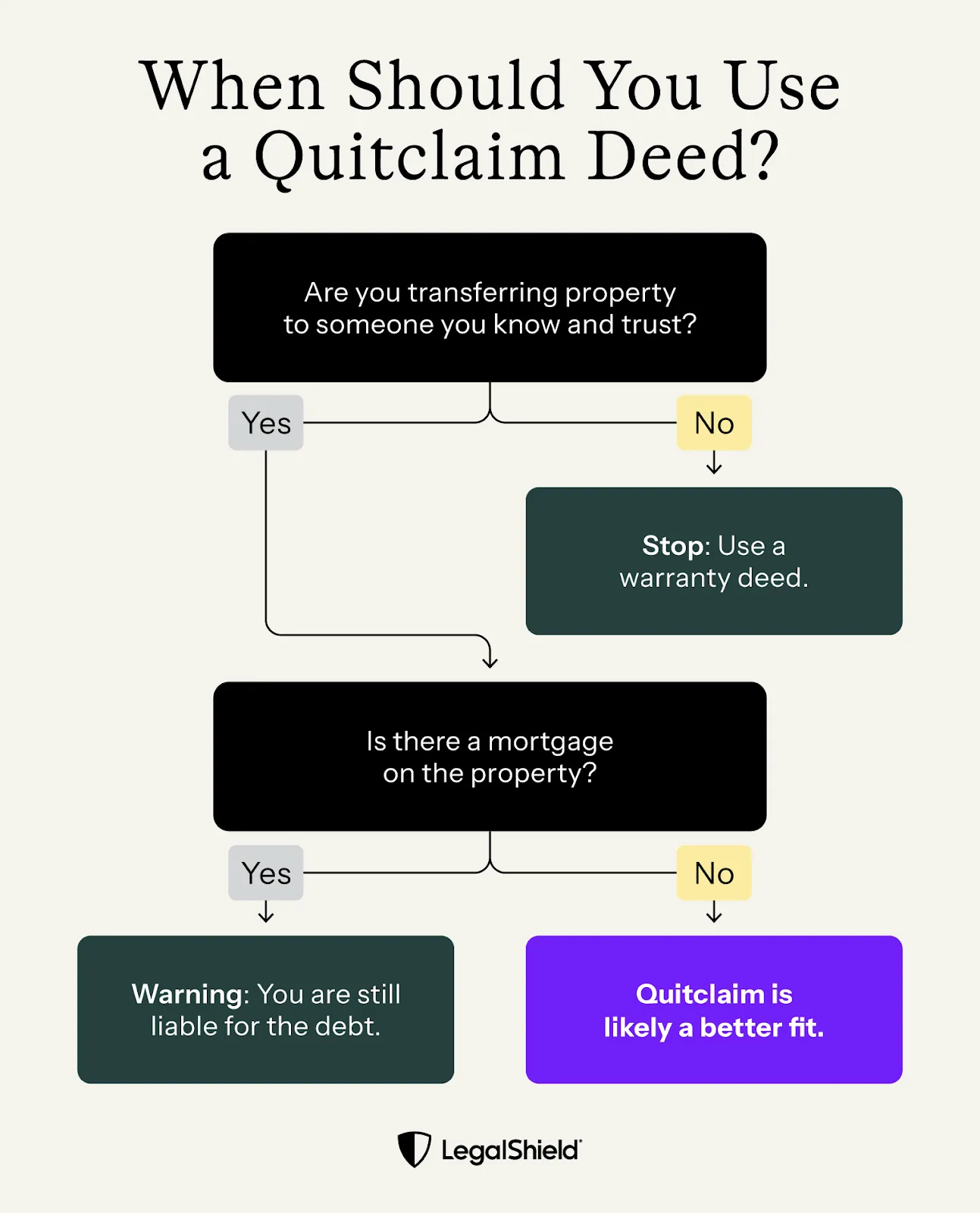
A quitclaim deed can be a red flag in property transactions between strangers or unfamiliar persons. So, it may be best to avoid using it in the following situations:
When selling or buying a property from strangers, as there is no guarantee that the property has a clear title.
When there are pending liens placed on it by creditors.
When the sale or transfer of the property title can trigger potential tax or liability issues.
However, if a grantor provides full disclosure about the property’s issues to the beneficiary, a quitclaim deed may still be a great option for the transfer of property rights for everyone involved.
{{billboard-2}}
How to file a quitclaim deed
Filing a quitclaim deed is a straightforward process. In most states, the grantor just needs to do the following:
Before filing, it's wise to run a title search first to confirm there are no liens, claims, or encumbrances you'll be taking on.
Get the quitclaim deed form, which could be from an online resource like LegalShield, from a lawyer, or your county’s local deed office.
Fill out the form with details like names of grantor and grantee, as well as property description, and other relevant details.
Have a Notary Public witness the signing of the deed. LegalShield offers E-Signature and E-Notary services if you need alternative help with this step.
Go to the local county clerk or deed register office to record the quitclaim deed transfer.
Pay any associated filing fees (this varies by state or county).
It is very important that all the information put on a deed is correct and complete or the property will have title problems later on. While the name of the document may vary slightly, depending on your state or county, the filing process is pretty much the same everywhere in the country, and results in a fast quitclaim deed transfer to your intended beneficiaries. So, check your local filing guidelines to see how it works there.
Quitclaim deed tax implications
A quitclaim deed for a house or other property can have certain tax consequences for the person transferring title or the new owner. These include:
Gift tax: This applies if the market value of the transferred property is higher than the IRS’ annual gifting exclusion limit ($19,000 for 2026), but the “transfer cost” was lower than what the house would ordinarily sell for.
Capital gains tax: If the beneficiary later sells the property at a price higher than what the person who transferred the property title spent on buying and maintaining the house — often referred to as cost basis — the beneficiary will pay taxes on the difference.
Property transfer tax: Some states charge a fee — often a small percentage of the property's value — when the old owner transfers the property to the new owner (even though it was a gift).
Property tax: The new owner will pay this moving forward.
The tax issues that arise after someone has transferred their property rights using a quitclaim deed can be quite confusing — who knew you had to pay taxes for giving gifts — but a lawyer or CPA can explain it to you if you need more clarification.
Quitclaim deed risks
Although quitclaim deeds are helpful because they allow for the quick, easy transfer of property titles, they also carry risks. These include:
No protections or warranty for the grantee, so they essentially have to take the grantor at their word.
Recipients may get “dud” properties or fake ownership interests that were fraudulently obtained, such as in instances where the real owner’s name was removed without consent.
In states like Texas, Virginia, and a few others, title-issuing firms do not issue quitclaim deeds because they consider them “uninsurable”.
Grantors may lose their homestead exemption status, leading to higher property taxes.
Start a quitclaim deed with LegalShield
With a quitclaim deed, transferring your property title or rights is much easier and faster. LegalShield makes this process simple. Get downloadable quitclaim deed forms in Word and PDF formats, find guidelines, and connect with lawyers who can help, or explore our real estate legal resources for broader guidance on property transactions. Explore our plans today to get started.
{{billboard-1}}
Obtén las respuestas que necesitas, cuando las necesitas
¿Necesitas un poder notarial pero te preocupa el costo? Es natural preocuparse por pagar servicios legales, pero es importante no quedarse atrapado/a en dólares y centavos. Después de todo, no le puedes poner precio a la tranquilidad, y eso es exactamente lo que ofrece un poder notarial.
En Estados Unidos, un divorcio sin oposición generalmente cuesta al menos $1,500, mientras que un divorcio con oposición puede empezar en $5,000 y superar los $20,000 en casos complejos. El costo total depende de los honorarios de abogados, los costos judiciales y el nivel de conflicto entre los cónyuges.
A veces la gente tiene reacciones emocionales fuertes a la palabra "prenupcial" porque sienten que su pareja no confía en ellos. Pero un contrato prenupcial trata de establecer confianza y justicia. Puede ser una forma prudente y cariñosa de comenzar un matrimonio. Un contrato prenupcial es una manera en que dos personas resuelven cómo manejarán el dinero y los bienes antes de decir "acepto".
La mayoría de nosotros sabemos que deberíamos tener un testamento. Simplemente seguimos encontrando razones para posponerlo. Si eso te suena familiar, no estás solo/a. Sigue leyendo para aprender qué puedes hacer al respecto.
Planificar el futuro de tu familia toma tiempo y reflexión. Una herramienta que puede ayudar es el fideicomiso familiar: un arreglo legal que te permite decidir cómo se administra y se comparte tu propiedad con las personas que te importan.
Decidir tramitar el divorcio ya es bastante difícil sin tener que preguntarte si estás llenando el formulario correcto. Cada estado maneja el proceso de manera un poco distinta, y es normal sentir dudas acerca de dónde empezar. Reunimos información sobre lo que puede suceder durante el trámite, incluyendo perspectivas de una abogada de verdad, para darte más claridad en este camino.
Prepararse para un divorcio implica reunir documentos financieros y personales, hacer un presupuesto de tus gastos mensuales, asegurar tus cuentas digitales e inventariar tus bienes. También es importante decidir qué tipo de divorcio se adapta a tu situación y consultar con un abogado antes de presentar la petición para proteger tus derechos.
Saber qué tipo de abogado necesitas depende del asunto legal que enfrentas: derecho de familia para divorcio o custodia, planificación patrimonial para testamentos, derecho laboral para conflictos en el trabajo, derecho tributario para impuestos, entre otras áreas. Consultar con un abogado de práctica general o una firma proveedora de LegalShield te puede ayudar a identificar la especialidad correcta.
•
13 min de lectura
*See your plan contract for details. Additional fees, limitations, and waiting periods may apply.