
What Is an LLC?: Benefits, Considerations, and How To Form One


Get the legal advice you need without the hourly legal fees
LLC stands for limited liability company, which is a popular business structure in the U.S.
Deciding on a legal business structure is one of the first things you’ll do. A limited liability company — often called an LLC — is one of the most popular choices for U.S. businesses.
But aside from what the letters stand for, what is an LLC, exactly? Let’s find out exactly what it is, why forming an LLC is a good option, how an LLC works, and how to start one.
What is an LLC?
First, let’s start with the definition — what does LLC mean? A limited liability company (LLC) is a type of business entity that entrepreneurs can create to both own and run their business. LLCs offer protection against personal liability for business debts, lawsuits, and obligations, provided everything is formed and operated correctly.
An LLC keeps your personal and business finances separate. So, if your business runs into trouble, your personal assets should be safe.

What does LLC mean in business?
For solo owners or partnerships, forming an LLC has multiple benefits. Each state has its own requirements and regulations, so be sure to review what your state offers. LLC owners, known as members, can manage their business directly — no need for boards or formal meetings.
An LLC is a hybrid entity that combines the best features of corporations, partnerships, and sole proprietorships. Owning and running a business can be complicated, so the simplicities and flexibility offered by LLCs are welcome.
How does an LLC compare with other business structures?
All U.S. companies have to choose a legal business structure. The structure that’s right for another company might not be right for yours. Before deciding which choice works best for your business, you need to understand what each provides and requires.
We’ll look at LLCs, sole proprietorships, and corporations so you can compare:
LLC
- Liability: Separates business debts and claims from personal assets
- Taxes: Allows pass-through taxation so owners can claim business income directly, eliminating double taxation
- Setup: Setting up an LLC is relatively easy with basic paperwork and filing with the appropriate state
Sole proprietorship
- Liability: Provides no separation of personal and business assets
- Taxes: Owners report income on their personal tax returns
- Setup: Setup is very simple with minimal or no filing required
Corporation
- Liability: Creates a strong separation between the business and its owners
- Taxes: Corporate and personal tax returns are separate, potentially leading to double taxation
- Setup: Complex setup process with ongoing requirements and formal rules
Advantages and drawbacks of LLCs
As beneficial as they can be, LLCs do have some drawbacks. You need to consider both the advantages of an LLC and the possible disadvantages before deciding if you want to set one up for your business.
Advantages of LLCs
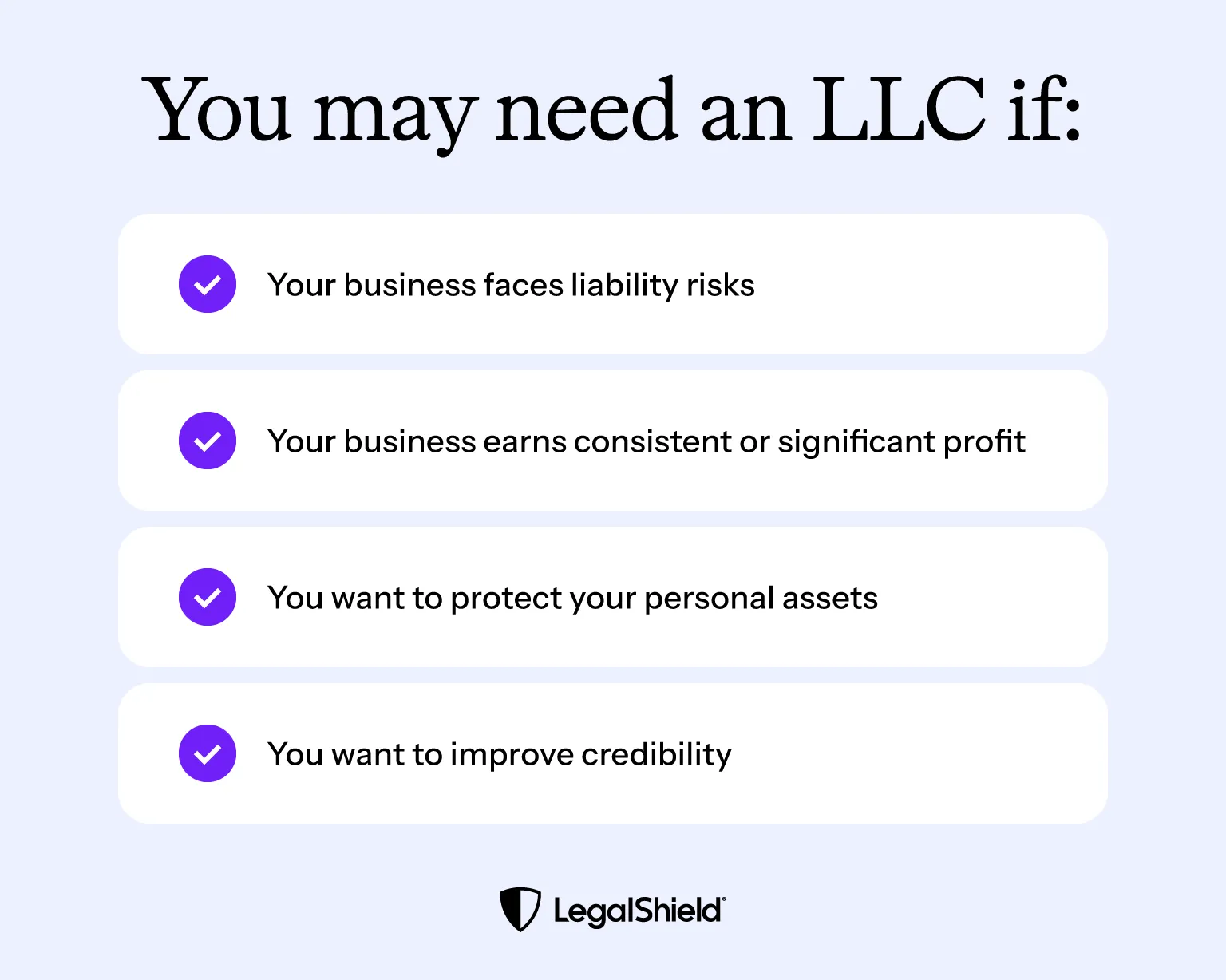
- Protects personal assets from most business debts and legal claims
- Allows profits to pass through to personal taxes, which avoids separate business income tax in most cases
- Ownership and operation are flexible — you can have one owner or several, and you can choose who is responsible for which parts of day-to-day operations
- No need for officers, a board of directors, or stock certificates to maintain
- An LLC can own additional LLCs
- Lending institutions and other businesses typically find LLCs credible
Considerations for LLCs
- Requires filing fees and ongoing state costs that other structures do not
- Owners still pay self-employment taxes on business income in many situations
- All members of an LLC must usually agree if one owner wants to transfer or sell their portion
- If you have several different types of businesses, you may need an LLC for each in order to maintain liability protection between the businesses
- State laws governing LLCs differ, which can present complications if your business operates in multiple states
How do LLC taxes work?
Pass-through taxation is an attractive benefit of domestic limited liability companies. With this system, the business itself does not pay income taxes.
Instead, the owner or owners report business income on their personal tax return. They then pay taxes at their individual rates. This prevents taxing the same money twice (double taxation). Nobody wants to pay more taxes than they have to!
LLCs can also choose to pay taxes as a C-corporation or an S-corporation. This option can provide greater flexibility, reduce self-employment taxes, and add to the LLC’s financial structure.
LLC registration: 10 steps
Want to learn how to start an LLC? Although the details may differ by state, these LLC registration steps are common.
1. Name your LLC
Your business name needs to be meaningful, descriptive, and compliant with state regulations. You should check with your Secretary of State’s website to see if the name you want is available. You’ll probably want a website and social media accounts, so check for availability in those areas as well.
2. Appoint a registered agent
You’ll need a registered agent — whether they’re an individual or a company — to get legal documents for your company. Be sure to check your state’s requirements for registered agents.
3. Choose the state and business address
Whether your business will have one location or several, you need to choose its main address carefully. It will appear on all licenses, filings, and notices. The state and address also affect associated fees, taxes, and the rules you must comply with. Most owners choose to form their LLC in the state where they operate for simplicity.
4. File the articles of organization
To make your LLC official, you must file articles of organization with your state’s government. In most cases, that means the Secretary of State. These documents inform the state that your business exists, its name, the registered agent, and the type of management you will use. You may also need to provide details about the purpose of your business and the owner's details.
5. Create an operating agreement
People often skip this step, but it’s one of the most important, especially if there are multiple LLC owners. Your operating agreement lists details like decision-making procedures, member roles, profit-and-loss allocations, and ownership percentages. Creating this agreement at the beginning of your venture can save you lots of stress and money.
6. Get an EIN from the IRS
Like individuals have Social Security Numbers, businesses need Employer Identification Numbers (EINs). You’ll need this number for business licenses, banking, payroll, and tax filing. Your EIN is free, and you can get it easily through the IRS website.
7. Register for taxes, permits, and licenses
To operate legally, your LLC will probably need several licenses and permits. The kind you need depends on the type of business you’re operating. You have to meet all local, state, and federal requirements.
8. Open a business bank account
One of the biggest benefits of forming an LLC is that your personal and business finances are separate. That means you need separate business accounts to take full advantage of that benefit. A separate account also makes your accounting processes easier.
9. Set up basic recordkeeping
Your recordkeeping will likely include both paper and digital information. Keep all of your formation documents in one place, along with financial records, payroll records, supporting documents like receipts, and operational records.
To comply with tax regulations, you’ll need to keep records for 3-7 years unless advised otherwise by a tax or legal professional.
10. Set up legal counsel as needed
Setting up your LLC is the first step, but you need to keep it in good standing to benefit from its protections. You may find yourself facing legal questions or problems. It’s better to bring in an experienced lawyer early so they are familiar with your company before issues come up.
A lawyer can help you in many ways and answer questions you may have as your business grows.
Get affordable legal support with LegalShield for your LLC
We hope we have answered the question, “what is an LLC?” LegalShield members can receive tax advice, assistance with contracts, and help resolving disputes from a lawyer experienced in small business — at a fraction of the price that other lawyers charge.
With one of our affordable LegalShield Small Business Legal Plans, you can save time and money. Receive legal guidance for an unlimited number of business legal matters, including those that are pre-existing and out-of-state. Choose your plan and start creating your LLC today.
Get the Answers You Need, When You Need Them
Content Specialist at LegalShield, creating educational resources about legal and consumer protection topics. She focuses on making complex legal and financial concepts accessible to readers and has contributed to various educational articles on consumer rights and protections.