
How To Know When Probate Is Required

Get the legal advice you need without the hourly legal fees
Losing a loved one is never easy, and handling their estate can feel overwhelming during such a difficult time. If you’re responsible for settling their affairs, you may be wondering whether probate is required and what steps to take next.
In this post, we’ll explain what properties or assets can go into probate, when it's necessary, and how to avoid probate court if necessary. You'll also learn how much it costs to get started, how long the probate process takes, and what it looks like.
What is probate?
Probate is a legal process where a court takes charge of handing out money, properties, and assets to the family members (or beneficiaries) of someone who has died. If all goes well, each beneficiary will receive a part of their deceased loved one’s estate as their inheritance.
The people or organizations the deceased owed money to may also be able to recover the money through the probate process. Because the probate process involves many steps, it takes time. The waiting period can be difficult for the family of the person who died, who may be relying on those funds.
While the process can take time, probate is designed to ensure assets are distributed according to the deceased’s wishes or applicable state law.
When is probate required?
Not all estates need to go into probate. Certain situations will determine when probate is required. These include:
- The deceased died without a Will (intestate) or without naming an heir as a beneficiary of their property and assets
- The deceased’s property or assets, when they died, were valued higher than their home state's threshold
- If the person has a contested Will (the relatives disagree with the deceased's instructions), the estate may need to go through probate so the court can decide whether the Will holds up
- If the person who died had debts or loans, probate can help pay them off
- If there is no Will, the court can look for surviving relatives who may qualify as legal heirs, so that it can give them the inheritance that the deceased left behind
Keep in mind that only specific assets owned by the deceased can go into probate. These include:
- Real estate properties with title deeds solely in the deceased’s name
- Bank and investment accounts solely in their name
- Vaguely titled personal property, such as cars, art, jewelry, wristwatches, baseball cards, or other valuables and collectors’ items
If your situation matches one or more of these conditions, probate may be required to help resolve these matters. While the process seems complex, understanding when it applies can help you move forward with clarity.

When is probate not required?
In some cases, a deceased person’s estate doesn't need to go into probate. One example is if the value of the deceased’s assets is small or lower than the state’s small-estate limits.
Other factors that can help estates avoid the probate process include:
- If the assets are in a Trust
- If certain beneficiaries were already named to automatically take possession of the deceased’s assets and personal properties after they die
- If the deceased co-owned a property with other people, and the value of their share of the property is below the state’s small estate limits
Also, if the deceased shared ownership of assets like property, bank accounts, retirement accounts, and other personal property with another person — usually a partner/spouse or a close relative — the other surviving party may become the owner of all shared assets afterward.
Probate vs. non-probate assets
Knowing the difference between the probate and non-probate assets can save you a lot of stress and money. Probate assets are properties that are solely titled in the deceased’s name and have no named beneficiaries. So they can't be automatically transferred to anyone.
Probate assets may include:
- Solely owned or titled real estate
- Bank, retirement, or investment accounts and portfolios in the deceased’s name only
- Personal stakes or shares in companies
- Personal property like automobiles, art, and other collectors’ items solely owned by the deceased
Non-probate assets, on the other hand, have established transfer instructions and do not need court injunctions or procedures for the beneficiary to assume ownership.
Non-probate assets may include:
- Bank and investment accounts, real estate, vehicles, and other properties where the deceased shared ownership with other people
- Life insurance benefits payable to named beneficiaries
- Bank accounts with instructions to pay or transfer the money in them to designated recipients
- Retirement accounts with named recipients
- Assets that the deceased placed in a Living Trust when they set it up
What happens during probate?
The probate process often takes time. So, a good understanding of what happens when your estate goes to probate will help you decide if that’s a good option for you.
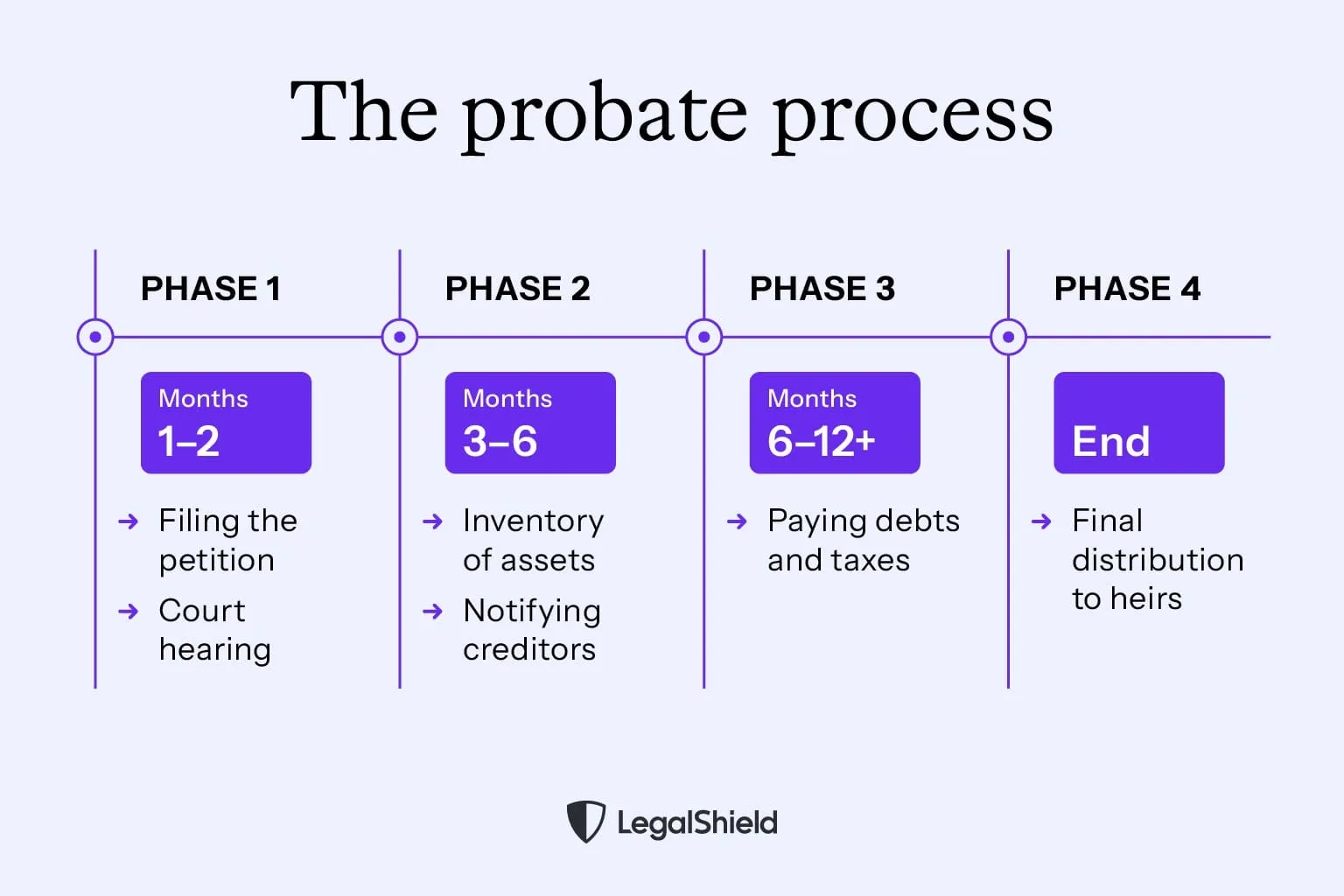
Here’s what the typical probate requirements look like:
- An individual — usually an executor of the estate or a listed beneficiary in the Will — files a petition with the county’s probate court.
- Other parties, such as close relatives or creditors, may also file if no other person is willing to do so.
- In a hearing, the court formally recognizes the Will and appoints someone to manage the estate (an administrator or executor).
- The administrator can then list all assets and properties owned by the deceased and present them to the court within the required timeframe
- The administrator must publish notice in the newspaper and notify creditors of the probate.
- After the administrator informs the court that the estate is ready, the court will reach out to the beneficiaries to let them know they're named beneficiaries of an estate and a Will. If there is no Will, the court will try to identify and contact legal heirs.
- If the deceased owed money, the administrator will pay off their debts from the estate.
- Finally, all beneficiaries or heirs will receive the assets or inheritance left by the deceased.
- Once that is done, the estate will be closed, and the probate process will end.
If the deceased person owns property in multiple counties, probate may need to be opened in each county.
How to avoid probate
Planning ahead can help keep your estate out of court, avoid probate, and ease the burden on your family. If you'd prefer your estate to avoid this process entirely, there are several legal ways to transfer property without probate — including living trusts, transfer-on-death deeds, and joint ownership arrangements. Take these steps to simplify the process for your loved ones:
- Seek counsel from an attorney about an estate plan that fits you and your family’s needs.
- Create a valid Will with clearly designated beneficiaries, preferably in the presence of two objective, disinterested, or impartial witnesses — they will need to sign the Will too. Please note that the requirements for a valid Will vary from state to state.
- Set up beneficiaries for bank, retirement, and investment accounts with transfer-on-death (TOD) or payable-on-death (POD) instructions. These assets will be transferred to the named recipients after your death.
- Many families set up a living trust specifically to avoid the probate process — see what a living trust costs to set up to understand if the upfront investment makes sense for your estate.
- Consider joint property and asset ownership with a beneficiary, either directly or via a rights-of-survivorship agreement. This ensures that the surviving owner will automatically own the assets and property after your death.
- Create transfer-on-death deeds for your properties. This will transfer your properties’ title deeds to the beneficiaries when you pass on.
Costs and timeline of probate
The probate process can take anywhere from three months to multiple years. It all depends on the situation. For instance, if there is a Will with no named beneficiaries or if someone contests the Will, it will take the court much longer.
But if the relatives of the deceased agree with the contents of the Will, or the deceased clearly named their heirs, the process will take less time.
Probate also costs money, including legal fees, court filing costs, executor costs, estate valuation and accounting fees, and/or surety bonds, where necessary. For families already navigating loss, these additional expenses and delays can feel overwhelming.
Look to LegalShield for probate guidance
Navigating probate, or trying to avoid it, can feel complicated, especially during an emotional time. Having legal guidance can help you make informed decisions with confidence.
LegalShield’s provider lawyers with experience in estate planning can help you figure out the best solution for your situation. Our lawyers can help you prepare a valid Last Will and Testament.
With our Premium Legal Plan, a provider lawyer can help you prepare a Living Trust, and you get Simplified Probate if your Last Will and Testament was prepared by your LegalShield provider law firm.
Take advantage of LegalShield’s estate planning and probate resources, and protect your family’s future. Start planning for your family today!