Chapter 7 bankruptcy costs between $1,000 and $3,500 on average. This figure includes court costs, lawyer fees, and more. It may be well worth this price to wipe out your debts, especially if you can access more affordable legal help.
Filing for bankruptcy is a huge decision. It can be a way to wipe out your debts, but will it add to your financial stress?
How much a bankruptcy Chapter 7 costs depends on various factors, including filing fees, lawyers’ fees, and other expenses. In general, most people pay around $2,000.
Not ready to file bankruptcy? LegalShield provider lawyers can provide debt collection advice. With our legal subscription plans, getting help from a lawyer is affordable and accessible.
How much are Chapter 7 bankruptcy lawyer fees?
Chapter 7 bankruptcy lawyer fees are usually the most costly part of a bankruptcy case.
Typically, you can expect to pay a lawyer anywhere from around $1,000 to $1,700, but you could pay up to $3,000 or more if you have a complex case or live in an expensive market.
Breakdown: The cost to file Chapter 7
Chapter 7 bankruptcy costs include several different types of expenses. Some of these are fixed, while others vary.
Court fees
Cost range:$338 fixed, unless you qualify for a waiver
Nationwide, fees to open a Chapter 7 bankruptcy are the same, and you can’t do anything to change them. You’ll pay a total of $338, which covers:
$245 filing fee to the court to open your case and process related paperwork
$78 administrative fee
$15 trustee surcharge
There are additional fees required as your bankruptcy case progresses, such as if you have to file an amendment to something you have filed previously, or you need a certified document. You may also require fees such as copying and notarization.
If your income is 150 percent below the federal poverty line, you may meet bankruptcy fee waiver requirements. You’ll need to file a form to request a waiver and submit it when you file for bankruptcy.
Lawyer fees
Cost range: $1,000, or more
Bankruptcy legal fees can be expensive, starting from around $1,000 in most cases, or more if you have a more complex case. Some lawyers may charge an hourly rate, or a fixed fee if you have a simple case.
For this fee, a lawyer prepares your bankruptcy petition, represents you in court, and helps you avoid common legal mistakes.
The success rate of Chapter 7 Bankruptcies filed by lawyers is higher than those filed without representation. So, for many people, legal fees are worth it to rid themselves of debt. But you usually have to pay them up front, which can be a strain when you’re already dealing with overwhelming debt.
You can get advice on consumer law issues, like credit card debt and debt collection harassment.
Education fees
Cost range: $24 to $100
Federal law requires individuals who file for Chapter 7 bankruptcy to take pre- and post-bankruptcy financial education courses, specifically a credit counseling class within 180 days before filing and a debtor education class after filing. It is vital to stay on top of these requirements, as the court can dismiss your bankruptcy case if they are not completed.
These courses typically cost between $12 and $50 each, meaning you should budget a total of $24 to $100 for these requirements.
Note that total costs may vary by provider and additional fees may apply based on your specific needs. However, if you can't afford these fees, you may be able to get a fee waiver or discount based on your income level.
Other costs
On top of the baseline fees you have to pay, you may also have some miscellaneous fees to cover, depending on your situation. They may include:
Credit report fees: You may need to pay a fee to pull credit reports. If you’re working with a traditional lawyer, they might charge their own administrative fees for pulling these reports in addition to the standard costs from the credit bureaus.
Printing and postage fees: You’ll pay for printing and postage for physical mailings you have to send to creditors and other parties.
Document copy fees: The court will charge you for reproducing and transmitting printed and digital documents. It’ll also charge for certifying documents.
Transportation expenses: If you have to travel to bankruptcy hearings, you may need to cover costs like gas, lodging, and lost wages for time off from work.
What factors affect Chapter 7 costs?
The average Chapter 7 bankruptcy costs around $1,000 to $3,500, though total costs depend on a variety of circumstances and the complexity of your case.
Factors that can affect bankruptcy Chapter 7 costs include:
Your location: Lawyer fees, education fees, and some other expenses are often higher in larger markets. It can also add to your costs if you have to travel out of town for bankruptcy hearings.
The complexity of your case: More complex cases can lead to higher lawyer fees. Complex cases can also cost more because of miscellaneous fees related to a lot of documents or mailings.
Your financial situation: If your income is 150 percent below the federal poverty line, you may be able to waive some court fees.
Whether or not you use a lawyer: Legal fees are one of the biggest expenses in most bankruptcy cases. While it’s possible to represent yourself, working with a lawyer increases your chances of success.
LegalShield pairs you with a law firm for a low monthly price. With your membership, you can consult with a knowledgeable lawyer who can assist with document preparation, filing, and review. Explore plans to learn more.
What debt can I wipe out with Chapter 7?
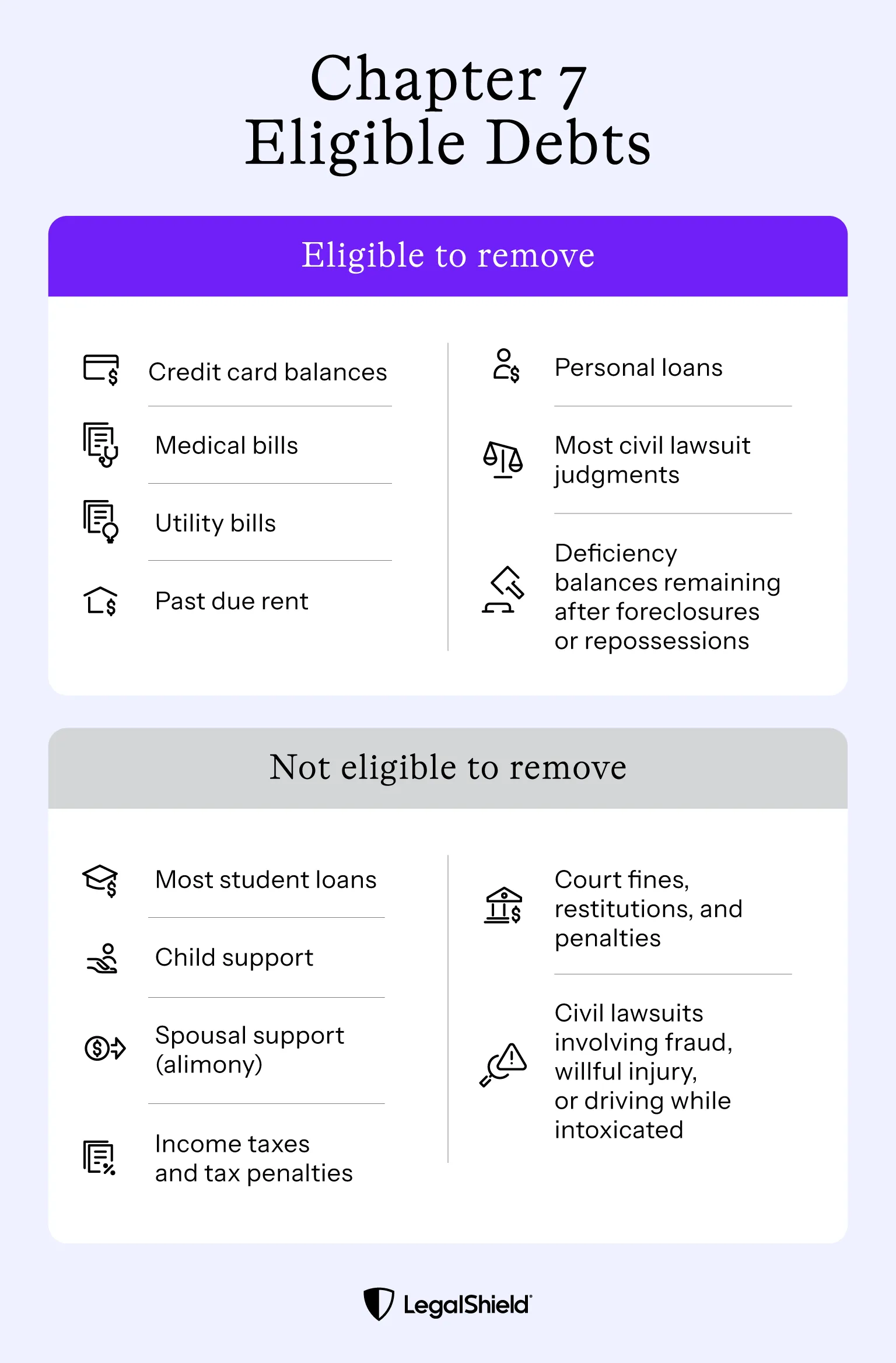
There are usually three types of debts involved in Chapter 7: Secured debts, unsecured debts, and priority debts. You can eliminate secured and unsecured debts. You can’t eliminate priority debts.
Secured debts are debts backed by collateral, such as mortgages and auto loans. If you are a business owner, you may have equipment that is secured by collateral, which may be recorded under your state’s Uniform Commercial Code. Often, creditors resolve these by taking back the property through foreclosure or repossession.
There are ways you can pay off your debts and keep your home and car with a Chapter 7 property exemption, but laws vary by state. If a creditor has placed a judgment lien on your property to collect a debt, an exemption can also prevent them from taking it as collateral.
The next type of debt is unsecured debt. Unsecured debts include those not backed by collateral, such as:
Credit card balances
Medical bills
Utility bills
Past due rent
Personal loans, unless secured by collateral
Most civil lawsuit judgments (except those related to fraud, willful injury, or driving while intoxicated)
Deficiency balances remaining after foreclosures or repossessions
Finally, there are priority debts, which you can’t eliminate. These include:
Most student loans
Child support
Spousal support (alimony)
Income taxes and tax penalties
Court fines, restitutions, and penalties
Trust LegalShield to help with your bankruptcy
The cost of a Chapter 7 bankruptcy ranges from $1,000 to $3,500, on average.
Our provider law firms can tell you more about Chapter 7 bankruptcy.
How can I save money on Chapter 7 bankruptcy costs?
Lawyer fees are usually the biggest expenses in a bankruptcy case. They are also variable, whereas other costs, such as filing fees, are fixed. With your LegalShield plan, you can consult with a provider lawyer about your options if you are thinking about bankruptcy.
What do you lose in Chapter 7 bankruptcy?
In a Chapter 7 bankruptcy, you may lose non-exempt property. This may include:
Second homes
Second vehicles and recreational vehicles
Luxury or high-value personal property, such as jewelry, art, and antiques
Investments, such as stocks and bonds
Cash on hand
Money in checking and savings accounts
How much is the monthly bankruptcy payment?
Bankruptcy payments vary based on your income and other factors. The court will decide the payment on your bankruptcy.
What factors influence the cost of Chapter 7 bankruptcy?
Costs can be higher or lower based on your legal fees, the complexity of your case, and where you live.
Obtén las respuestas que necesitas, cuando las necesitas
Content Specialist at LegalShield, creating educational resources about legal and consumer protection topics. She focuses on making complex legal and financial concepts accessible to readers and has contributed to various educational articles on consumer rights and protections.
¿Necesitas un poder notarial pero te preocupa el costo? Es natural preocuparse por pagar servicios legales, pero es importante no quedarse atrapado/a en dólares y centavos. Después de todo, no le puedes poner precio a la tranquilidad, y eso es exactamente lo que ofrece un poder notarial.
En Estados Unidos, un divorcio sin oposición generalmente cuesta al menos $1,500, mientras que un divorcio con oposición puede empezar en $5,000 y superar los $20,000 en casos complejos. El costo total depende de los honorarios de abogados, los costos judiciales y el nivel de conflicto entre los cónyuges.
A veces la gente tiene reacciones emocionales fuertes a la palabra "prenupcial" porque sienten que su pareja no confía en ellos. Pero un contrato prenupcial trata de establecer confianza y justicia. Puede ser una forma prudente y cariñosa de comenzar un matrimonio. Un contrato prenupcial es una manera en que dos personas resuelven cómo manejarán el dinero y los bienes antes de decir "acepto".
La mayoría de nosotros sabemos que deberíamos tener un testamento. Simplemente seguimos encontrando razones para posponerlo. Si eso te suena familiar, no estás solo/a. Sigue leyendo para aprender qué puedes hacer al respecto.
Planificar el futuro de tu familia toma tiempo y reflexión. Una herramienta que puede ayudar es el fideicomiso familiar: un arreglo legal que te permite decidir cómo se administra y se comparte tu propiedad con las personas que te importan.
Decidir tramitar el divorcio ya es bastante difícil sin tener que preguntarte si estás llenando el formulario correcto. Cada estado maneja el proceso de manera un poco distinta, y es normal sentir dudas acerca de dónde empezar. Reunimos información sobre lo que puede suceder durante el trámite, incluyendo perspectivas de una abogada de verdad, para darte más claridad en este camino.
Prepararse para un divorcio implica reunir documentos financieros y personales, hacer un presupuesto de tus gastos mensuales, asegurar tus cuentas digitales e inventariar tus bienes. También es importante decidir qué tipo de divorcio se adapta a tu situación y consultar con un abogado antes de presentar la petición para proteger tus derechos.
Saber qué tipo de abogado necesitas depende del asunto legal que enfrentas: derecho de familia para divorcio o custodia, planificación patrimonial para testamentos, derecho laboral para conflictos en el trabajo, derecho tributario para impuestos, entre otras áreas. Consultar con un abogado de práctica general o una firma proveedora de LegalShield te puede ayudar a identificar la especialidad correcta.
•
13 min de lectura
*See your plan contract for details. Additional fees, limitations, and waiting periods may apply.