Chapter 7 bankruptcy costs between $1,000 and $3,500 on average. This figure includes court costs, lawyer fees, and more. It may be well worth this price to wipe out your debts, especially if you can access more affordable legal help.
Filing for bankruptcy is a huge decision. It can be a way to wipe out your debts, but will it add to your financial stress?
How much a bankruptcy Chapter 7 costs depends on various factors, including filing fees, lawyers’ fees, and other expenses. In general, most people pay around $2,000.
Not ready to file bankruptcy? LegalShield provider lawyers can provide debt collection advice. With our legal subscription plans, getting help from a lawyer is affordable and accessible.
How much are Chapter 7 bankruptcy lawyer fees?
Chapter 7 bankruptcy lawyer fees are usually the most costly part of a bankruptcy case.
Typically, you can expect to pay a lawyer anywhere from around $1,000 to $1,700, but you could pay up to $3,000 or more if you have a complex case or live in an expensive market.
{{billboard-1}}
Breakdown: The cost to file Chapter 7
Chapter 7 bankruptcy costs include several different types of expenses. Some of these are fixed, while others vary.
Court fees
Cost range:$338 fixed, unless you qualify for a waiver
Nationwide, fees to open a Chapter 7 bankruptcy are the same, and you can’t do anything to change them. You’ll pay a total of $338, which covers:
$245 filing fee to the court to open your case and process related paperwork
$78 administrative fee
$15 trustee surcharge
There are additional fees required as your bankruptcy case progresses, such as if you have to file an amendment to something you have filed previously, or you need a certified document. You may also require fees such as copying and notarization.
If your income is 150 percent below the federal poverty line, you may meet bankruptcy fee waiver requirements. You’ll need to file a form to request a waiver and submit it when you file for bankruptcy.
Lawyer fees
Cost range: $1,000, or more
Bankruptcy legal fees can be expensive, starting from around $1,000 in most cases, or more if you have a more complex case. Some lawyers may charge an hourly rate, or a fixed fee if you have a simple case.
For this fee, a lawyer prepares your bankruptcy petition, represents you in court, and helps you avoid common legal mistakes.
The success rate of Chapter 7 Bankruptcies filed by lawyers is higher than those filed without representation. So, for many people, legal fees are worth it to rid themselves of debt. But you usually have to pay them up front, which can be a strain when you’re already dealing with overwhelming debt.
You can get advice on consumer law issues, like credit card debt and debt collection harassment.
Education fees
Cost range: $24 to $100
Federal law requires individuals who file for Chapter 7 bankruptcy to take pre- and post-bankruptcy financial education courses, specifically a credit counseling class within 180 days before filing and a debtor education class after filing. It is vital to stay on top of these requirements, as the court can dismiss your bankruptcy case if they are not completed.
These courses typically cost between $12 and $50 each, meaning you should budget a total of $24 to $100 for these requirements.
Note that total costs may vary by provider and additional fees may apply based on your specific needs. However, if you can't afford these fees, you may be able to get a fee waiver or discount based on your income level.
Other costs
On top of the baseline fees you have to pay, you may also have some miscellaneous fees to cover, depending on your situation. They may include:
Credit report fees: You may need to pay a fee to pull credit reports. If you’re working with a traditional lawyer, they might charge their own administrative fees for pulling these reports in addition to the standard costs from the credit bureaus.
Printing and postage fees: You’ll pay for printing and postage for physical mailings you have to send to creditors and other parties.
Document copy fees: The court will charge you for reproducing and transmitting printed and digital documents. It’ll also charge for certifying documents.
Transportation expenses: If you have to travel to bankruptcy hearings, you may need to cover costs like gas, lodging, and lost wages for time off from work.
What factors affect Chapter 7 costs?
The average Chapter 7 bankruptcy costs around $1,000 to $3,500, though total costs depend on a variety of circumstances and the complexity of your case.
Factors that can affect bankruptcy Chapter 7 costs include:
Your location: Lawyer fees, education fees, and some other expenses are often higher in larger markets. It can also add to your costs if you have to travel out of town for bankruptcy hearings.
The complexity of your case: More complex cases can lead to higher lawyer fees. Complex cases can also cost more because of miscellaneous fees related to a lot of documents or mailings.
Your financial situation: If your income is 150 percent below the federal poverty line, you may be able to waive some court fees.
Whether or not you use a lawyer: Legal fees are one of the biggest expenses in most bankruptcy cases. While it’s possible to represent yourself, working with a lawyer increases your chances of success.
LegalShield pairs you with a law firm for a low monthly price. With your membership, you can consult with a knowledgeable lawyer who can assist with document preparation, filing, and review. Explore plans to learn more.
What debt can I wipe out with Chapter 7?
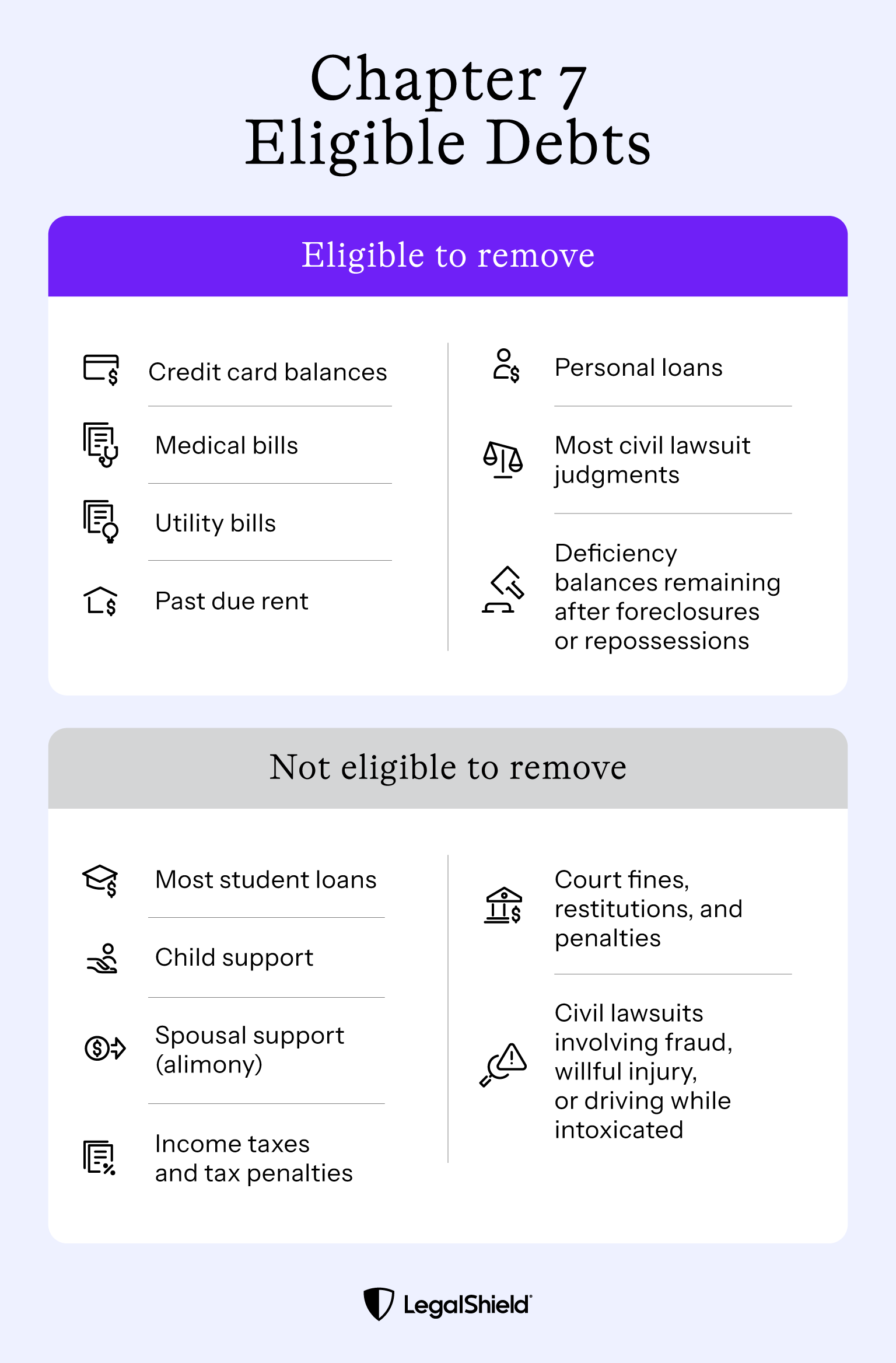
There are usually three types of debts involved in Chapter 7: Secured debts, unsecured debts, and priority debts. You can eliminate secured and unsecured debts. You can’t eliminate priority debts.
Secured debts are debts backed by collateral, such as mortgages and auto loans. If you are a business owner, you may have equipment that is secured by collateral, which may be recorded under your state’s Uniform Commercial Code. Often, creditors resolve these by taking back the property through foreclosure or repossession.
There are ways you can pay off your debts and keep your home and car with a Chapter 7 property exemption, but laws vary by state. If a creditor has placed a judgment lien on your property to collect a debt, an exemption can also prevent them from taking it as collateral.
The next type of debt is unsecured debt. Unsecured debts include those not backed by collateral, such as:
Credit card balances
Medical bills
Utility bills
Past due rent
Personal loans, unless secured by collateral
Most civil lawsuit judgments (except those related to fraud, willful injury, or driving while intoxicated)
Deficiency balances remaining after foreclosures or repossessions
Finally, there are priority debts, which you can’t eliminate. These include:
Most student loans
Child support
Spousal support (alimony)
Income taxes and tax penalties
Court fines, restitutions, and penalties
Trust LegalShield to help with your bankruptcy
The cost of a Chapter 7 bankruptcy ranges from $1,000 to $3,500, on average.
Our provider law firms can tell you more about Chapter 7 bankruptcy.
How can I save money on Chapter 7 bankruptcy costs?
Lawyer fees are usually the biggest expenses in a bankruptcy case. They are also variable, whereas other costs, such as filing fees, are fixed. With your LegalShield plan, you can consult with a provider lawyer about your options if you are thinking about bankruptcy.
What do you lose in Chapter 7 bankruptcy?
In a Chapter 7 bankruptcy, you may lose non-exempt property. This may include:
Second homes
Second vehicles and recreational vehicles
Luxury or high-value personal property, such as jewelry, art, and antiques
Investments, such as stocks and bonds
Cash on hand
Money in checking and savings accounts
How much is the monthly bankruptcy payment?
Bankruptcy payments vary based on your income and other factors. The court will decide the payment on your bankruptcy.
What factors influence the cost of Chapter 7 bankruptcy?
Costs can be higher or lower based on your legal fees, the complexity of your case, and where you live.
Content Specialist at LegalShield, creating educational resources about legal and consumer protection topics. She focuses on making complex legal and financial concepts accessible to readers and has contributed to various educational articles on consumer rights and protections.
Yes, an HOA can foreclose on your house. If you fall behind on dues, it can put a lien on the house and, depending on your state, sell it, sometimes without a judge. Losing the house doesn't erase your mortgage, so you can still owe the bank. If you get a lien or foreclosure letter, call a lawyer that day.
Owing more than you can pay can be stressful, especially when debt collectors come calling. When you’re struggling to keep up, bankruptcy could be a way to make a fresh start.
Writing your own will comes with costs you may not be aware of. Learn everything you need to know about creating a DIY will and how it compares to using a lawyer.
A new LegalShield study reveals what most of us already suspect but rarely say out loud: getting ripped off hurts, and the embarrassment that follows keeps people from doing much about it.
Realizing you’ve been scammed is one of the most stressful moments anyone can face. In this guide, we’ll walk you through the exact steps to take after a scam: who to contact, how to report the fraud, what your legal rights are, and how to increase your chances of getting your money back.
You aren't the only one to be in debt. Your LegalShield attorney can explain your rights, legal requirements, and other ways to start getting out of debt.




.webp)