
How To Negotiate a Rent Increase With Your Landlord: 9 Tips

Editor's note:This post was originally published on March 23, 2022, and has been updated for accuracy, comprehensiveness, and freshness on March 10, 2026.
Housing costs are an important financial consideration, especially for renters. This often leads tenants to wonder how to negotiate a rent increase.
Even though rent increases are common in rental properties, there are steps tenants can take to minimize their financial impact. Read on to learn how to negotiate a surprise rent increase and what strategies offer you the best chances of success.
Can you negotiate rent increase?
Whether you can negotiate a rent increase depends on your landlord. Small annual bumps in monthly rent that are a response to overall inflation are difficult to negotiate. However, landlords are sometimes more willing to negotiate bigger rent increases.
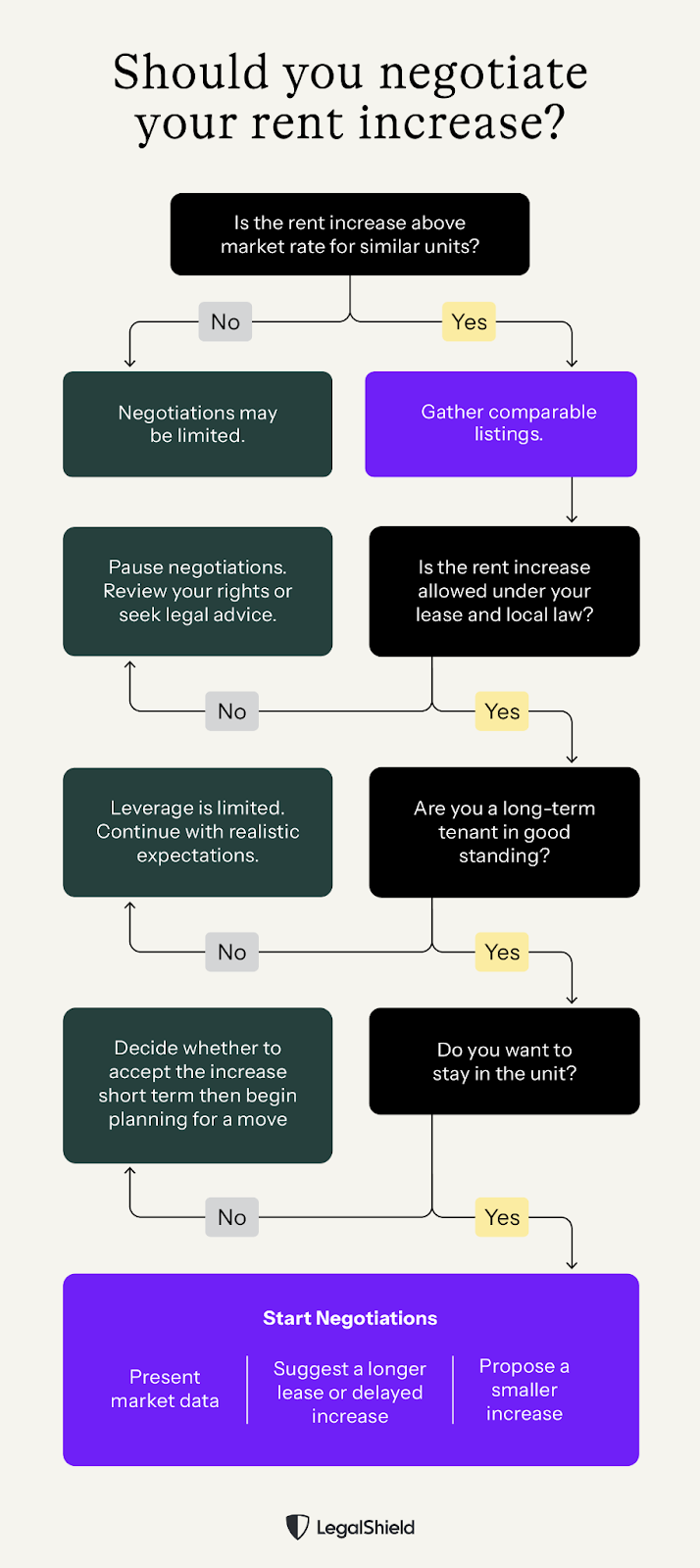
How to negotiate rent increase
Below are several tips and strategies that can help you negotiate your next rent increase.
1. Be a model tenant
The more your landlord likes you, the more likely they are to want to talk about a rent increase. That doesn't mean you have to become friends with your landlord, but you can do things for your landlord to consider you a quality tenant, like:
- Always paying rent on time (or early)
- Not causing any disturbances, such as excessive noise, littering in the common areas, or harassing neighbors
- Avoiding any damage to the rental property
- Letting the landlord know about small property issues before they become serious (and expensive) problems for the landlord, such as water leaks
The bottom line is that if you act like a good neighbor, your landlord will likely want to keep you as a tenant. This could help when you need a favor from your landlord, such as reducing a rent increase or trying to end a lease early.
2. Do market research
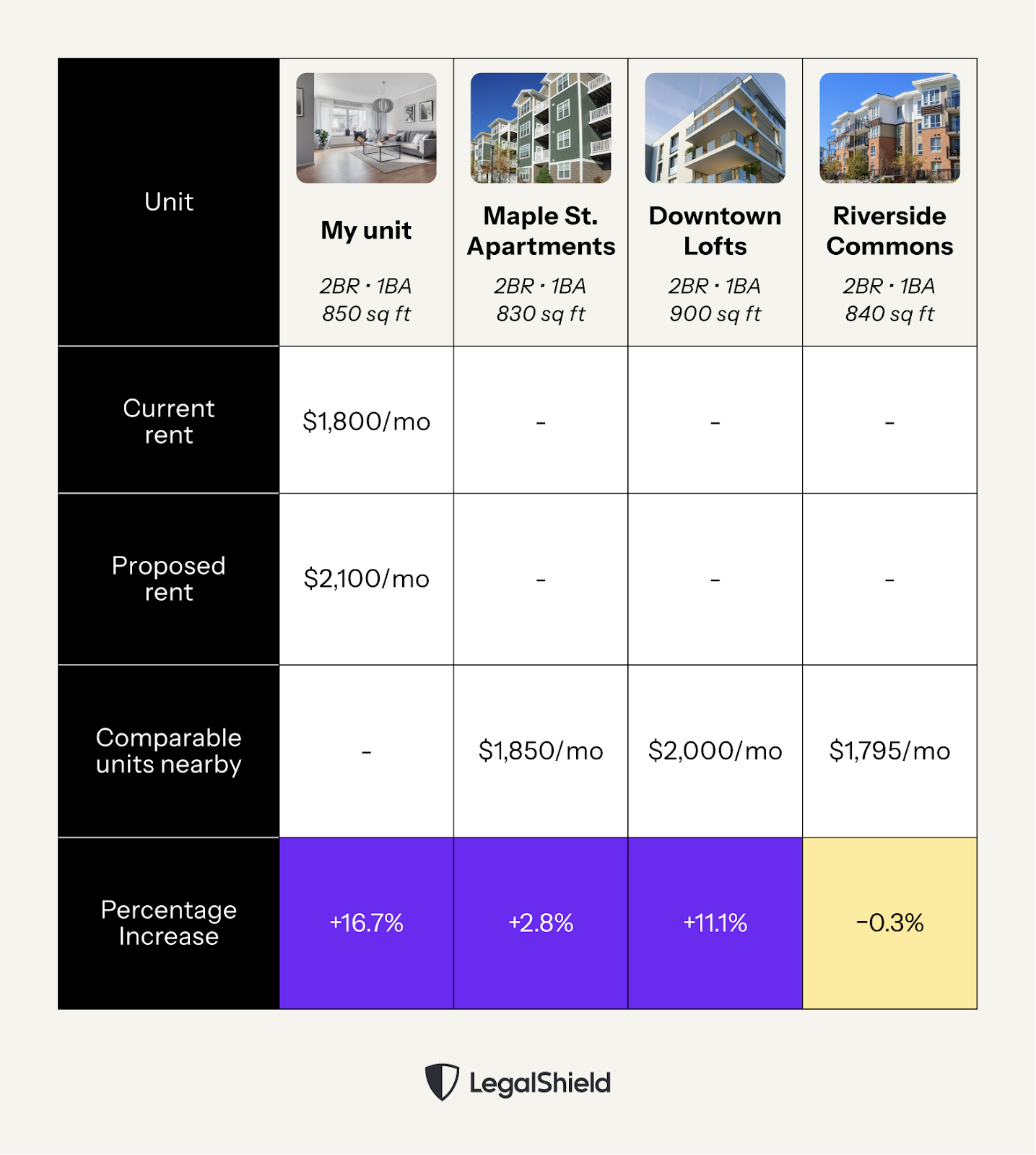
Like any other negotiation, it's best to be prepared before you talk about your house or apartment lease. One strong starting point is to research comparable rent for similar homes in your area, including whether there have been any recent increases in rent (and, if so, how much). Is the percent of increase similar to what you’re facing?
If your landlord is asking for much more than market value, you now have an opportunity to give them evidence that this increase may be excessive. Make sure you document your research—like in the image above—so that you can effectively present your case to your landlord.
3. Understand your tenant rights
Besides understanding your rental market, you also need to understand your rights as a tenant, starting with reading your lease. It is possible that the proposed rent increase is not allowed under the law or under the terms of the lease. There is also a chance the lease allows for the increase, but know that this is illegal.
One of the biggest lease-based oversights is when landlords include that they can ask for a rent increase that isn't legal according to local law. If you don't fully understand your rights, consider talking to a lawyer who knows about tenant rights through your LegalShield membership.
4. Have a conversation with your landlord as soon as possible
If you want to negotiate rent increases with a landlord in the best way possible, you need to get started sooner rather than later. Asking someone for a favor is harder to do when you wait until the last minute. Also, should negotiations break down, you will have more time to find alternative solutions to pay for the higher rent or a new place to live.
As you talk to your landlord, remember to stay respectful at all times. Also, bring any research or information you have that can support your arguments.
5. Be flexible
To be a successful negotiator, you need to be open to a compromise. This includes keeping your expectations flexible.
For example, imagine that overall inflation is up 7% for the year and other tenants in your area have seen 8%-10% rent increases. If your landlord is asking for a 7% rent increase, it might not be reasonable to expect them to agree to anything less. Instead, you should be flexible enough to accept that even though your rent is going up, you're getting a good deal compared to the market.
6. Write a hardship letter
If you’re nervous about negotiating face-to-face (or your talks haven't gone well so far), you can write a hardship letter. It should outline your current financial situation and the burden that a rent increase will put on you. Highlight in the letter that you are a good tenant, have a strong rental history, and are worth keeping.
The letter also allows you to take your time outlining every piece of your argument, gives your landlord extra time to think about what you have said, and creates a paper trail of the negotiations.
7. Suggest a long-term lease
One way to take advantage of your status as a good tenant is to suggest a longer lease. Most residential leases have one-year terms, but consider signing a lease with a 1.5 or two-year term in exchange for a smaller rent increase.
Some landlords are willing to take less rent in return for a good tenant, especially one who agrees not to move somewhere else for an extended period.
8. Volunteer for Repair Work
If you have the time and skills, consider bartering for lower rent. You could offer to complete repair or maintenance work for the rental property in return for a smaller (or no) rent increase.
9. Consult a lawyer
If you want to learn how to fight a rent increase, it's helpful to consult a real estate lawyer. This is especially true if you suspect that the increase is illegal or in violation of the lease.
Navigate rent spikes with LegalShield
Facing an unexpected rent increase can be scary and unsettling. Luckily, you do not have to sit by and accept the increase. Instead, you can learn how to negotiate a rent increase and work with your landlord to find a solution you’re both okay with.
Just remember that you do not have to face these negotiations on your own. LegalShield offers various legal plans to give you the knowledge and power to take control of your living situation.
You also get access to legal advice on issues relating to rent, as well as a review of legal documents and discounts on other legal services for renters.
Frequently asked questions
What’s the most a landlord can increase rent?
Unless the lease states otherwise, there is no limit.
How do I write a letter to negotiate a rent increase?
You can do an online search for suggestions, and there should be multiple templates available to get you started. Also consider asking for guidance on social media or a message board. There are likely many people with similar experiences who can offer advice on how to draft your letter. Or, you could use your LegalShield membership to receive guidance from a lawyer.
LegalShield is a trademark of Pre-Paid Legal Services, Inc. (“LegalShield”). LegalShield provides this blog as a public service and for general information only. The information made available in this blog is meant to provide general information and is not intended to provide legal advice, render an opinion, or provide a recommendation as to a specific matter. The blog post is not a substitute for competent legal counsel from a licensed professional lawyer in the state or province where your legal issues exist, and you should seek legal counsel for your specific legal matter. All information by authors is accepted in good faith. However, LegalShield makes no representation or warranty of any kind, express or implied, regarding the accuracy, adequacy, validity, reliability, availability, or completeness of such information. The materials contained herein are not regularly updated and may not reflect the most current legal information. No person should either act or refrain from acting on the basis of anything contained on this website. Nothing on this blog is meant to, or does, create an attorney-client relationship with any reader or user. An attorney-client relationship may be formed only after the execution of an engagement letter with an attorney and after that attorney has confirmed that no conflicts of interest exist. Nothing on this website, or information contained or transmitted by this website, is intended to be an advertisement or solicitation. Information contained in the blog may be provided by authors who could be a third-party paid contributor. LegalShield provides access to legal services offered by a network of provider law firms to LegalShield members through membership-based participation. LegalShield is not a law firm, and its officers, employees or sales associates do not directly or indirectly provide legal services, representation, or advice.

What Is a Lease Agreement for an Apartment?
How To Negotiate a Rent Increase With Your Landlord: 9 Tips
