Let’s say you walk into a cool new restaurant with your service dog. The hostess looks nervous. She says she needs to check with her manager. You're left standing by the door, wondering if you'll be turned away.
This happens more often than you might think. Many business owners don't fully understand the laws for service dogs in restaurants. Customers with service dogs aren't always sure of their rights either. This confusion can lead to uncomfortable situations for everyone.
The good news? The rules are actually pretty clear and we are here to break them down for you. We will explain when service dogs must be allowed in restaurants. You'll also learn about the rare times when a service dog can be denied entry. We'll cover the responsibilities of both businesses and handlers so everyone knows what to expect.
What is a service dog?
A service dog is not just any pet. Under the Americans with Disabilities Act (ADA), a service dog must be trained to do specific tasks for a person with a disability.
These tasks might include guiding someone who is blind, alerting someone who is deaf, or helping a person who has seizures. The dog must be trained to perform work directly related to the person's disability.
Service dogs are working animals, not pets. Because of this, they get special protection under federal law.
What the ADA says about service dogs in restaurants
The ADA is a federal law that protects people with disabilities. It applies to restaurants and most other businesses that serve the public.
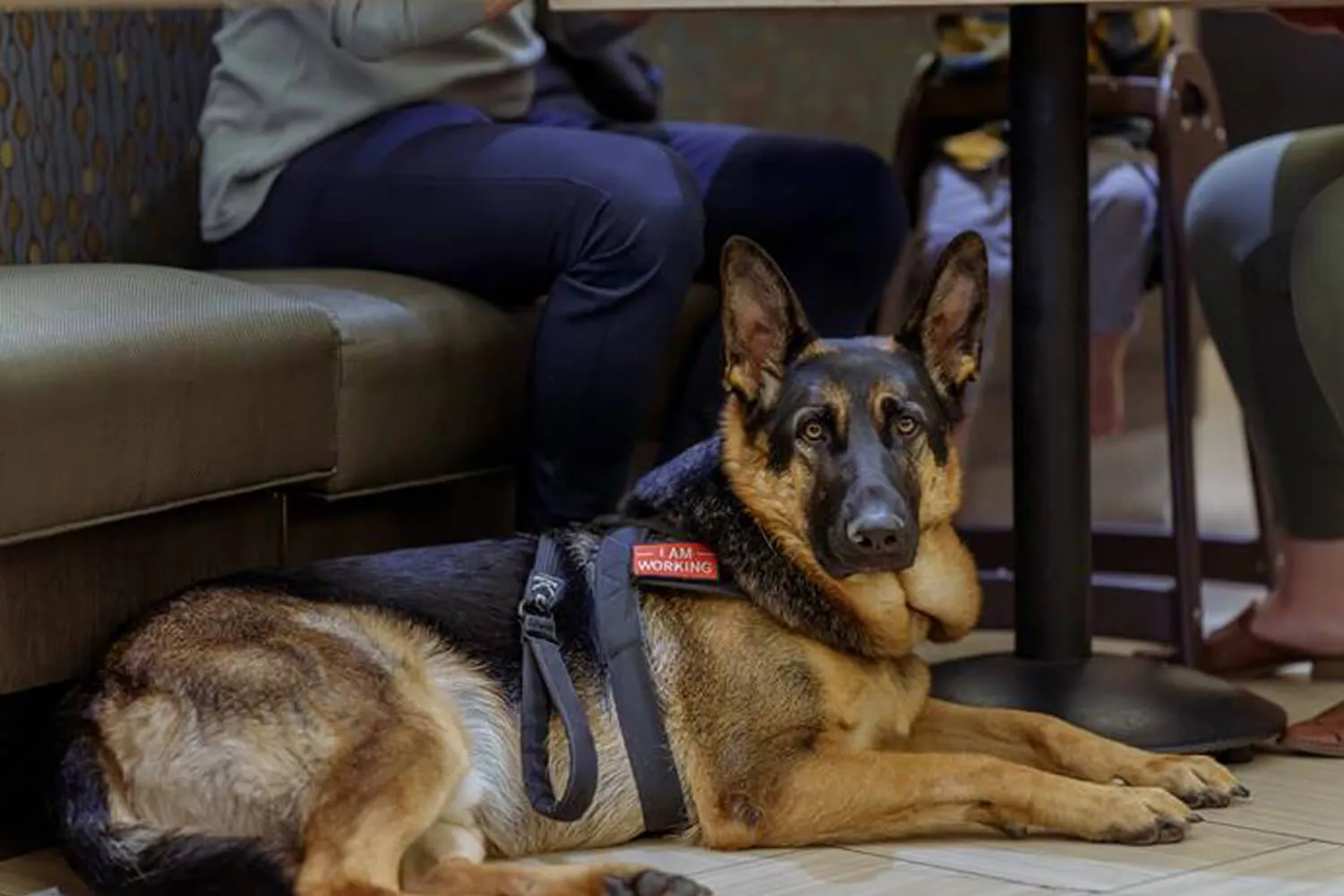
Restaurants must allow service dogs, even if they have "no pets" signs on the door. The rules for service dogs in restaurants are clear. Service dogs are not considered pets under the law.
There's an important difference to understand. Service dogs are not the same as emotional support animals. Emotional support animals provide comfort, but they don't have special training to perform tasks. The ADA does not require restaurants to allow emotional support animals.
Can a restaurant refuse a service dog?
In most cases, no. Restaurants cannot turn away customers with service dogs.
Some restaurant owners worry about customers with dog allergies. Others might be afraid of dogs. These are not valid reasons to refuse a service dog. The law is clear on this point.
Can you refuse a service dog in a restaurant just because you prefer not to have dogs inside? No, you cannot. The ADA protects the rights of people who need service dogs.
When a service dog may be denied entry
There are typically only two situations when a service dog can be denied entry:
The dog is out of control and the handler doesn't fix the problem. If a service dog is barking repeatedly, jumping on people, or acting aggressively, the restaurant can ask the handler to remove the dog. But the handler must be given a chance to get the dog under control first.
The dog is not housebroken. If a service dog has an accident inside the restaurant, that's a health code violation. The restaurant can ask the handler to leave with the dog.
Here are some examples of when it is not appropriate to deny entry to a service dog:
Invalid reasons to deny entry:
A customer at another table says they're allergic to dogs
The owner doesn't like dogs
The dog is a certain breed that many people fear or dislike
The restaurant has a "no animals" policy
Can a restaurant ask for identification or certification for the service dog?
Restaurant staff cannot ask to see ID cards or certification papers for service dogs. They cannot require the dog to wear a special vest. These requirements would be unlawful.
So, what can restaurants ask? Staff members are allowed to ask only two questions:
Is the dog required because of a disability?
What work or task has the dog been trained to perform?
That's it. Staff cannot ask about the person's specific disability. They cannot demand proof or paperwork.
Rules restaurants must follow about service dogs
The laws for service dogs in restaurants include several important rules:
No extra fees: Restaurants cannot charge customers extra money just because they have a service dog
Equal treatment: Customers with service dogs must get the same service as everyone else
Limited questions: Staff can only ask the two questions listed above
No special seating: Restaurants cannot force service dog handlers to sit in a separate area
These rules for service dogs in restaurants protect people with disabilities from discrimination.
Responsibilities of service dog handlers
Service dog handlers also have responsibilities. Can a restaurant refuse a service dog if the handler isn't following the rules? Yes, in certain cases.
Here's what handlers must do:
Keep the dog under control using a leash, harness, or voice commands
Supervise the dog at all times
Clean up after the dog if accidents happen
Make sure the dog behaves appropriately
Even if a restaurant removes a service dog for bad behavior, the customer still has rights. The restaurant must offer to serve the person without the dog.
Tips for service dogs going to restaurants
Handlers can make restaurant visits smoother by preparing their service dogs. Here are some helpful tips:
Training tips:
Practice staying calm in crowded, noisy places
Train the dog to ignore food smells and other diners
Work on commands like "stay" and "quiet"
During the visit:
Position your dog under the table or close beside you
Don't let your dog block walkways or emergency exits
Keep your dog focused on you, not on other people's food
Good preparation helps prevent misunderstandings. It also makes the experience better for everyone in the restaurant.
Common misconceptions about service dogs in restaurants
Let's clear up some common myths:
Myth 1: Service dogs need ID cards or vests. Not true. The ADA does not require service dogs to have identification or wear special gear.
Myth 2: Emotional support animals have the same rights as service dogs. False. Emotional support animals are not covered by the ADA. Can a restaurant refuse a service dog? Usually no. Can a restaurant refuse an emotional support animal? Yes.
Myth 3: Restaurants can ban certain dog breeds. Wrong. Breed restrictions do not apply to service dogs under the ADA.
These misconceptions often cause confusion about the laws for service dogs in restaurants.
Understanding the law helps everyone
Clear knowledge about these laws reduces conflict. It creates equal access for people with disabilities. And it leads to better experiences for everyone who visits restaurants.
Know your rights and protect yourself
Understanding your legal rights shouldn't be complicated or expensive. Whether you're facing questions about service dogs, consumer finance issues, or other legal matters, having legal guidance makes all the difference.
LegalShield puts the power of legal help in your pocket. For around a dollar a day, you get access to experienced lawyers who can answer your questions, review documents, and help you understand your rights. Don't wait until you're standing in that restaurant doorway wondering what to do.
Visit LegalShield's Consumer Finance page today and discover how affordable legal protection can give you confidence in any situation. Your rights matter. Protect them.
Content Specialist at LegalShield, creating educational resources about legal and consumer protection topics. She focuses on making complex legal and financial concepts accessible to readers and has contributed to various educational articles on consumer rights and protections.
Owing more than you can pay can be stressful, especially when debt collectors come calling. When you’re struggling to keep up, bankruptcy could be a way to make a fresh start.
Writing your own will comes with costs you may not be aware of. Learn everything you need to know about creating a DIY will and how it compares to using a lawyer.
Filing for Chapter 7 bankruptcy typically costs between $1,000 and $3,500. That includes fixed court fees, mandatory education courses, and variable attorney fees.
A new LegalShield study reveals what most of us already suspect but rarely say out loud: getting ripped off hurts, and the embarrassment that follows keeps people from doing much about it.
Realizing you’ve been scammed is one of the most stressful moments anyone can face. In this guide, we’ll walk you through the exact steps to take after a scam: who to contact, how to report the fraud, what your legal rights are, and how to increase your chances of getting your money back.
You aren't the only one to be in debt. Your LegalShield attorney can explain your rights, legal requirements, and other ways to start getting out of debt.






.webp)