
Deed vs. Title: Differences and How They Work in Real Estate


Get the legal advice you need without the hourly legal fees
Key Takeaways
A deed and title aren’t two versions of the same thing. A deed is a legal document that transfers real estate ownership. Title means legal ownership itself.
Buying a home pushes you into a wilderness of unfamiliar terms, and “deed” and “title” are two of the easiest to mix up. They’re closely connected but not at all the same thing.
If you understand the difference between deed and title, you can ask better questions before closing. It can also help you spot issues that warrant legal review, like deed errors, title defects, liens, and questions about who has the right to sell the property.
A LegalShield® Personal Plan can connect you with a provider law firm for real estate legal advice. But in the meantime, take a moment to familiarize yourself with these two critical home-buying terms.
What is a deed?
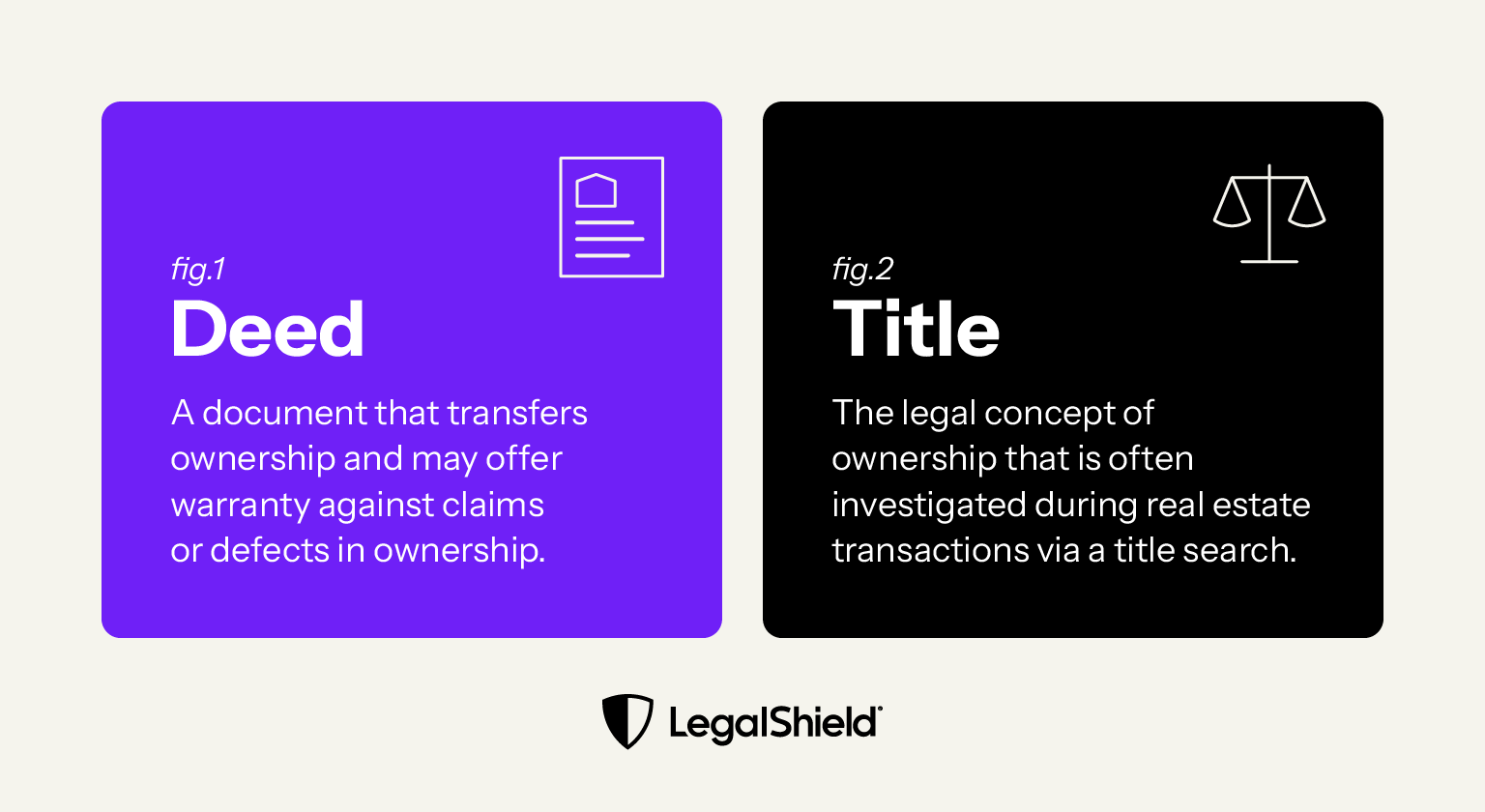
A deed is a legal document that transfers real estate ownership from one person or entity to another. If you’re buying a real estate, the deed shows that the seller is transferring their ownership interest in the property to you.
Once they’re signed and properly recorded, deeds typically become part of the public record in the county where the property is. That public record shows the property’s ownership history, giving future buyers, lenders, and title professionals a way to review past transfers.
Types of deeds
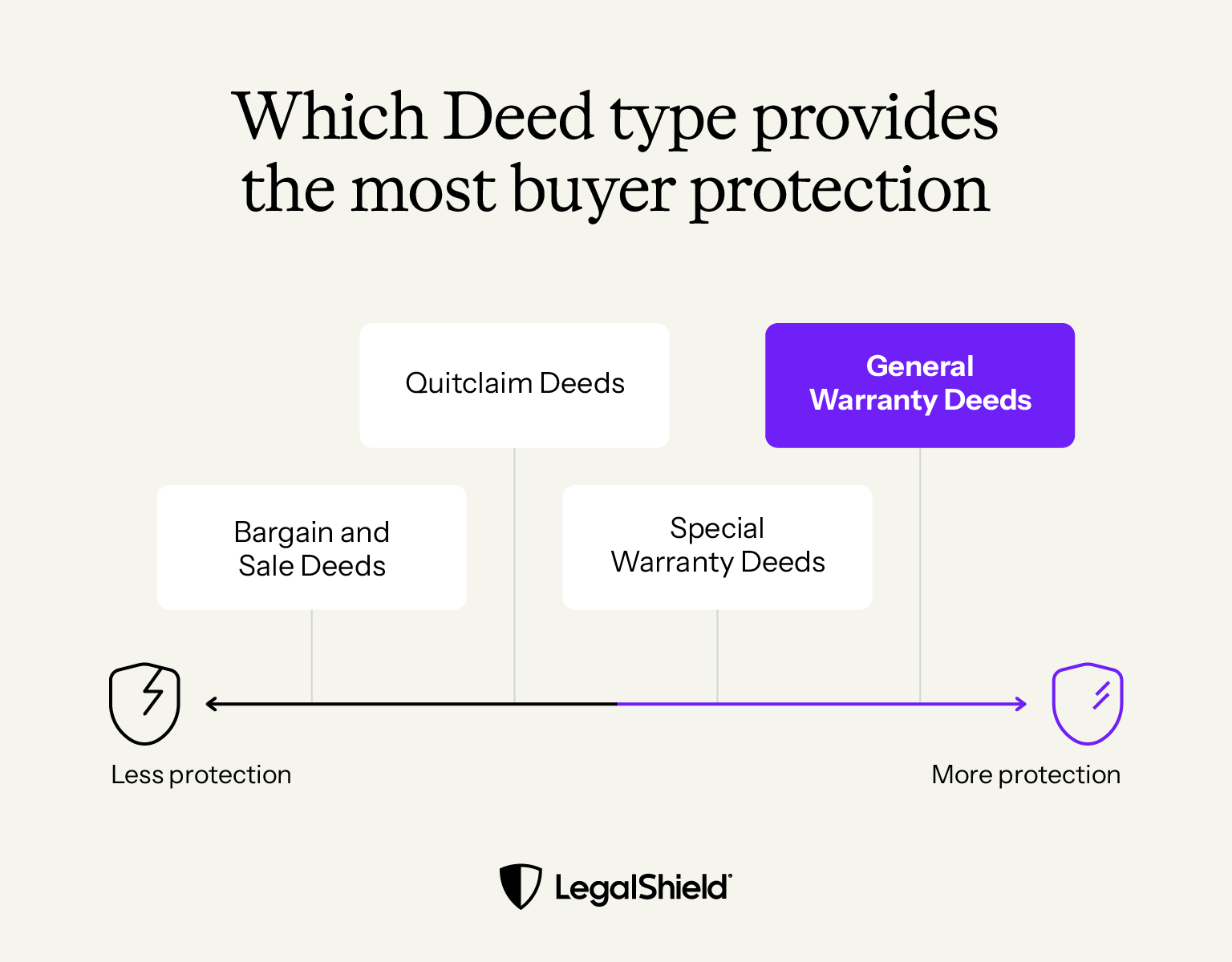
Deeds are diverse. The various types offer different levels of buyer protection, with some making broad promises about the property’s title and others simply transferring ownership interest.
General Warranty Deeds
General Warranty Deeds give the strongest buyer protection. Here, the seller promises they have the right to transfer the property, and that no undisclosed ownership claims or defects affect the title. That even includes potential problems from before the seller owned the property.
Special Warranty Deeds
Special Warranty Deeds offer more limited protection. With these, the seller is generally promising that they didn’t create title problems while they owned the property, but they can’t make any promises about previous owners.
Quitclaim Deeds
Quitclaim Deeds make very few promises. They usually just transfer whatever ownership interest the person signing the deed may have in the property. There’s typically no promise that the person has a clear title. That’s a reason buyers are often cautious about using this type of deed for a traditional property purchase, though they’re sometimes used to transfer property to family.
Bargain and Sale Deeds
Bargain and Sale Deeds are common in foreclosure and tax sales. They’re less common in traditional property purchases. These deeds typically promise that the seller has the right to transfer the property but make few other promises about any liabilities that could come up.
What is a title?
A title is the legal concept of ownership. When you have “title” to property, you have legal rights to it. It’s not a specific document like a deed to a house. However, several real estate documents may collectively show title, including deeds, public records, and any history of how the property has changed hands over time.
The deed transfers ownership in a real estate purchase; title describes what ownership rights come with that transfer. Legal title tends to describe formal ownership rights, while equitable title may refer to a buyer’s interest before the transaction is completed.
Many people make the mistake of assuming title is less important than the deed because it doesn’t have a clear physical form. The concept of title is critical when you’re buying or selling real estate.
Why is title important during real estate transactions?
The title tells you whether the seller has the legal right to transfer the property to you. That’s a big deal. Problems with the title can lead to post-closing issues like unpaid liens, unresolved ownership claims, recording errors, and disputes from past owners.
The cluster of potential problems is precisely why buyers tend to have a title search performed before they complete a real estate transaction. That’s just a review of public records to look for problems that could affect the buyer’s ownership rights.
It’s best to find those issues before closing, while you still have a chance to ask questions, request corrections, or get legal help.
Common issues with deeds and titles
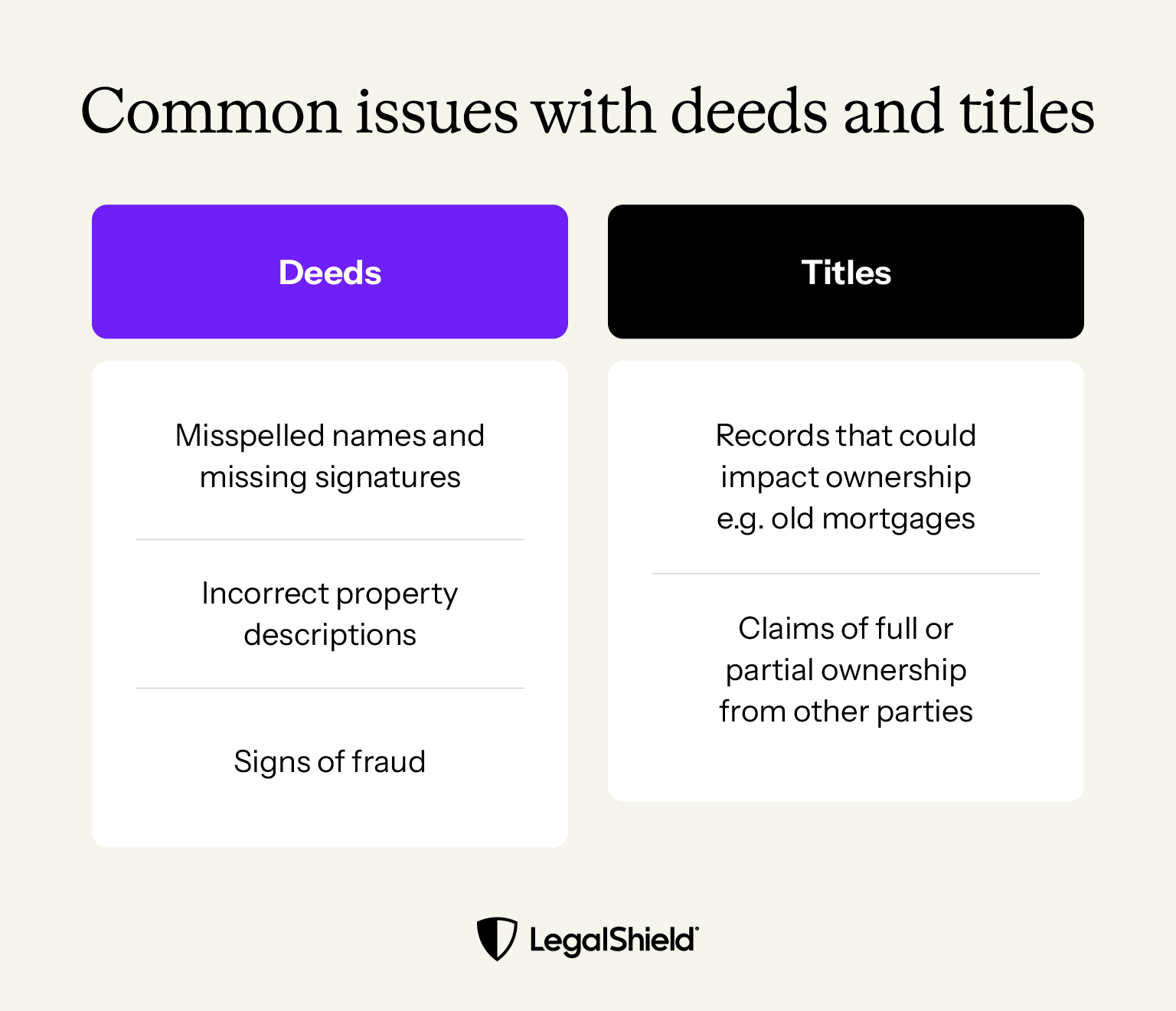
Issues with deeds and titles have a nasty habit of popping up during a stressful time, like when you’re trying to close on a property. Some of these problems are simple clerical errors, but others can affect whether the seller can even transfer ownership at all.
Issues with deeds
Misspelled or incorrect names, incorrect property descriptions, and missing signatures are all minor problems that can come up with deeds. It’s usually possible to correct these issues with deeds, but they matter because the deed needs to accurately capture who’s transferring the property and which property it is.
Other deed issues can be complex. If there are signs of fraud or questions about whether the seller has the authority to sign, the buyer may need to pull back until they can get more information. These issues don’t automatically cancel the sale, but they can affect the buyer's confidence in the transfer.
It’s a little nerve-wracking, and it’s the type of thing many buyers want help reviewing. A LegalShield Personal Plan can connect those buyers with a provider law firm for advice.
Issues with titles
Title problems often involve records or claims that could impact ownership. An old mortgage may still appear in the records even if it’s paid off, for instance. Or a contractor, tax authority, lender, former spouse, or heir might also have a claim that needs to be resolved before the buyer can get clear ownership.
Title problems are typically discovered during a title search and opinion that is performed by a lawyer. Some people skip this step, but they could be missing critical information that affects their real estate. Read more about title insurance.
Corrected paperwork, payoff records, and updated public filings can fix some title issues with relatively little friction. Others can take longer. That’s often the case when there’s a dispute over ownership or a potentially valid lien.

Get legal advice on buying real estate with a LegalShield Personal Plan
Buying property is exciting but stressful, especially when deed and title issues come up. Before you press on or call the whole thing off, you need an idea of what the documents actually say, the questions to ask, and whether anything needs correcting before closing day.
You can get that kind of advice with a LegalShield Personal Plan. Depending on the plan and legal issue, a provider law firm may be able to help you with a variety of real estate matters. That might look like a review of purchase documents, an explanation of deed language, or help in understanding a title concern, for example.
Find out how the LegalShield Personal Plan can connect you with legal help for real estate matters.
Frequently Asked Questions

No. Neither is more important than the other. A real estate purchase usually needs both. A properly prepared deed transfers ownership, and clear title shows that the seller has the right to transfer it.
If a deed names you as the current owner, that usually shows that you hold title to the property. But remember that “a title” is not a single document. Mistakes, old records, liens, encumbrances, and unresolved ownership claims can complicate the whole clean title question, including whether you technically have it. If you’re unsure, a lawyer’s review can help.
Get the Answers You Need, When You Need Them
Content Specialist at LegalShield, creating educational resources about legal and consumer protection topics. She focuses on making complex legal and financial concepts accessible to readers and has contributed to various educational articles on consumer rights and protections.