
Wedding Contracts: A Guide For Couples

This post was originally published on September 20, 2024, and has been updated for accuracy, comprehensiveness, and freshness on March 17, 2026.
A wedding contract is a legally binding document between the couple and their vendors that outlines each party’s responsibilities and expectations.
You’re getting married — congratulations! Weddings take careful planning, and last-minute problems can be very frustrating and expensive. Wedding contracts help make sure couples and vendors are on the same page about what they expect from each other.
Every contract should describe exactly what each vendor agrees to provide, like the number of tables at your reception or the kinds of flowers in your bouquets. Having these clear, detailed terms can offer protection and peace of mind on your special day.
Learn more about wedding contracts, the types involved, and why you need them.
What is a wedding contract?
A wedding contract is a legally binding document that you sign when you enter into an agreement with another party related to your big day. Some of the big ones cover venue reservations, clothing rentals, catering, music, flowers, and photography services. You may want other options, like a wedding planner or a videographer. Every service provider involved in the wedding needs a separate contract.
Why you need a wedding contract
Whether your wedding will be small and intimate or large and lavish, you want every detail to be perfect. You depend on all of your vendors to do what you discussed during planning, right? Without a signed wedding contract, you can’t enforce those details. You could end up with extra costs or reduced services.
You and your vendors may have talked about the perfect centerpiece, photo, or accessory. That’s great, but verbal conversations don’t give you legal standing if the vendor doesn’t provide what you talked about.
You probably don’t even want to think that your wedding might involve legal issues. That doesn’t mean there won’t be any. It’s better to protect yourself before they happen with solid wedding contracts.
A wedding contract provides legal protections for couples and vendors:
- Provides legal protection: Detailed wedding contracts — which you can enforce legally — can help prevent disputes. They clearly outline responsibilities, expectations, and any penalties for not meeting those terms.
- Sets clear expectations: A wedding contract states exactly what services each vendor will provide, when they’ll deliver those services, and the quality expected. This helps you avoid missed details and unmet promises.
- Adds financial security: Your wedding contract specifies prices, payment schedules, and refund terms. The clarity protects you against surprise charges.
- Defines venue rules and restrictions: Your venue wedding contract details things like time limits, guest capacity, and alternate plans needed during inclement weather. Knowing these rules ahead of time helps you plan accordingly.
- Helps maintain professionalism and accountability: Having a formal wedding contract encourages vendors to fulfill their commitments and act professionally. It holds everyone accountable to meet their side of the deal.
.jpg)
Types of wedding vendor contracts
The more info you include in your wedding contracts, the better! Each type of contract should include as many details as possible to avoid confusion and legal issues down the road. Always include payment schedules in every contract.
Wedding venue contract
Include the names of the primary contract holders, the number of guests, and the exact beginning and end times of your event. Name and describe the exact rooms you will need. List the items you’ll use, such as furniture, silverware, the number of chairs and tables, etc. Make sure you know the venue’s liability policy. Be specific about the required fees, deposits, the wedding venue cancellation policy, rescheduling terms, and total cost.
Wedding dress rental or purchase
Ensure that the contract you are given lists items like the name, address, and contact information of the salon where you found your dress. Write the day and time you purchased your dress, as well as the total amount and any deposits you put down. Don’t forget to name your consultants and the dress details, like designer, color, size, measurements, fitting dates, and any alterations. Be sure to have similar contracts for tuxedo rentals or purchases.
Wedding DJ contract
You can move and groove with ease when you’ve made arrangements with your DJ beforehand. This agreement should outline who is responsible for planning the event timeline and when any playlists will be finalized. Include the equipment the DJ will bring and what you are required to provide. Specify what to do if cancellation or postponement becomes an issue.
Wedding florist contract
Flowers are a focal part of any marriage ceremony. List the exact flowers, prices, and arrangements you’ve purchased. Agree on when the florist should arrive and where they should deliver the flowers. If the florist is providing other decorations, list those out too — as well as details for how you want them set up.
Catering contract
What’s a wedding without food? Include details like the number of guests and the kind of food service you want. List the menus and special accommodations for food allergies. Make sure to list your caterer’s license. If guests will be paying for their meals, put the prices in writing.
Wedding cake contract
While we’re on the subject of food, let’s talk about cake. It will be featured in many photos and videos, so be specific about the cake size, color, decorations, filling, and other details. List ingredients that may cause allergic reactions for you or others. Work out what to do if the event is postponed, the cake is wrong, or other problems arise on the big day.
Wedding photography contract or videography contract
How do you want to remember your special day? Your wedding photography contract should list the hours you want your photographer and/or videographer to work and the types of photos and videos you want. Specify the packages you’ve agreed on, the prices, and the method of delivery. Make it clear who will receive copies of the final edits and when.
Wedding planner contract
A wedding planner can make the whole process smoother! Agree on who will book services like the ones listed above. Decide how many consultations you get with your planner and whether they will be at the wedding in person. When is the last day you can get a refund if the planner doesn’t work out? Make arrangements for how, when, and why to cancel your agreement if you are unsatisfied.
Wedding officiant contract
To make your marriage official, you need someone qualified to perform your wedding ceremony. Each state has its own rules governing who can legally officiate weddings, so be sure to verify which rules apply for your location. Your wedding contract should include the officiant’s name, qualifications, and details about the type of ceremony you expect.
.jpg)
What a wedding contract should include
Every wedding contract is different, but they should all offer details and protections for both couples and vendors. This helps you avoid disputes if something goes wrong.
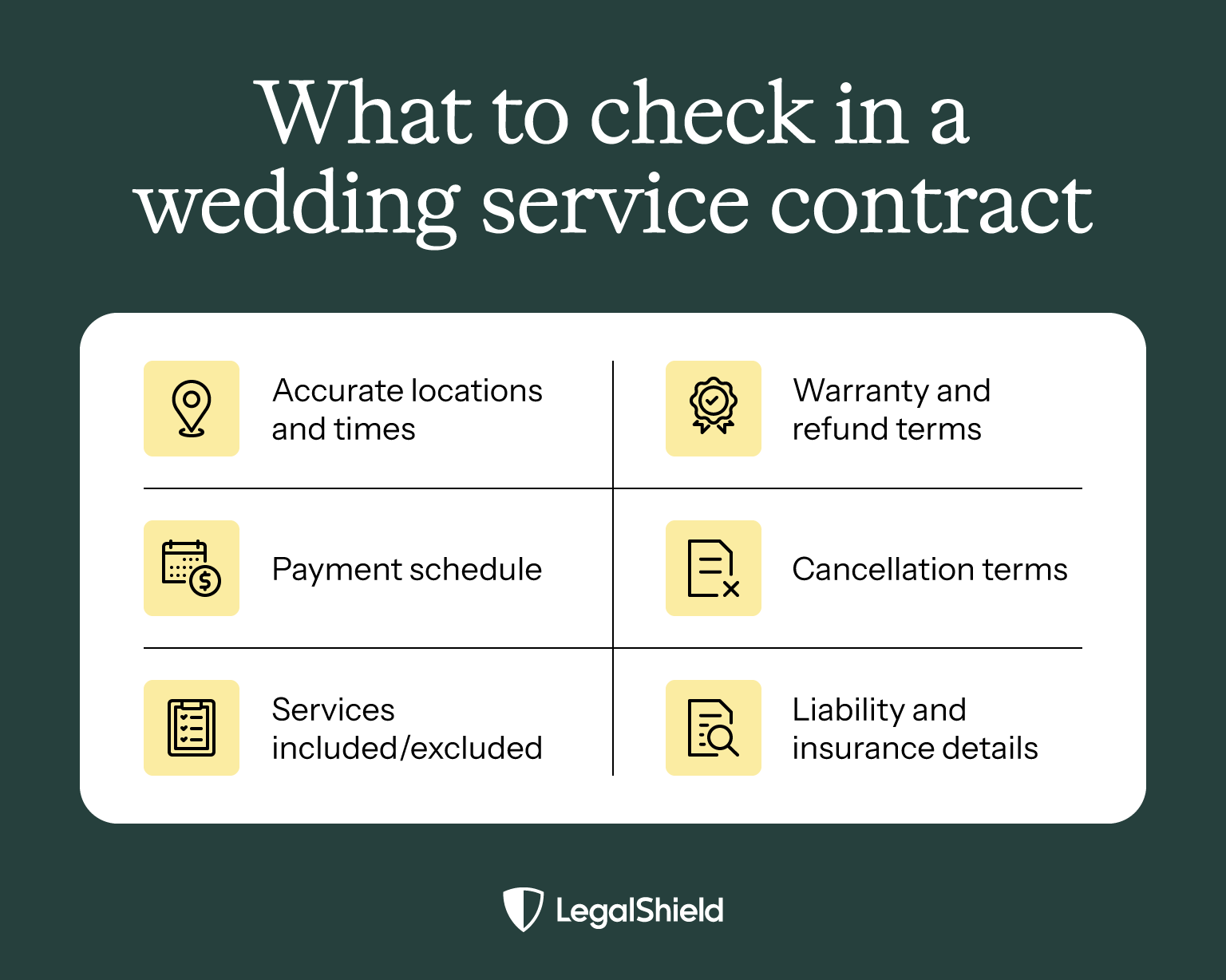
Each contract should include:
- Names of all parties involved: List the couple’s full names, the vendor’s name, which could be an individual or company, and everyone’s contact information.
- Description of services or goods: Include specific details, like what the vendor will provide, quantities, hours of service, inclusions, and exclusions.
- Date, time, and location: Specify the event date, the times your vendors should provide their services, and the name and address of the location. This is also true for rehearsal dinners, wedding ceremonies, receptions, and any other wedding-related event.
- Payment terms, deposits, and deadlines: Include total costs, deposit amounts, payment amounts and due dates, accepted payment methods, and any extra fees.
- Cancellation and refund terms: Detail refund rules and what happens if the event is cancelled. This protects the couple and the vendor.
- Rescheduling and force majeure language: If rescheduling becomes necessary, you need to understand how it will affect your wedding contract, payments, and liability. In most cases, rescheduling or cancellation is only permitted in extreme cases. A force majeure clause in a legal contract protects parties who can’t fulfill their obligations due to uncontrollable circumstances, such as acts of God and natural disasters.
- Liability, insurance, and dispute resolution: If something goes wrong, this information specifies who is responsible for what. It also outlines the agreed-upon methods to resolve disputes.
Hopefully, every aspect of your wedding will be perfect! If it’s not, your wedding contracts help you hold the vendors accountable for their mistakes. If you fail to meet your obligations, such as payment amounts and dates, the same contracts protect the vendors.
When to get legal help reviewing a wedding contract
Although wedding contracts don’t have to be complicated, most people aren’t familiar with how to spot unclear terms, hidden fees, and language that obligates you unfairly. An experienced lawyer can point out risks and keep your agreements fair.
- Wedding contract review is especially helpful when vendors include multiple restrictions, lengthy rules, and lots of fine print.
- Contracts with complex terms, large deposits, or strict cancellation rules are red flags. Signing these without legal review is probably not in your best interests.
- Once you sign a contract, it gets much more complicated to correct problems. Having a lawyer review your contracts before signing can help you avoid costly mistakes.
The time to address concerns is before you sign a legally binding contract, and LegalShield can help. Our Guide to Getting Married explains how we can help with other common legal questions, like creating a prenuptial agreement or deciding whether you should get wedding insurance.
How LegalShield can help with wedding contracts
Your wedding day should be perfect. While wedding contracts don’t sound romantic, they can eliminate confusion, worry, and last-minute drama. Not everyone understands the “legalese” included in many wedding contracts. Fortunately, LegalShield provider lawyers can help with that.
We connect you with lawyers who are dedicated to helping our members at a fraction of other lawyers’ usual hourly rates. LegalShield Members can access our provider lawyers for assistance in reviewing those complicated wedding contracts. You can also receive legal advice on personal legal issues, even pre-existing ones.
Choose the personal plan that’s right for you, and LegalShield provider lawyers can help you ensure that the contracts you sign protect your interests.
Frequently asked questions
How do I negotiate a wedding venue contract?
Read the wedding venue contract carefully, highlighting any questionable language and terms. Ask for clarifications, and be sure to include any changes in writing. Let a LegalShield provider lawyer review the contract before signing.
Do you need a contract for every wedding vendor?
Yes, each vendor needs a separate contract. This provides clarity and can reduce the potential for disputes.
Can I create my own wedding contract?
You can create your own wedding contracts, but you need to include specific details. A LegalShield provider lawyer can help you review it to be sure that it’s fair, complete, and legally binding. See membership plans for what’s included.
Can a wedding contract be changed after signing?
If all parties agree, a wedding contract can be changed after signing. Add the changes in writing, and be sure that everyone involved signs them.
What happens if a vendor cancels?
Your wedding contract needs to specify what happens if a vendor cancels. Possibilities include replacement services, refunds, and penalties.
LegalShield is a trademark of Pre-Paid Legal Services, Inc. (“LegalShield”). LegalShield provides this blog as a public service and for general information only. The information made available in this blog is meant to provide general information and is not intended to provide legal advice, render an opinion, or provide a recommendation as to a specific matter. The blog post is not a substitute for competent legal counsel from a licensed professional lawyer in the state or province where your legal issues exist, and you should seek legal counsel for your specific legal matter. All information by authors is accepted in good faith. However, LegalShield makes no representation or warranty of any kind, express or implied, regarding the accuracy, adequacy, validity, reliability, availability, or completeness of such information. The materials contained herein are not regularly updated and may not reflect the most current legal information. No person should either act or refrain from acting on the basis of anything contained on this website. Nothing on this blog is meant to, or does, create an attorney-client relationship with any reader or user. An attorney-client relationship may be formed only after the execution of an engagement letter with an attorney and after that attorney has confirmed that no conflicts of interest exist. Nothing on this website, or information contained or transmitted by this website, is intended to be an advertisement or solicitation. Information contained in the blog may be provided by authors who could be a third-party paid contributor. LegalShield provides access to legal services offered by a network of provider law firms to LegalShield members through membership-based participation. LegalShield is not a law firm, and its officers, employees or sales associates do not directly or indirectly provide legal services, representation, or advice.
Wedding Contracts: A Guide For Couples

Why You Need a Wedding Photography Contract
