A unilateral contract is a one-sided agreement: one party promises something, like a reward, and becomes legally bound only when another person completes the requested task.
When you research contracts for competitions or commissions, you might come across the term “unilateral contract.” Unilateral is a common descriptor for contracts that means “one-sided.” Rest assured that in most situations, a lawyer can worry about contract interpretations for you. But learning more about contracts in general can give you peace of mind.
A lawyer can review the terms of most contracts you come across. LegalShield® Personal Plans give you access to provider law firms that can guide you through contracts before you sign.
What is a unilateral contract?
A unilateral contract is a contract in which the person who offers it only needs to follow through on it if the other party completes the task in the contract. The term “unilateral” is rarely used as the name of a contract or within it, as it merely describes the type of obligation the people have to each other.
Examples of unilateral contracts
A classic unilateral contract example is a reward offer, such as someone losing a wallet and offering money to whoever finds it. Anyone who sees that offer can accept it by finding their wallet and turning it in. Examples of unilateral contracts appear in other areas of life:
Contests and competitions
A contest works like the reward poster on a bigger stage. The sponsor is generally obligated to hand over the prize only when someone meets the stated winning conditions, such as the best chili recipe or the fastest lap.
Employment and commissions
Employment, consulting, and independent contractor agreements tend to be bilateral contracts (described below), but performance-based pay contracts can be unilateral. When a business announces a bonus for hitting a sales target, it's promising to pay if the number is reached.
Unilateral, bilateral, and aleatory contracts
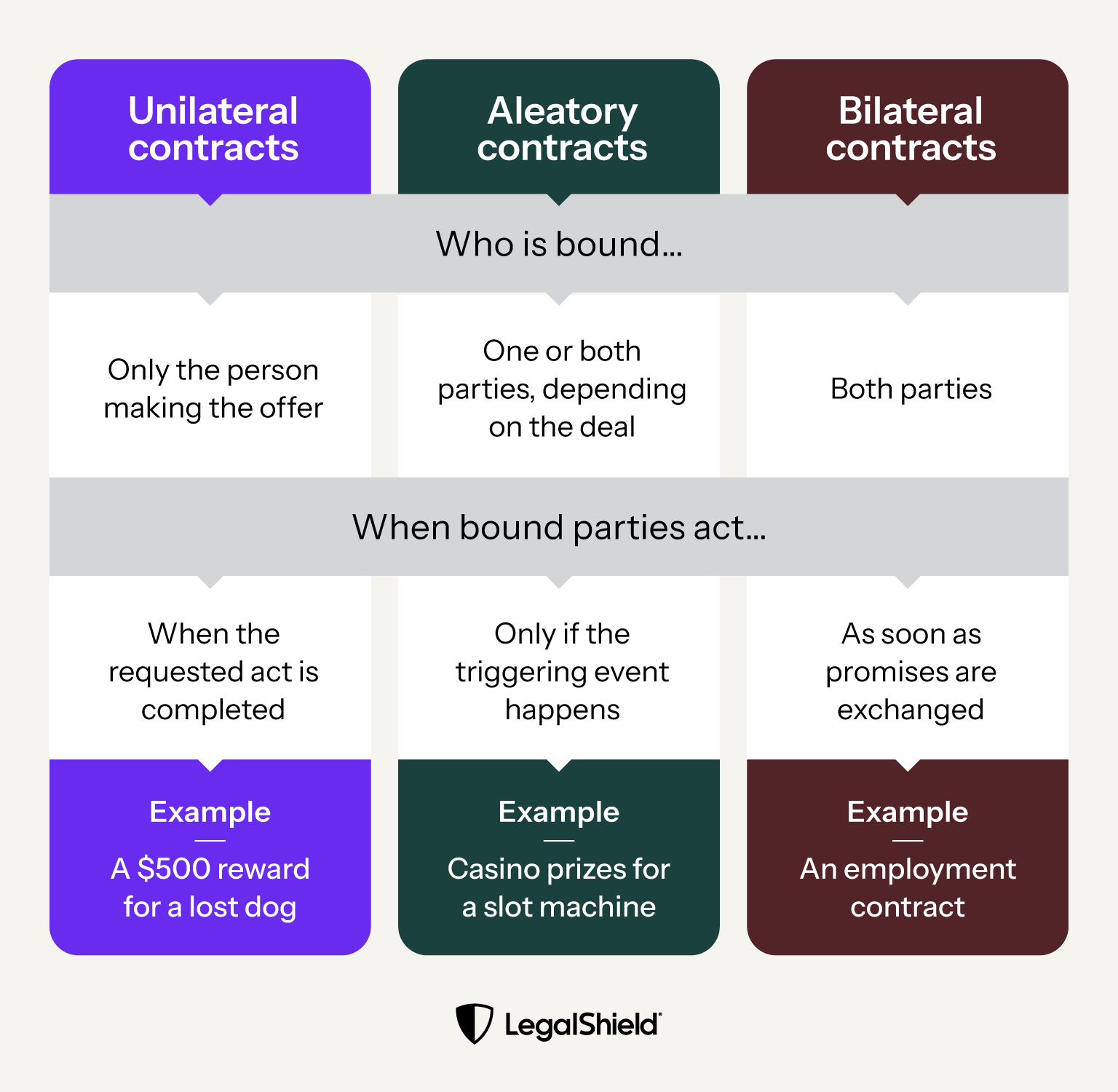
Unilateral, aleatory, and bilateral are descriptions of contract terms. That doesn’t mean they are always opposing contract types. So there’s a difference between unilateral and bilateral contracts. But a contract could be aleatory and unilateral or bilateral at the same time.
In a unilateral vs bilateral contract comparison, the difference is who makes a promise. A bilateral contract is the kind most people picture: both sides exchange promises. They each make specific promises and become bound to follow them when they sign the contract. A unilateral contract binds only one side, and that person only has to follow through if someone performs the promised task.
A contract becomes aleatory when it depends on an uncertain event. For example, courts may determine that the rules of a casino game act as a contract. When someone uses a slot machine, the casino promises to pay out an indeterminate amount of money depending on the results of the game.
This can end up benefiting either party, depending on the circumstances. If the machine malfunctions, the casino might not be bound to a payout that occurred in error, due to the rules that the player agreed to. But if the casino refuses to pay out a legitimate win, the winner might choose to take legal action.
Enforceability and disputes
Once the requested act is complete, a unilateral contract can generally be enforced like other agreements. Courts treat the finished performance as both acceptance and consideration.
Contract law also varies from state to state, so how a court reads a specific promise can depend on where the dispute lands.
Get help with contract law from a LegalShield Provider Law Firm
A unilateral contract is one form a contract can take, and the details, from state law to a single word in the offer, decide how it holds up. When your money depends on that promise, it can help to have professional support.
With a LegalShield Personal Plan, you can speak with a provider law firm about contracts you encounter in your life. Plan features can include consultation on consumer disputes and contracts with service providers. With an Advanced Plan or Premium Plan, you can get help with rental agreements.
Frequently Asked Questions
Generally, yes, up until someone begins the task. After the task starts, many state courts hold the offer open long enough to give that person a reasonable chance to finish.
Typically, yes, once the requested act is completed and the standard contract requirements are satisfied. Because the specifics vary by state, whether a particular promise holds up can depend on the offer's wording and where the dispute is heard. A provider lawyer can help sort out how the rules apply to your situation.
Content Specialist at LegalShield, creating educational resources about legal and consumer protection topics. She focuses on making complex legal and financial concepts accessible to readers and has contributed to various educational articles on consumer rights and protections.
Trust administration involves managing the assets inside a trust. Administrators protect the assets and ensure they are kept and distributed according to the trust’s rules for the benefit of beneficiaries.
En Estados Unidos, un divorcio sin oposición generalmente cuesta al menos $1,500, mientras que un divorcio con oposición puede empezar en $5,000 y superar los $20,000 en casos complejos. El costo total depende de los honorarios de abogados, los costos judiciales y el nivel de conflicto entre los cónyuges.
Decidir tramitar el divorcio ya es bastante difícil sin tener que preguntarte si estás llenando el formulario correcto. Cada estado maneja el proceso de manera un poco distinta, y es normal sentir dudas acerca de dónde empezar. Reunimos información sobre lo que puede suceder durante el trámite, incluyendo perspectivas de una abogada de verdad, para darte más claridad en este camino.
La mayoría de nosotros sabemos que deberíamos tener un testamento. Simplemente seguimos encontrando razones para posponerlo. Si eso te suena familiar, no estás solo/a. Sigue leyendo para aprender qué puedes hacer al respecto.
Prepararse para un divorcio implica reunir documentos financieros y personales, hacer un presupuesto de tus gastos mensuales, asegurar tus cuentas digitales e inventariar tus bienes. También es importante decidir qué tipo de divorcio se adapta a tu situación y consultar con un abogado antes de presentar la petición para proteger tus derechos.
¿Necesitas un poder notarial pero te preocupa el costo? Es natural preocuparse por pagar servicios legales, pero es importante no quedarse atrapado/a en dólares y centavos. Después de todo, no le puedes poner precio a la tranquilidad, y eso es exactamente lo que ofrece un poder notarial.
Ya sea que te estés casando, pasando por un divorcio o simplemente estés listo para un nuevo comienzo, cambiar tu nombre es un gran paso. Puede ser un proceso sorprendentemente difícil, y las tarifas varían mucho.
•
8 min read
Thank you! You're subscribed!
Oops! Something went wrong while submitting the form.