

Small Business
15 min read
What Is an S Corporation, and What Are Its Benefits?
For the right company, S status can lower the yearly tax bill and give owners a cleaner way to take home profits.


An annual report for an LLC is a document that confirms its business information is up to date. State requirements vary, but LLC annual reports are typically due every year or every 2 years.
States require LLCs to file an annual report to keep their information up to date with the Secretary of State or another state entity. Even though it sounds like a hassle, it’s not as difficult to prepare and file as you might think.
If you don’t file an annual report for your LLC, you risk penalties and interruptions to your business. Learn how to avoid these problems and what you need to do to comply with your state’s LLC reporting requirements.
An annual report for an LLC provides the state with updated information about your LLC. Sometimes called a statement of information or annual registration, this report is part of an LLC's compliance requirements. It’s typically done annually, though some states require it every two years.
Unlike annual reports filed by public corporations, LLC annual reports usually lack detailed financial information. States require annual reports for LLCs because company details can change throughout the year.
State requirements vary, but most annual report filings will require:
While you may be able to make changes to your LLC information when you file your annual report, many states have laws that require changes, like to your registered agent, be filed in specific time frames. There are also good business reasons why you should not wait until your annual report to make changes. Additionally, you cannot always make changes to the information in your Articles of Organization when you file your annual report. If you have changes in that information, you may need to file an Amendment to your Articles before filing your annual report. Each state differs on these requirements, so if your LLC has new information, check the requirements before you get started.
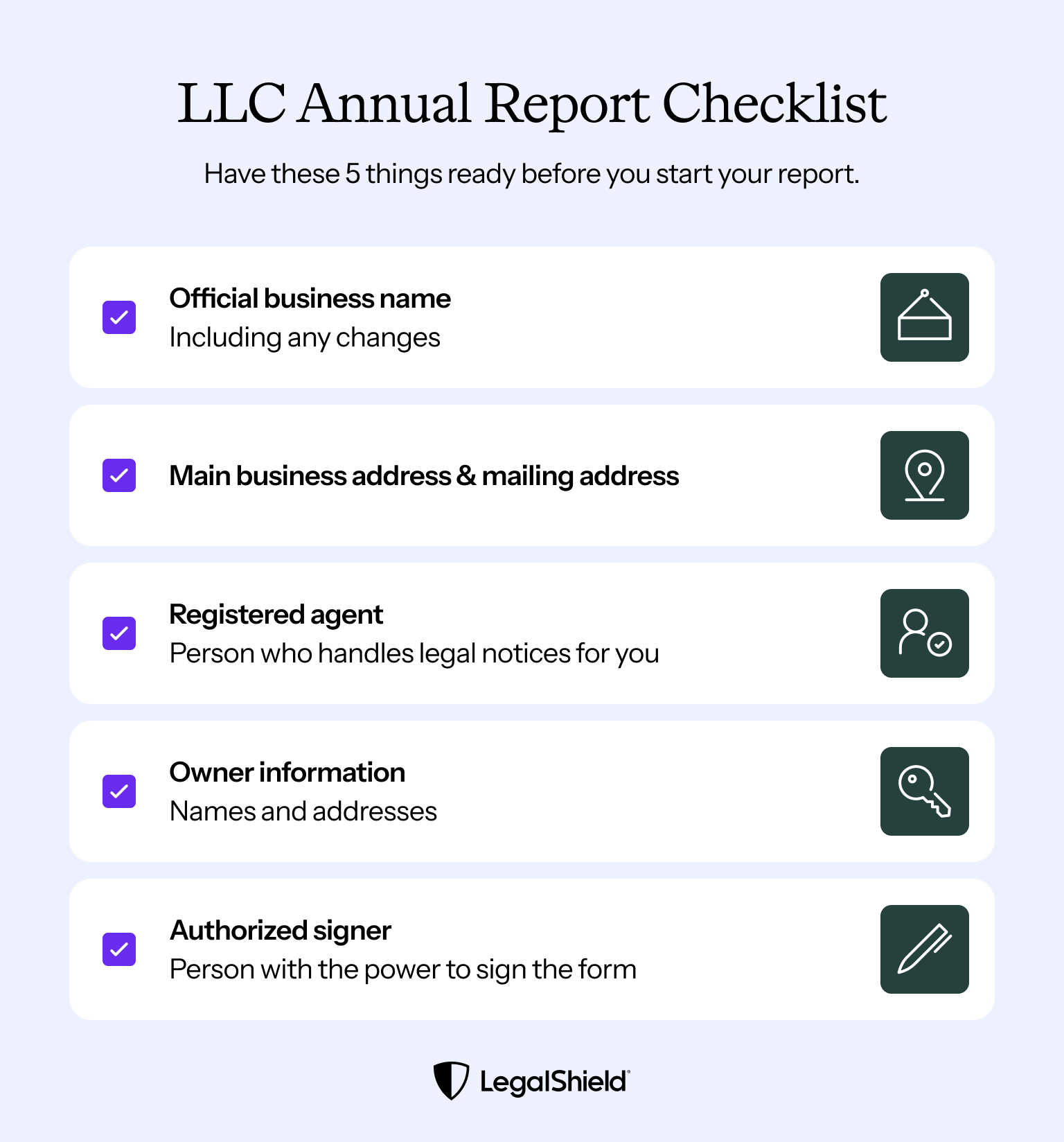
It might seem like filing an annual report is just another task to add to the small business compliance checklist, but it serves several important purposes:
If an LLC fails to file an annual report, it may become inactive and ultimately be revoked by the state.
If an LLC loses its good standing with a state for filing an annual report a few days late, that state may allow that LLC to regain its active status. The LLC can file the missing annual report, a reinstatement form, and pay the necessary annual report filing fee and reinstatement/penalty fee.
The annual report filing procedure varies for each state, but many states follow a similar process, such as:
Some states require payment of the fee after submitting the annual report, and/or allow LLCs to mail in their annual report. If you need guidance during this process, LegalShield provider lawyers can clarify the specific requirements for your state.
How often you should file a report depends on your state. Most states require an annual report, but some have biennial (every two years) or even partial-year filings due.
Check your state for details. Report deadlines vary greatly — some are on the anniversary of the formation of your LLC, others are preset for all entities, no matter when formed.
Each state is different, but you should expect the annual report filing fee to be roughly the same cost (or a little bit less) as the LLC filing fee you paid to start your LLC. These costs vary from state to state.
Some states charge an optional “rush fee” in addition to the regular filing fee to expedite processing.
If your business is an LLC in good standing with your state, you want to keep it that way. To do that, you’ll need to file your LLC annual report. While many business owners handle this process themselves, having access to legal guidance can help ensure everything is completed correctly.
Staying compliant with state requirements is essential for maintaining your LLC’s status. With LegalShield Business Plans, you can get guidance from a provider law firm yer who can help you understand your state’s requirements. Our provider law firms can help answer questions related to business formation, debt collection, employment law, and property renting.
Contact LegalShield today to learn more!
Pre-Paid Legal Services, Inc. (“LegalShield”) provides access to legal services offered by a network of provider law firms to LegalShield members through membership-based participation. Neither LegalShield nor its officers, employees or sales associates directly or indirectly provide legal services, representation, or advice. Small Business Legal Plans and certain benefits are not available in all states. See a Small Business Legal Plan contract for a specific state for complete terms, coverage, amounts, and conditions. The information made available in this blog is meant to provide general information and is not intended to provide legal advice, render an opinion, or provide a recommendation as to a specific matter. The blog post is not a substitute for competent legal counsel from a licensed professional lawyer in the state or province where your legal issues exist, and you should seek legal counsel for your specific legal matter. Information contained in the blog may be provided by authors who could be a third-party paid contributor. All information by authors is accepted in good faith, however, LegalShield makes no representation or warranty of any kind, express or implied, regarding the accuracy, adequacy, validity, reliability, availability, or completeness of such information.

The vast majority of states require LLCs to file an annual report. A few states require this report every two years, though, so check the requirements to stay in compliance.
You can file an annual report yourself or hire someone to do it for you. However, while you can file an annual report yourself, having guidance from a legal professional can help ensure accuracy and compliance with your state’s requirements.
A simple online search for your state’s business services or Secretary of State website should provide the LLC annual report filing deadline.
Yes, but you may need to file a reinstatement form to get your LLC back in good standing. You’ll then file the missing annual report. Then there are fees to pay, with the two most common being a reinstatement/penalty fee and the annual report filing fee.
Communications Director at LegalShield overseeing content creation designed to make legal protection simple and approachable. He focuses on offering straightforward, trustworthy guidance that empowers people to make informed decisions about their legal rights and responsibilities.
For the right company, S status can lower the yearly tax bill and give owners a cleaner way to take home profits.

Dissolving an LLC can be tricky, and doing it without guidance can lead to unnecessary stress and delays. We’ve put together some helpful information so you can start the LLC dissolution process with more peace of mind.

An employment contract is an important piece of paperwork because it defines the working relationship, your expectations, and conditions. Here are some of the common components included.

Virtual business addresses can be a practical option for those forming an LLC from home, working remotely, or trying to keep their business and personal mail separate.

By the end of this blog, you’ll get a high-level summary of trademarking a name and logo, how logos differ from business names and artwork, and how much it all costs.

A DBA is a name registration that lets you run your business under a name other than your personal legal name or legal business entity. While a DBA offers branding flexibility and market expansion opportunities without creating a new legal structure, it does not provide legal liability protection, tax benefits, or function as a business license.

An indemnity agreement settles the “who is responsible” question ahead of time. One party promises, in writing, to cover certain losses tied to the work, so the other isn't left with the bill. These promises appear in construction contracts, leases, and business sales.

A certificate of good standing is official proof from your state that your business is registered and current on its requirements. Most lenders and agencies want a recent one, so it helps to know how to get it before someone asks.