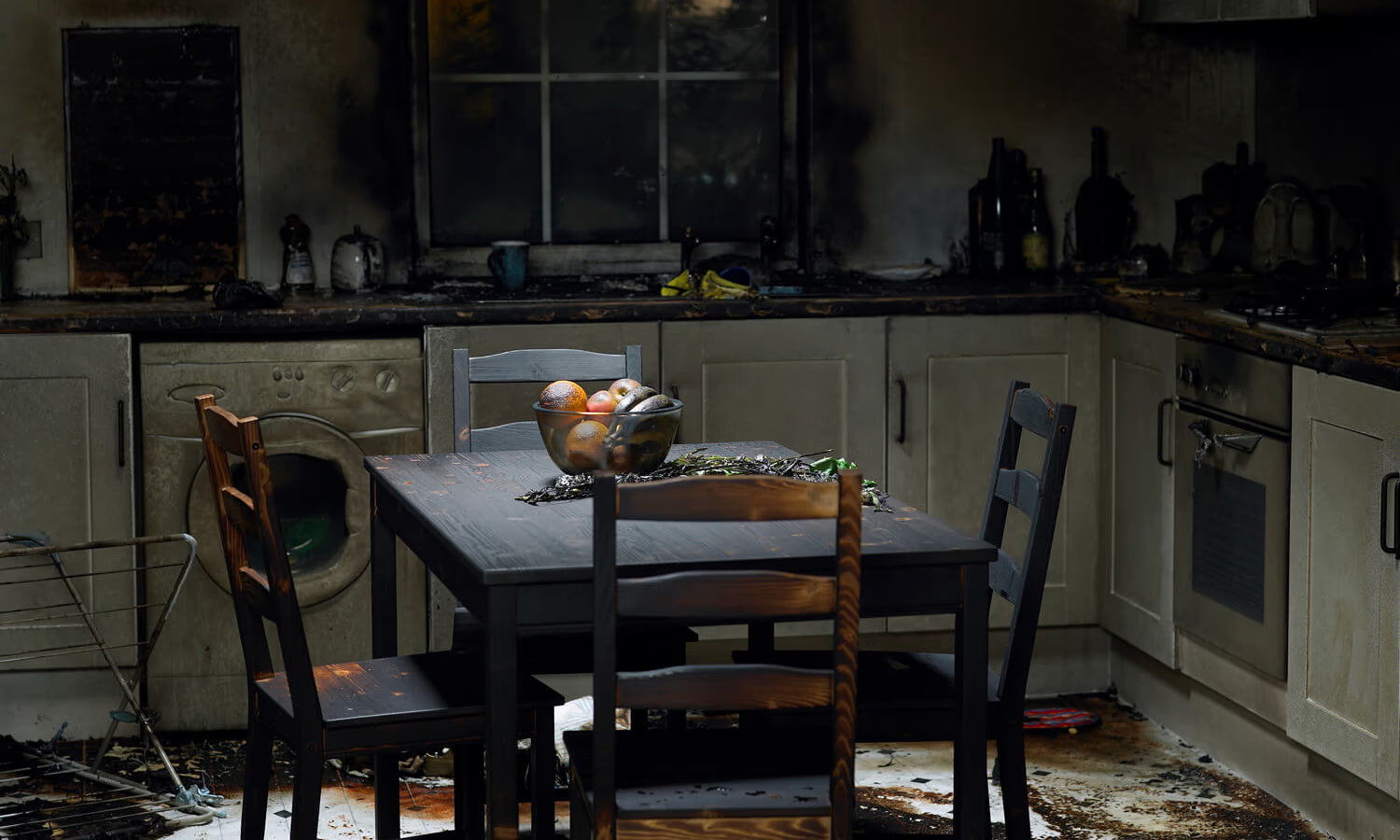
Imagine waking up in the middle of the night to a fire in your home. Or picture coming home to find a burst pipe has flooded your entire house. Your home is damaged, and you can't live there anymore.
Where would you stay? How would you pay for a hotel? What about feeding your family at restaurants every day?
This is where loss of use coverage comes in. It's like a safety net that catches you when your home becomes unlivable. Loss of use coverage helps pay for temporary housing, meals, and other costs while your home gets repaired.
To help you understand when you might need to use this important part of your insurance policy, we’ve laid out some basics in this article. You’ll learn what loss of use coverage is, how it works, what it pays for, and how to make sure you're protected.
Loss of use coverage meaning
So, what is loss of use coverage? Also called additional living expenses (ALE), it's a part of your home insurance that helps pay your living expenses when you can't stay in your home. When something bad happens to your home and you need to move out temporarily, this coverage helps reimburse you for extra costs, like storage, temporary housing, dining out, and other costs that go above your normal living expenses.
Most homeowners insurance policies include loss of use coverage. Renters insurance has it too. It's there to help you when disaster strikes and you need somewhere else to live while repairs happen. The loss of use coverage policy kicks in when your home becomes unsafe or impossible to live in because of a covered problem.
How loss of use coverage works
Loss of use coverage starts working after a covered event damages your home. Covered events include things like fires, storms, or water damage from broken pipes.
When your home becomes unlivable, you file a claim with your insurance company. They review what happened and decide if your loss of use coverage applies.
Your insurance company will then reimburse you for extra living expenses. Let’s say you usually spend about $300 per month on groceries, but this month you spent $500 on restaurant meals because you didn’t have a kitchen. You will receive $200 from your insurance company to cover the difference. This usually lasts until your home is fixed and safe to live in again. Some policies set time limits, like 12 or 24 months.
Examples of covered living expenses
While it is important to check your specific policy to know what is protected, your loss of use coverage policy typically pays for these necessities:
Hotel rooms or temporary rentals while your home is being repaired
Extra food costs like restaurant meals (above what you normally spend on groceries)
Laundry and dry cleaning if you don't have access to your washer and dryer
Transportation costs if your temporary home is farther from work or school
Pet boarding if your temporary housing doesn't allow pets
Storage fees for your furniture and belongings
Understanding coverage limits
Insurance companies set limits on how much loss of use coverage they'll pay. There are two common ways they do this.
Some policies use a percentage of your dwelling coverage. If your home is insured for $300,000 and your policy offers 20% loss of use coverage, you'd have up to $60,000 available.
Other policies set a fixed dollar amount. Your loss of use coverage might be listed as a specific number like $25,000 or $50,000.
No matter which type of limit your policy includes, once you reach your limit, the insurance stops paying. That's why it's important to know your coverage amount.
Common events that trigger loss of use coverage
Common situations when you may need to employ your loss of use coverage include these scenarios:
House fires that damage rooms or create smoke damage throughout your home
Windstorms like tornadoes, hurricanes and severe wind that damage your walls, windows or roof
Water damage from burst pipes, broken water heaters, or appliance leaks
Vandalism that makes your home unsafe
Gas leaks that require evacuation until repairs are complete
The key point is that your home must be unlivable. Your insurance company usually sends someone to inspect the damage and confirm you can't safely stay there.
What loss of use coverage does not pay for
Your loss of use coverage policy has limits. It doesn't cover everything.
Here's what loss of use coverage typically won't pay for:
Your regular mortgage or rent payments (you still owe these even if you can't live there)
Utilities
Lost rental income
Routine maintenance of your home
Home upgrades or renovations beyond repairing the damage
Luxury expenses like fancy hotels when cheaper options exist
Entertainment costs like movies, concerts, or vacation activities
Damage from floods or earthquakes unless you have separate coverage for these
Loss of use coverage for homeowners is meant for basic living expenses, not extras. It helps you maintain your normal lifestyle, not improve it.
Is loss of use insurance worth it?
Loss of use coverage is valuable protection. Most people don't have thousands of dollars saved for emergency housing. The good news? Loss of use coverage is usually included automatically in homeowners insurance policies. You don't have to buy it separately.
The amount of coverage varies by policy. Some people have enough to cover months of expenses. Others might need to increase their limits.
For families without big emergency savings, this coverage provides peace of mind. You won't have to choose between paying for a hotel and paying your bills.
While an insurance agent is the best person to consult with questions, you will also want to have a lawyer on hand. Lawyers can help review paperwork and clear up confusion related to the legal ins and outs of dealing with loss of use insurance. Getting a lawyer’s assistance could be the key to avoiding legal mix-ups with insurance companies, rental agreements, frustrated landlords and more.
Loss of use in homeowners, renters, and condo insurance
Loss of use coverage for homeowners, renters, and condo owners all work similarly, but with some differences.
Homeowners use loss of use coverage when major damage makes their entire house unlivable. They might need months of temporary housing while rebuilding happens.
Renters have loss of use coverage too. If the building becomes unsafe due to fire or other damage, renters get help paying for temporary housing. Even though they don't own the building, they still need somewhere to live.
Condo owners get loss of use coverage when their unit or the building needs major repairs. This might happen after a fire in their unit or damage to the whole building.
The coverage amounts vary by policy type. Homeowners policies often have higher limits because houses take longer to repair than apartments.
How to check your loss of use coverage policy
You should know what your loss of use coverage is for your specific policy. Here's how to find out.
First, locate your insurance policy documents. Look for these terms:
"Loss of Use"
"Additional Living Expenses" or "ALE"
"Coverage D"
"Fair Rental Value"
Your policy will show your coverage limit. It might say something like "20% of dwelling coverage" or list a specific dollar amount.
Can't find it? Call your insurance agent. Ask them these questions:
What is my loss of use coverage limit?
How is it calculated?
What expenses does it cover?
Are there time limits on how long I can use it?
Understanding your loss of use coverage policy now means you'll be prepared if disaster strikes.
Take time to review your loss of use coverage for homeowners. Check your limits. Make sure you have enough coverage for your family's needs. Talk to your insurance agent if you have questions. And don’t forget to consult an experienced lawyer with any legal questions you have!
Being prepared means having the right coverage before you need it.
Need legal help with real estate insurance issues?
Dealing with insurance companies can be confusing and frustrating. If you're having trouble with a claim, coverage dispute, or need legal guidance on your homeowners insurance, you don't have to face it alone.
LegalShield provides affordable access to experienced lawyers who can help with real estate legal matters. Get the legal support you need without breaking the bank.
Content Specialist at LegalShield, creating educational resources about legal and consumer protection topics. She focuses on making complex legal and financial concepts accessible to readers and has contributed to various educational articles on consumer rights and protections.
We’ll provide more information about the trustors vs. trustees comparison, what to consider when filling these roles, and how they work together in Revocable and Irrevocable Trusts.
A power of attorney with springing powers is a legal document that grants someone else the authority to act on your behalf only after a specific event occurs.
There’s no rule that says a lawyer has to set up your Trust for it to be valid. However, Trusts are complex and doing it yourself without a lawyer's help comes with risks.
A Certificate of Trust proves your Trust is real and names who can act for it, while your beneficiaries and assets stay private. It lets your Trustee handle Trust business, like opening accounts or transferring property.
A limited power of attorney often comes in handy when you need help for a short time or for a single purpose. This legal document can help in situations like when you’re traveling, serving in the military, caring for an aging parent, or sending a child to study abroad.
We’ll cover some of the most common scams, the red flags that give them away, how to protect yourself, and what to do if you’ve already been caught out.
An executor is responsible for ensuring your final wishes get carried out, so it’s important that you choose someone who is responsible and can bear the emotional burden.
An employer identification number is a nine-digit number the IRS uses to identify a taxpayer. The estate needs its own, and getting one is usually simpler than it sounds. Learn more about estate EINs.
•
5 min read
Author Name
,
Author Title
September 16, 2026
Thank you! You're subscribed!
Oops! Something went wrong while submitting the form.








.jpg)