
Data Insights
5 min read
Understanding the Small Claims Court Process in 5 Steps
If you are filing a claim in small claims court, you should know how to prepare & what to expect during processing.

Before holiday shopping, know what each deal costs you. Read the final sale terms, screenshot the return policy and pay with a credit card, which gives you the strongest right to dispute a charge. Open every box when it arrives. Use AI to find the deal, and do the buying yourself.
Rebecca A. Carter is a principal for Friedman, Framme & Thrush, P.A., a LegalShield provider firm based in Owings Mills, Maryland.
This post draws on the LegalShield Intelligence holiday spending survey, conducted online Nov. 16 to 17, 2026, among 1,001 U.S. adults, ahead of Black Friday and Cyber Monday.
Packages for my kids and the rest of the family land on my porch every day. I don’t want anyone to see them, so I put them aside and figure I’ll wrap everything in December.
That habit costs people money. Order in early November, leave the box sealed until late December, and you can find out the gift is broken after the return window or the dispute deadline has closed.
This holiday shopping season, a lot more boxes are hiding in closets. In our holiday survey, 9 in 10 people said higher prices changed how they shop, and 4 in 10 still expect to spend more than last year.
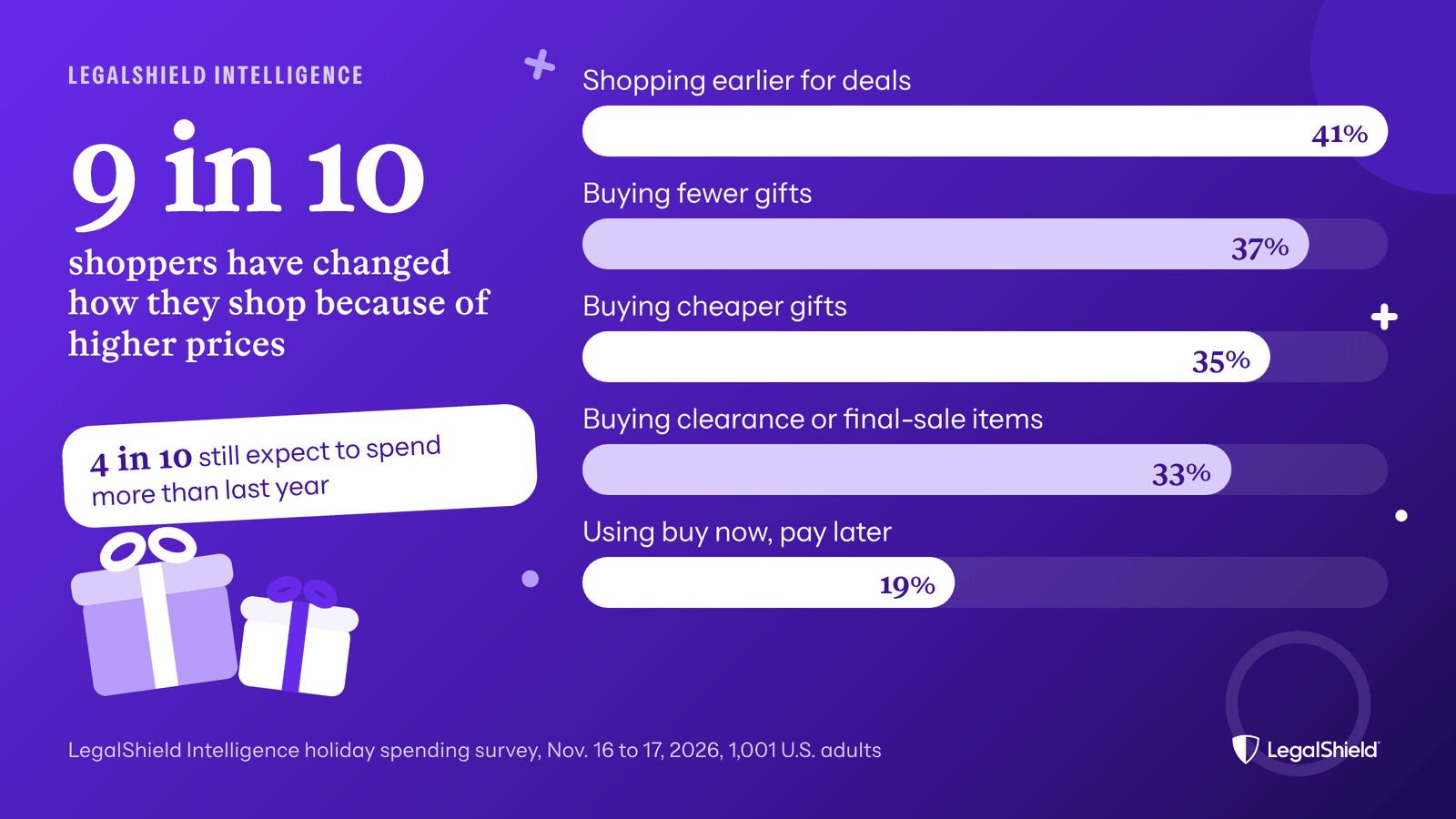
Every one of those changes saves money up front and makes it harder to get your money back if something goes wrong. Most shoppers don’t know which protections they still have. Only 36% knew a credit card protects them most if an online order never arrives.
No one calls an attorney after the holidays to tell us what a great deal they got. They call about a charge they didn’t authorize, a package that never showed up or a gift that didn’t work out of the box.
Buying early starts the return clock sooner, final sale lets a store refuse a return, and a price that beats everyone else’s may come from a store that doesn’t exist.

Shopping early beats the price hikes and the sellouts. The catch is that your time to return an item or dispute a charge starts the day you buy. Orders get bundled together, so a missing piece or a broken gift can sit unnoticed in a box you haven’t opened while that time runs out.
More than 2 in 3 shoppers (68%) have bought something on sale and later found out it was final sale or had a shorter return window than they expected. Nearly half (49%) don’t regularly check a store’s return policy before they buy.

I’m a sucker for low prices and clearance myself, because it’s a good deal. Stores are allowed to set their own rules on those items, whether that’s no returns at all or store credit only. If a final sale item doesn’t work the way it’s supposed to, you may still have a right to a repair, replacement or refund, depending on your state and how it was sold. Online stores run final sales too. Open that “Terms and Conditions” bubble, read it and take a picture of it before you pay.
Scammers know you’re hunting for deals. They’ll send an act-now link to a big-ticket item at a price no one else can touch, on a site that looks a lot like a store you know. More than half of shoppers in our survey (57%) were targeted by a shopping or delivery scam in the past year, most often through fake websites and social media ads (29%). If it’s too good to be true, it probably is. If you’ve already paid, call your credit card company and dispute the charge right away.
A shopping bot isn’t going to be legally responsible when it buys the wrong thing. So who is? Is it the AI company? Maybe. Is it the consumer who prompted it? Maybe. Probably.
In our survey, 44% of shoppers have used an AI assistant to help them shop, and half (51%) would be comfortable letting one buy something for them. They split on who should pay when it buys the wrong thing. 39% say the user, and 34% say the company that makes the AI assistant.

There are no clear answers on this yet. When you let an AI agent shop for you, you’re authorizing it to make purchases.
AI is a great tool for comparing prices, finding deals and checking out a company. If you use a shopping assistant, set spending limits and be specific in the prompt. Personally, I stop short of letting it make the purchase. Buy it yourself, keep your documentation and stay in control of each step. Use it, but use it cautiously.
For online shopping, I recommend a credit card over a debit card every day of the week. What if you accidentally buy from a company that isn’t legitimate? Or your card information is stolen and misused?

I have this conversation with my teenagers often as they learn about finance. It sounds obvious to some, but not everyone understands the difference. With a credit card, you’re spending borrowed money and paying it back. A debit card comes straight out of your bank account.
When something goes wrong, the federal Fair Credit Billing Act gives you 60 days from the date your statement was sent to dispute a credit card billing error in writing, and that includes a charge for something you never got. With a debit card, your own money has already left your account, and other payments can bounce while you fight to get it back.
When I shop in person at a large retailer, I’m not particularly worried about a debit card purchase. When I shop online, I recommend a credit card.
Using buy now, pay later? Read the lender’s terms before you tap that button, because your right to dispute a charge depends on those terms and on your state’s law.

If a holiday purchase goes sideways, save all documentation and talk with a licensed attorney about your situation before the deadline passes. That can be a LegalShield provider attorney or your own attorney.

A credit card, especially online. There are more ways to pay than there were a few years ago, and they don’t all protect you the same way. With a credit card, federal law gives you 60 days from the statement date to dispute a billing error in writing, including a charge for something you never got. With a debit card, your own money is gone while you fight to get it back. Buy now, pay later protection depends on the lender’s terms and your state’s law. The FTC compares sending money through an app like Zelle, Venmo or Cash App to paying cash, and it’s very hard to get back. Paying with your phone? Your protection generally follows the card behind it. Log in to your accounts often to review charges.
It can, and the law hasn’t caught up yet. If the agent pays with your credit card, your right to dispute a charge for something that never arrived generally still applies. A purchase you didn’t want is murkier, because you gave the agent permission to buy. If you try one, set a spending limit, make it ask before checkout and keep every receipt. I think AI is a great tool for researching holiday deals and comparing products and prices. Personally, I like to make the actual purchase myself.
They can be. The big sales are often a good time to get a deal on a big-ticket item you’ve been considering all year. Shop around first, because most items are sold by more than one retailer and they’re competing with each other. Then make sure the store with the best price is a real store, and if you’re shopping online, verify the website. Compare return policies, too.
If the store gives you a shipping time, it has to ship by then or tell you about the delay and let you cancel for a full refund. If it doesn’t give one, the default is 30 days. Screenshot the shipping time when you buy and track the package. If it doesn’t show up, contact the company first, then dispute the charge with your card company.
Rebecca A. Carter is a principal at Friedman, Framme & Thrush, P.A., a LegalShield provider law firm. She has practiced law for more than 20 years and is licensed in Maryland, the District of Columbia and Virginia.
If you are filing a claim in small claims court, you should know how to prepare & what to expect during processing.

Meghan and Harry's interview with Oprah has started new conversations about bullying. Though you may not be Royal, you can still combat bullying in everyday life with these tips.

Frivolous lawsuits have become way too common in the United States, and taxpayers are left holding the bill. Learn what you can do to combat this.


Statutes of limitation are laws requiring an injured or aggrieved party to file a lawsuit within a certain time frame or forever lose the right to sue.