Creating a Will can be all too easy to put off. Many people understandably delay this task because making end-of-life decisions can feel so final. But if you’re not prepared, it could cause more stress for your loved ones after you're gone, and they may not be able to honor your wishes.
It’s usually much easier for families to settle an estate with a Will than without one. The term for dying without a Will is intestate. When this happens, state laws determine the distribution of an estate, not the person who has passed or the people they care about. If you’re trying to settle an intestate estate, consider seeking legal guidance.
A LegalShield® Personal Plan gives you affordable access to a provider law firm that can help prepare a Will and other estate planning documents. Here, we cover what can happen if you die without a Will, who inherits, common misconceptions, and how you could protect your family.
What is the process when someone dies without a Will?
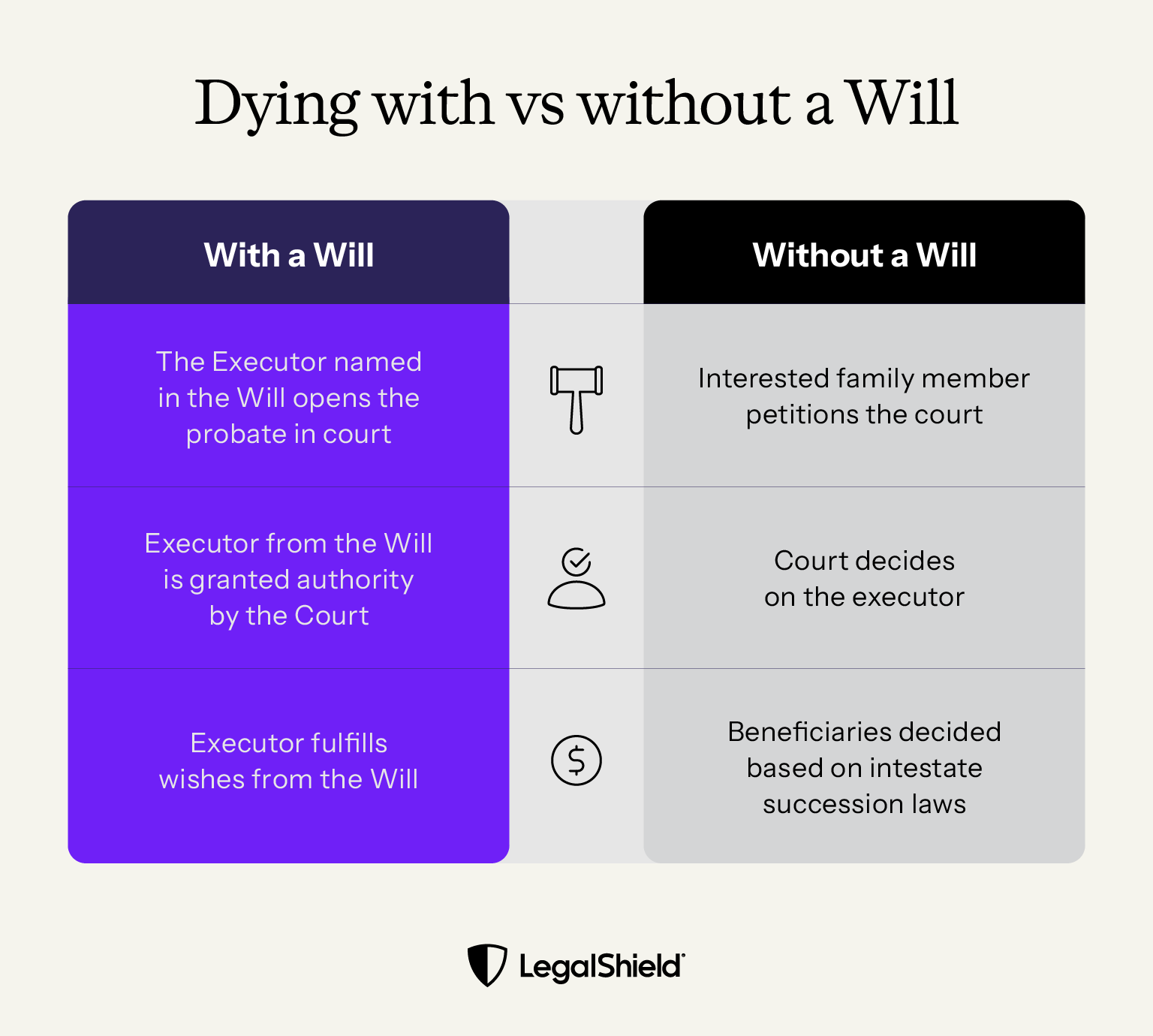
Passing away without a Will is legally referred to as intestate. It’s an instance when probate is required. Probate is the court-supervised process for administering an estate.
In probate without a Will, courts distribute an estate’s assets according to intestate succession laws. These laws govern inheritance, not the wishes of the deceased, and vary by state. The court also decides other matters, such as who administers the estate.
Who inherits your estate when there's no Will?
When someone dies without a Will, state law directs who can inherit their estate, and in what order. Each state has different intestate succession laws, but typically, the deceased’s spouse and children have priority.
The legal term for those with a right of inheritance is heirs at law. Usually, only spouses and blood relatives can be heirs at law. In most states, unmarried romantic partners, friends, and charities can’t inherit under intestate laws. Step-children may also be excluded. When there are no qualifying heirs, property may go to the state.
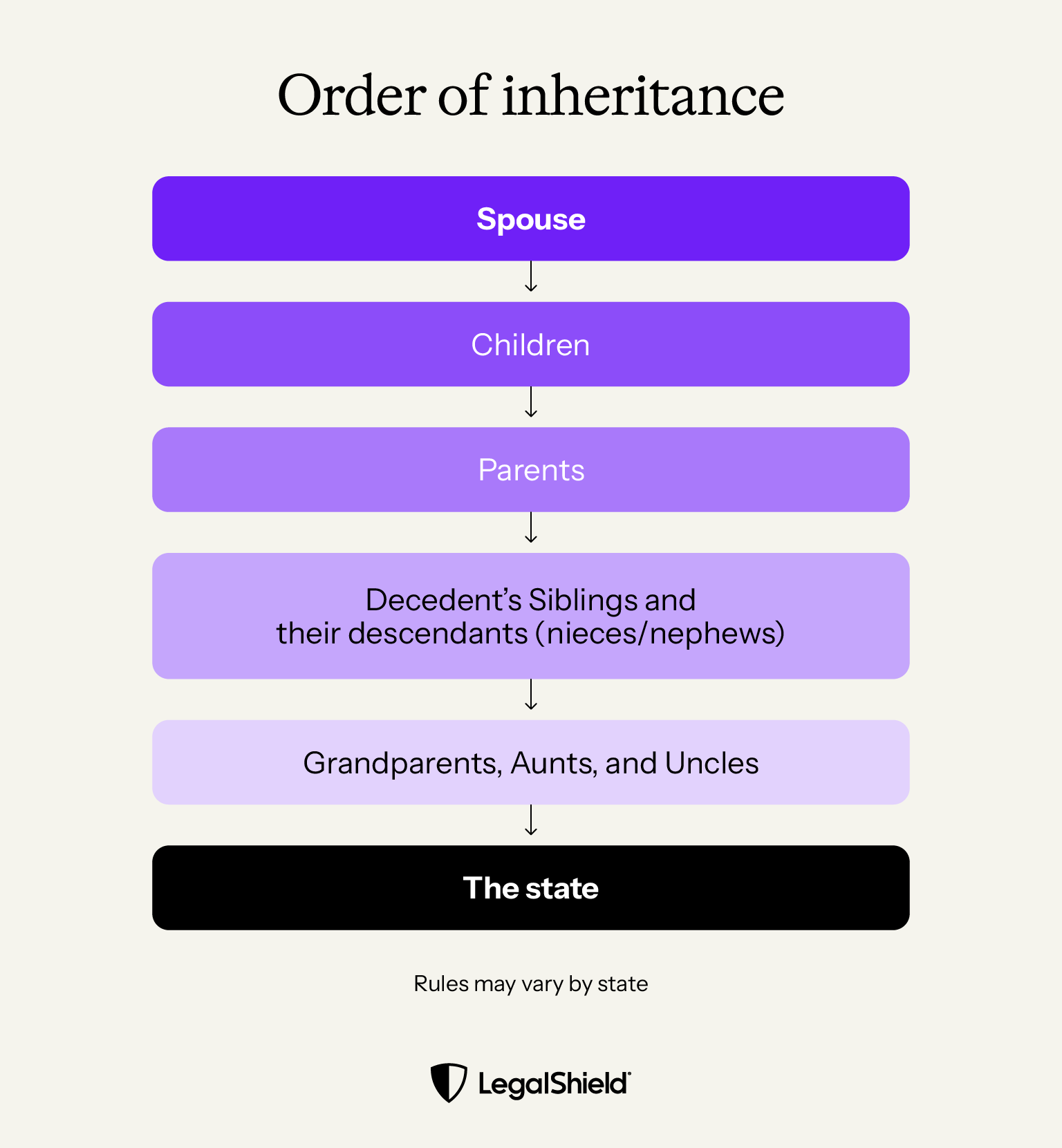
Here's what an order of inheritance might look like, but remember, laws vary by location:
Spouse: Inherits the entire estate if there are no children. If there are children, the spouse takes a portion, often half.
Children: Split the inheritance with the spouse. If there is no spouse, the children split the entire portion among themselves.
Parents: Inherit everything if there is no spouse or children.
Decendent's siblings and their descendents (nieces/nephews): Inherit if there is no spouse, children, or surviving parents.
Grandparents, aunts, and uncles: Inherit if there are no other surviving relatives.
The state: Inherits if there are no qualifying relatives. In legal terms, property escheats to the state.
If you have specific questions about intestate succession laws, a lawyer could tell you more about the rules in your state.
Making an estate plan and keeping it up to date as your family grows can often help avoid intestate succession and ensure your assets go to those you wish. Through a LegalShield® Personal Plan, you can access affordable legal help creating a Last Will & Testament, plus, depending on the plan, access to yearly reviews so you can make changes when needed.
Common misconceptions about dying without a Will
There can be a lot of confusion about exactly what happens when someone dies without a Will. Let’s debunk a few common misconceptions:
My spouse will automatically get everything
In general, intestate succession laws give priority to the deceased’s spouse. However, if there are children, the spouse may not get everything. In these situations, the spouse typically receives a percentage of the estate, and the remainder is divided among the children.
My unmarried partner will inherit
In most cases, unmarried spouses can’t inherit if an estate is intestate. Generally, only legally married spouses qualify as heirs in law. Common law spouses or legally registered domestic partners may qualify in states that recognize these arrangements.
My family will decide what to do
Estates without a Will usually must go through probate. When this happens, the probate court administers the estate according to intestate succession laws, not the wishes of the deceased or their family. It doesn’t matter if the deceased told their family what they wanted. If there’s no Will, it’s typically out of the family’s hands.
The court will know what I want
A Will is how courts know what a deceased person wants. Without one, the court will usually have to follow intestate succession. That’s one of the primary reasons for creating a Will — to make it clear what you want to happen after you’re gone.
The state will take everything
This typically isn’t where things start, but it could happen. When there’s no Will and no qualifying heirs in law under intestate succession, property may pass to the state. With a Will, individuals without blood relatives could leave assets to friends, an unmarried partner, or a charitable organization.
What happens to the probate process without a Will?
Probate without a Will usually follows similar steps to probate with a Will, with some key differences. And, again, the process can vary by state, but it often involves these steps:
Opening a case in probate court: Any “interested party,” i.e., someone who might inherit, can usually file.
Appointing an administrator: State law determines who the court appoints. Often, this is the deceased’s spouse or grown child. Once appointed, the administrator will receive a letter of testamentary granting them the legal authority to manage the estate.
Administering the estate: Responsibilities typically include taking inventory, notifying creditors, paying taxes, and distributing the remaining assets. When it comes to asset distribution, it’s done according to the Will when one exists, or according to intestate succession when one doesn’t.
Probate can be difficult for those involved. It’s an official court proceeding, and understanding each state’s laws can be confusing. Not to mention families often must navigate it while grieving a loss. Unfortunately, it can be even harder without a Will. Without knowing the deceased's wishes, the process can take longer, and there’s more room for disputes and conflict among family members.
How to ensure your family is taken care of
You can help take care of your family even after you’re gone by creating a valid Will and estate plan. Doing so gives you more control and your loved ones more guidance.
When you make a Will, you get to name your executor and beneficiaries and decide what they inherit, instead of the court deciding for you. This means you can name friends, charities, and family. You can also express your wishes about the legal guardianship of a minor child.
A legal professional could help you write a Will that addresses your needs. LegalShield Personal Plans include Will preparation by a provider law firm, as well as a Power of Attorney and Living Will. Our Premium Plan includes the preparation of a Revocable Living Trust for a fee. These estate planning tools can work with your Will to further communicate your wishes.
Help ensure your wishes are carried out with your LegalShield Membership
Dying without a Will can take away your right to express your wishes. A state formula ends up deciding who inherits what, instead of you deciding what to leave your loved ones. Not having a Will can also make settling your estate harder on your family during an already challenging time.
Creating a Will can help you avoid this, and a LegalShield Membership makes it affordable. Plans also provide legal consultations on a variety of other personal matters, like real estate and debt collection.
Learn more about how you can plan your estate and get ready for life’s big moments with help from a LegalShield Subscription Service.
Frequently Asked Questions
No. When there’s no Will, intestate succession laws guide who inherits. When there are children, the spouse usually inherits a portion of the state, not all of it.
If there’s no Will and someone dies without children but is married, their spouse usually inherits under intestate laws. If there's no spouse, inheritance generally passes to surviving parents, siblings, grandparents, or aunts and uncles, in that order.
Content Specialist at LegalShield, creating educational resources about legal and consumer protection topics. She focuses on making complex legal and financial concepts accessible to readers and has contributed to various educational articles on consumer rights and protections.
En Estados Unidos, un divorcio sin oposición generalmente cuesta al menos $1,500, mientras que un divorcio con oposición puede empezar en $5,000 y superar los $20,000 en casos complejos. El costo total depende de los honorarios de abogados, los costos judiciales y el nivel de conflicto entre los cónyuges.
Decidir tramitar el divorcio ya es bastante difícil sin tener que preguntarte si estás llenando el formulario correcto. Cada estado maneja el proceso de manera un poco distinta, y es normal sentir dudas acerca de dónde empezar. Reunimos información sobre lo que puede suceder durante el trámite, incluyendo perspectivas de una abogada de verdad, para darte más claridad en este camino.
La mayoría de nosotros sabemos que deberíamos tener un testamento. Simplemente seguimos encontrando razones para posponerlo. Si eso te suena familiar, no estás solo/a. Sigue leyendo para aprender qué puedes hacer al respecto.
Prepararse para un divorcio implica reunir documentos financieros y personales, hacer un presupuesto de tus gastos mensuales, asegurar tus cuentas digitales e inventariar tus bienes. También es importante decidir qué tipo de divorcio se adapta a tu situación y consultar con un abogado antes de presentar la petición para proteger tus derechos.
¿Necesitas un poder notarial pero te preocupa el costo? Es natural preocuparse por pagar servicios legales, pero es importante no quedarse atrapado/a en dólares y centavos. Después de todo, no le puedes poner precio a la tranquilidad, y eso es exactamente lo que ofrece un poder notarial.
Ya sea que te estés casando, pasando por un divorcio o simplemente estés listo para un nuevo comienzo, cambiar tu nombre es un gran paso. Puede ser un proceso sorprendentemente difícil, y las tarifas varían mucho.
Planificar el futuro de tu familia toma tiempo y reflexión. Una herramienta que puede ayudar es el fideicomiso familiar: un arreglo legal que te permite decidir cómo se administra y se comparte tu propiedad con las personas que te importan.
A veces la gente tiene reacciones emocionales fuertes a la palabra "prenupcial" porque sienten que su pareja no confía en ellos. Pero un contrato prenupcial trata de establecer confianza y justicia. Puede ser una forma prudente y cariñosa de comenzar un matrimonio. Un contrato prenupcial es una manera en que dos personas resuelven cómo manejarán el dinero y los bienes antes de decir "acepto".
•
10 min read
Author Name
,
Author Title
September 28, 2026
Thank you! You're subscribed!
Oops! Something went wrong while submitting the form.