Taxes, taxes, taxes. Around this time of year, taxes seem to be all you can think about. But even if they are constantly on your mind, it’s easy to miss the window when you are supposed to file the paperwork. What happens if you miss the deadline to file your tax return? It’s time to file a tax extension. This is easier said than done, so we’ve gathered the crucial info you need to file a tax extension and get that tax return submitted.
When would you need to file a tax extension?
Life happens. You may be busy with the kids’ school activities. You might be facing a family emergency that requires all your attention for a long period of time. Or you could simply get distracted and forget to file your tax return at the appropriate time. The IRS has laid out three main rules to remember as you look into filing a tax extension:
An extension of time to file your return does not grant an extension of time to actually pay your taxes.
Be careful to pay any owed taxes by the regular deadline to avoid penalties.
File your tax extension request no later than the regular due date of your return.
As long as you remember these basic principles, you should be able to apply for a tax extension and get a second chance to file your tax return paperwork.These forms you need for a tax extension are fairly straightforward. However, special rules may apply if you are living outside the United States but are still a U.S. citizen, or if you are serving in a combat zone or in another area that qualifies as hazardous duty.
What do you need to file a tax extension?
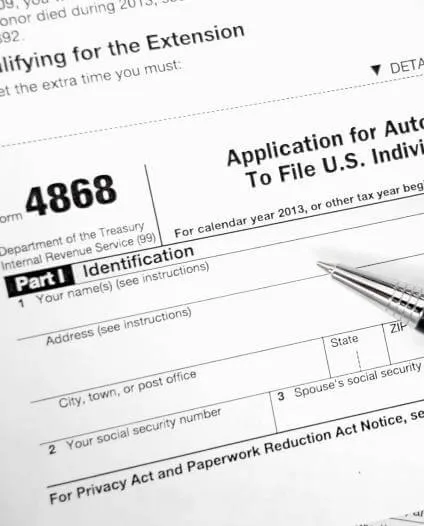
If you are an individual in the U.S. filing your personal tax return, you’ll need a Form 4868. This is officially known as “An Application for an Automatic Extension of Time to File U.S. Individual Income Tax Return.”If you are a business owner filing your business tax return, you have a couple of options. A Form 7004 is “An Application for Automatic Extension of Time to File Certain Business Income Tax, Information, and Other Returns.” A Form 1138 is an “Extension of Time for Payment of Taxes by a Corporation Expecting a Net Operating Loss Carryback.” The form you need to fill out will depend on the financial state your business is in or will be in soon.
Do you need to file separate extension requests for federal and state?
The short answer is no—in most cases. You’ll submit your request for an extension of time to file to the IRS online or by mail. When you’ve submitted this federal extension, most states will allow you an extension to file your state tax return as well. It’s best to double-check your individual state’s laws about state tax extensions before you assume you’ve done everything you need to do.
If your child pays taxes, can they file an extension?
A dependent child is required to submit their own tax return if they earn certain amounts of income in a year. If an employer pays your child for services or if your child is self-employed and earns a certain number in income—even in a part-time job—they will need to file an individual tax return. Since they are filing their own return, they can also apply for a tax extension just like anyone else.
What is the Child Tax Credit, and how does it work with an extension?
You can claim credits on your dependent child if they meet certain requirements in your household. If your child pays less than half of their own financial support and lives with you for more than half of the year, you can claim a Child Tax Credit. Additionally, your child must be under a certain age for each tax year. The final main requirement is that your annual income must not exceed a certain amount. If you have correctly filed a tax extension and you qualify for Child Tax Credit, you should be able to claim credits as usual on your tax return.
What happens if you don’t pay taxes before filing an extension?
You must still pay your taxes on time, regardless of when you get the paperwork turned in. If you do not pay your taxes by the deadline, you will be subject to various penalties depending on how much you have left to pay. For instance, if 10% of your taxes are remaining to be paid, you will have to pay a late payment penalty. The IRS can also charge you interest on the amount you have left to pay. And if you haven’t even filed your tax extension by the deadline, you will also be subject to a late filing penalty, which—you guessed it—will cost you more money.
Once again, we repeat: Pay your taxes on time. A tax extension gives you a grace period to file the paperwork, not to pay your taxes.
What should you do if you can’t pay your taxes on time?
If you are in a tough spot and are unable to pay your taxes by the deadline, it’s not the end of the world. There are ways for you to work with the IRS and pay your taxes over time. Let’s look at what you can do as an individual or as a business owner who owes taxes:
Individual Payment Plan
According to the IRS, you can pay your taxes in installments if you fit these requirements:
You owe $50,000 or less in combined tax, penalties and interest and have filed all the necessary returns. This will qualify you for a long-term payment plan.
You owe less than $100,000 in combined tax, penalties and interest. This will qualify you for a short-term payment plan.
It’s best to apply for a payment plan on the official IRS website. If you apply in person, by mail, or over the phone, you may have to pay some extra fees. You can start an account with ID.me as long as you are able to provide photo identification. You may also need your bank routing and account numbers handy if you are applying for a direct debit payment plan.
Business Payment Plan
You’ll qualify to apply online to pay in installments if you owe $25,000 or less in combined tax, penalties and interest, as long as you have filed all the necessary returns. According to the IRS, here is the info you will need to provide when you apply for a business payment plan:
The month and year when you officially established your business
Your caller ID
If you have already filed your tax return or you have not received a balance notice from the IRS, you will also need the following:
The business address you provided on your most recent tax return
The balance due amount
The tax form filed or examined
The tax period filed or examined
How can a lawyer help you with a tax extension?
Whew! That’s a lot to remember about tax extensions, isn’t it? While we have covered the basics, it’s important to note that we are not tax experts. You could easily bump into more questions and issues as you begin the process of filing a tax extension. That’s why it’s important for you to consult a lawyer.
Lawyers who focus on tax law are knowledgeable in all the areas of taxes: federal, state and local. They know the ins and outs of the deadlines you need to meet, the paperwork you need to file, the problems you may face, and the solutions you can use to address those problems. They are also able to advise you on the tax issues you will experience in various financial decisions, such as major purchases, business ventures and more. And when you look into filing a tax extension, guess what: A lawyer can help you with that too.
As you dive into tax season, consider signing up for a LegalShield plan. LegalShield provides direct access to a dedicated provider law firm at a fraction of other lawyers’ hefty hourly fees. Your LegalShield lawyer can help in many areas of life, including the complex issues you will face with taxes and extensions. With LegalShield’s protection, you can have peace of mind as you face tax season.
Owing more than you can pay can be stressful, especially when debt collectors come calling. When you’re struggling to keep up, bankruptcy could be a way to make a fresh start.
Writing your own will comes with costs you may not be aware of. Learn everything you need to know about creating a DIY will and how it compares to using a lawyer.
Filing for Chapter 7 bankruptcy typically costs between $1,000 and $3,500. That includes fixed court fees, mandatory education courses, and variable attorney fees.
A new LegalShield study reveals what most of us already suspect but rarely say out loud: getting ripped off hurts, and the embarrassment that follows keeps people from doing much about it.
Realizing you’ve been scammed is one of the most stressful moments anyone can face. In this guide, we’ll walk you through the exact steps to take after a scam: who to contact, how to report the fraud, what your legal rights are, and how to increase your chances of getting your money back.
You aren't the only one to be in debt. Your LegalShield attorney can explain your rights, legal requirements, and other ways to start getting out of debt.





.webp)