

Small Business
15 min read
What Is an S Corporation, and What Are Its Benefits?
For the right company, S status can lower the yearly tax bill and give owners a cleaner way to take home profits.


Incorporation turns your business into a separate legal entity. A corporate structure protects your personal assets, offers tax advantages, builds long-term stability, and opens the door to more funding opportunities. However, corporations are extremely complicated and may not be right for small businesses.
As a business owner, protecting what you’ve built matters. You want to keep both your company and your personal assets safe. You also want to reduce risks and create a strong future for your company. If you’re wondering how to do that, incorporating your company might be the answer.
Incorporation is the legal process of turning a business into a “legal person” that’s separate from you. An incorporated business can own property, pay taxes, and sign contracts under its own name. It can also borrow money and be legally responsible for itself.
That separation helps protect you from personal liability if your business runs into legal or financial problems. Instead of everything falling on you, the business handles its own obligations, so it’s good for both you and your business.
Let’s look at the many advantages of incorporation. Understanding them can help you decide if incorporating your business is right for you.
Liability protection means that business creditors and people bringing lawsuits can't come after you personally. That’s a great way to protect yourself, and you can get it through incorporation.
When businesses get into trouble, their owners could lose everything. But, there's a way to keep that from happening. Incorporating and operating your business according to law creates a “corporate veil.” This legal barrier usually keeps your personal assets safe, including:
Suppose someone sues your corporation. You shouldn’t lose your home and other personal belongings. Only your business should be responsible, not you.
Incorporation lets businesses choose their tax structure, which could help them select the most beneficial one for their situation.
Let’s look at some corporate tax structures:
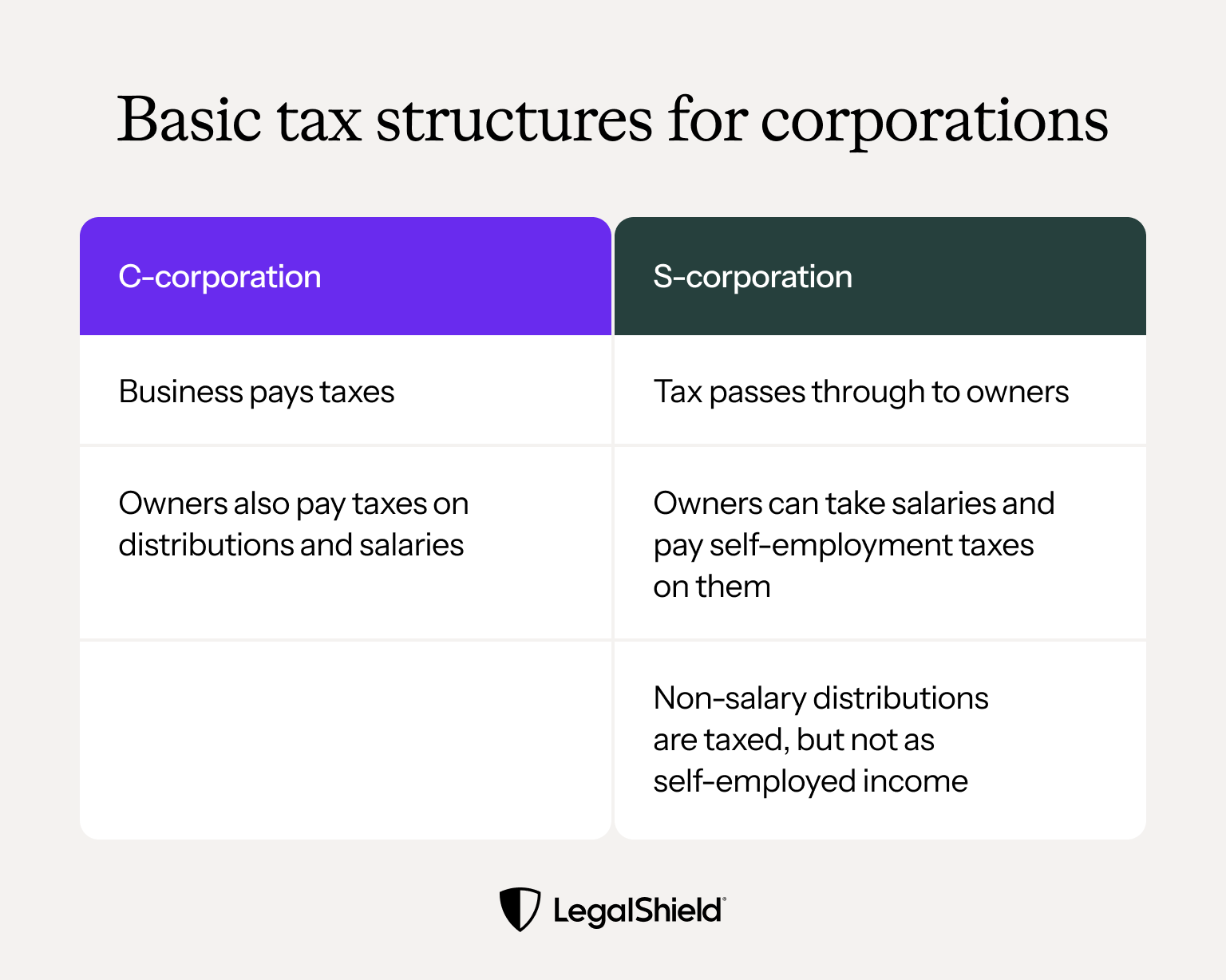
Another benefit of forming a corporation for tax purposes is that you can deduct lots of business expenses. That means a lower taxable income and an improved cash flow. Those deductions may include:
Also, you can leave profits in the company instead of taking them as personal income. Keeping those retained earnings in your company is a great strategy for delaying personal income tax liabilities. It also gives you funds for growing your company.

At some point, your business will probably need to borrow money or raise capital. Banks and other lenders may seek stock as collateral. Investors may want stock in return for their investment. Corporations have more formal recordkeeping and the ability to issue different types of stock, which may be more enticing to banks and investors.
A corporation has a life of its own. If an owner leaves, retires, or passes away, the business can keep operating. Ownership changes don’t necessarily mean the company pauses or dissolves.
Business continuity is important because it could help you:
Incorporating means ownership changes don’t have to affect the company. It makes long-term planning easier because the business can last even without your involvement.
Seamless transfers can prevent lots of problems. Due to a corporation’s recordkeeping requirements, stock transfers are very formal and should be well-documented. This can prevent ownership questions down the line.
You might also want to pass company ownership to your children. You can use a Will or Trust to transfer your shares of stock. You also may be able to prepare a Transfer on Death (TOD) to leave them your shares and have them transfer without probate.
It’s important to weigh the pros and cons of incorporation before you make a decision. We’ve talked about why you should incorporate your small business, but let’s look at some possible concerns:

Incorporation is a great way to protect yourself and your company. The benefits can make the extra responsibilities worth it. Deciding to incorporate is a big decision, and you may want to ask a lawyer for advice.
LegalShield® Business Plans make it easy for you to get solid legal advice for a reasonable price. Your membership gives you access to a provider law firm for document reviews, contract concerns, and more. Get the guidance you need to start protecting your business today.

It can be, depending on your purpose and the needs of your business. Look at the pros and cons for your specific situation before you decide. Asking a lawyer for advice is probably a good idea.
The biggest difference is how the business is run. LLCs are less formal and the law allows flexibility on structure and requirements. Corporations have stricter management rules and some things, like annual meetings, are required by law.
You don’t need a lawyer to incorporate, but legal guidance can help. A lawyer can help you decide if it’s the right business structure for you. Their advice can help you avoid costly mistakes.
The process of incorporation can take a few days or a few weeks. The timing depends on your state and when you submit all the required documents. You may be able to pay a fee for faster filing.
Yes, you can incorporate in another state. Many business owners register in their home states, and if doing business in other states, can register their business there as a foreign entity. Or you may choose to incorporate in a state known for its favorable business environment, such as Delaware or New York.
Incorporation is what you do to form a corporation. The corporation is the business entity you formed.
Content Specialist at LegalShield, creating educational resources about legal and consumer protection topics. She focuses on making complex legal and financial concepts accessible to readers and has contributed to various educational articles on consumer rights and protections.
For the right company, S status can lower the yearly tax bill and give owners a cleaner way to take home profits.

Dissolving an LLC can be tricky, and doing it without guidance can lead to unnecessary stress and delays. We’ve put together some helpful information so you can start the LLC dissolution process with more peace of mind.

An employment contract is an important piece of paperwork because it defines the working relationship, your expectations, and conditions. Here are some of the common components included.

Virtual business addresses can be a practical option for those forming an LLC from home, working remotely, or trying to keep their business and personal mail separate.

By the end of this blog, you’ll get a high-level summary of trademarking a name and logo, how logos differ from business names and artwork, and how much it all costs.

A DBA is a name registration that lets you run your business under a name other than your personal legal name or legal business entity. While a DBA offers branding flexibility and market expansion opportunities without creating a new legal structure, it does not provide legal liability protection, tax benefits, or function as a business license.

An indemnity agreement settles the “who is responsible” question ahead of time. One party promises, in writing, to cover certain losses tied to the work, so the other isn't left with the bill. These promises appear in construction contracts, leases, and business sales.

A certificate of good standing is official proof from your state that your business is registered and current on its requirements. Most lenders and agencies want a recent one, so it helps to know how to get it before someone asks.