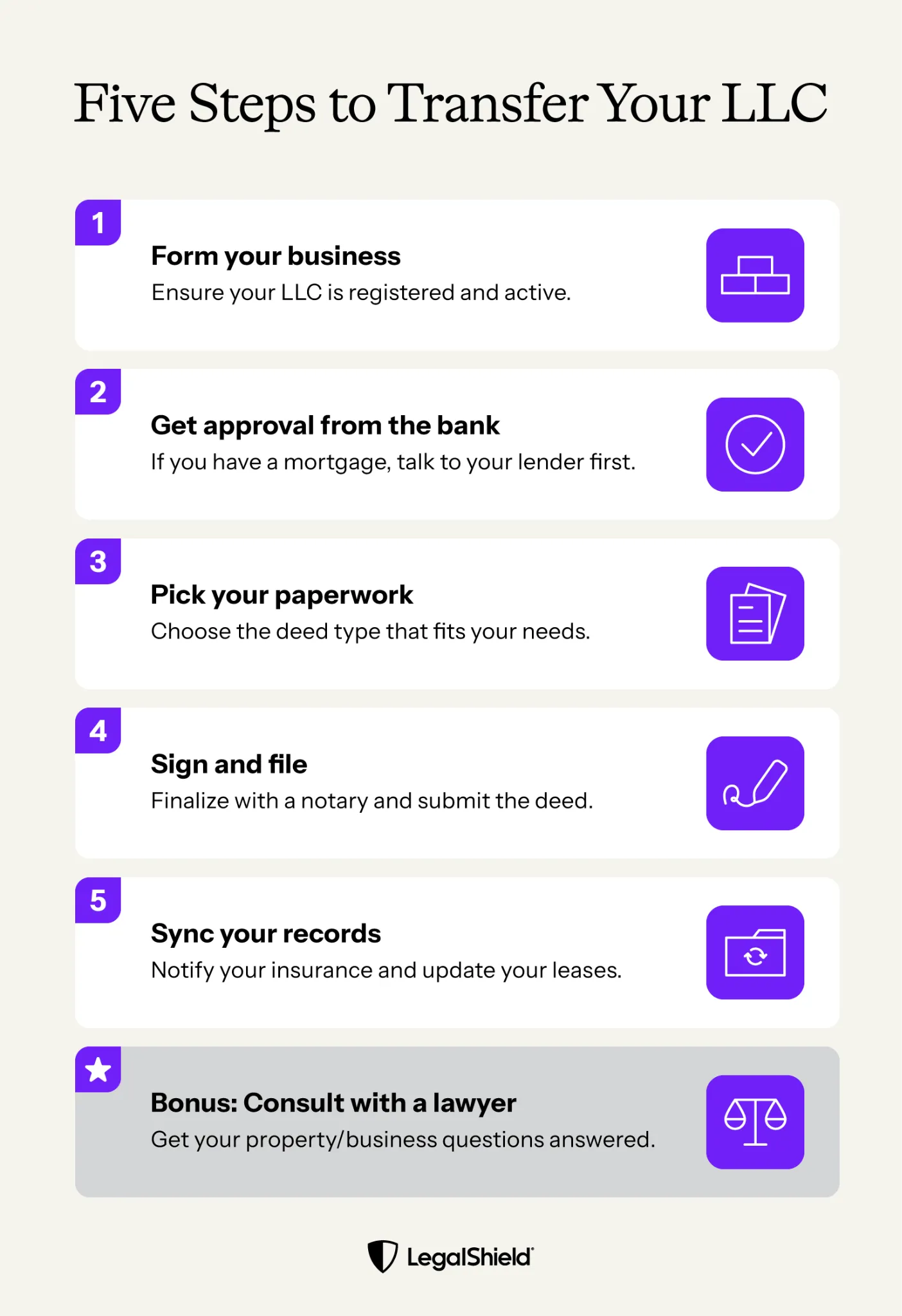
To transfer property to an LLC, you typically create the LLC, get approval from your lender, prepare a new deed transferring ownership to the LLC, sign and notarize the deed, and record it with your county recorder. After that, update insurance policies, leases, and related documents.
Owning rental property can be rewarding. It can also come with real risk — especially when everything is tied to your personal name.
Many property owners reach a point where they start asking: should this property be in an LLC instead? It’s a smart question. The way you structure ownership can significantly affect your liability and finances.
In this guide, we walk you through how to transfer property to an LLC in just a few steps, along with key things to watch for so you can make this change with clarity and confidence. Remember, getting legal advice is always a good idea when changing legal documents. A LegalShield® Personal Plan gives you access to lawyers starting around $1/day.
How to transfer your property in 5 steps
Transferring your real estate into an LLC is mostly about updating the legal ownership of the property. The steps below walk you through the typical process for how to transfer property to an LLC in a clear and organized way:
1. Set up your LLC
If you don’t have an LLC, you’ll need to form one and ensure it’s active and in good standing. Your LLC will be a separate legal entity that can own property, sign contracts, and open bank accounts.
If your property has a mortgage, your next step is to review your loan agreement. Many mortgages include a due-on-sale clause, which allows the lender to demand full repayment if ownership changes. Because transferring title to an LLC counts as a change in ownership, you’ll need to check with your lender before moving forward.
Do not assume that your lender will allow the transfer. Before you proceed, make sure you:
Contact your lender to explain the transfer
Ask about any restrictions or requirements
Get written approval confirming that the lender agrees to the change
A simple approval letter can go a long way. It helps protect you from unexpected issues and provides documentation in case questions arise later.
3. Choose the best deed for your situation
To transfer property into your LLC, you’ll need to create a new deed that changes ownership from you to the business. The two most common options for this type of transfer are Quitclaim deeds and Warranty deeds.
A Quitclaim deed transfers whatever ownership interest you have in the property, with no guarantee that the title is free from claims or defects. This is why it’s common to use this one when you’re transferring property between related parties (such as from yourself to an LLC).
Pros: Simple and fast to prepare; commonly used for transfers between related parties
Cons: No guarantees that the title is free from liens or ownership claims
By contrast, a Warranty deed gives you stronger protection. It guarantees that you have a clear title to the property and the legal right to transfer it.
Pros: Offers legal guarantees that the title is valid and clear
Cons: More formal and often unnecessary when transferring property to your own LLC
In some states, you may see variations like Special Warranty deeds or Grant deeds.
4. Prepare, sign, and record the deed
The next step is to prepare and sign the new deed. During preparation, seek guidance from a lawyer to ensure you select the right type, such as a warranty or quitclaim deed, and have them prepare the documents. Otherwise, have this information ready to fill in the deed:
Full legal name exactly as it appears on your ID
The LLC’s name exactly and EIN as it appears on documentation
An official legal description and parcel number of the property (not just the mailing address)
A consideration amount (which is usually small because you are transferring to an entity that you own)
Once the information is filled in, you can sign it and make the transfer official. In most states, you’ll need to sign the deed in front of a notary public.
Then, you file the notarized deed with your county recorder’s office. (This is sometimes called the county clerk or land records office.) Recording the deed will update public land records. That means the LLC will be listed as the new legal owner.
Here’s what to expect during this step:
Submit the notarized deed and any other required documents to the appropriate county office
Pay a recording fee (varies by location)
Receive confirmation once the deed is officially recorded
Recording fees are usually based on a standard filing rate or the number of pages in the deed.
There may be a tax exemption in your county for the transfer of property to an LLC if you own 100%. If you meet an exemption from paying tax on the transfer, you may need additional documents or need to include the exemption reference on your deed. If an exemption does not apply, then you may be required to pay a transfer tax, along with your deed recording fee.
5. Update your leases and insurance
With the title transferred, you may think that you’re done. But you’re not. You still need to update the documents associated with the property.
If the property is a rental, the lease agreement must list the LLC as the owner. That might mean sending an updated lease or an amendment. That way, your tenants know the correct owner and where to send payments and/or notices.
Also, take a look at insurance. You may need to update the property policy to list the LLC as the insured party. If your policy lists you as the owner when you file a claim, that could create problems.
Take a few more minutes to update any related documents, such as:
Transferring property into an LLC involves some administrative costs. The most common is the county recording fee, which is usually a flat fee or a per-page charge. Some states or counties might charge additional fees. These can include transfer taxes, documentary stamp taxes, or administrative fees.
Speaking of taxes, don’t forget to look at tax implications. In some cases, transferring property you own won’t trigger a taxable sale. But the details can vary with state rules and the structure of the transfer. For instance, a change in ownership or title could affect your property tax assessments or mortgage terms.
Because the rules vary and the consequences can be costly, many property owners speak with a lawyer before making the transfer.
Benefits of holding a property in an LLC
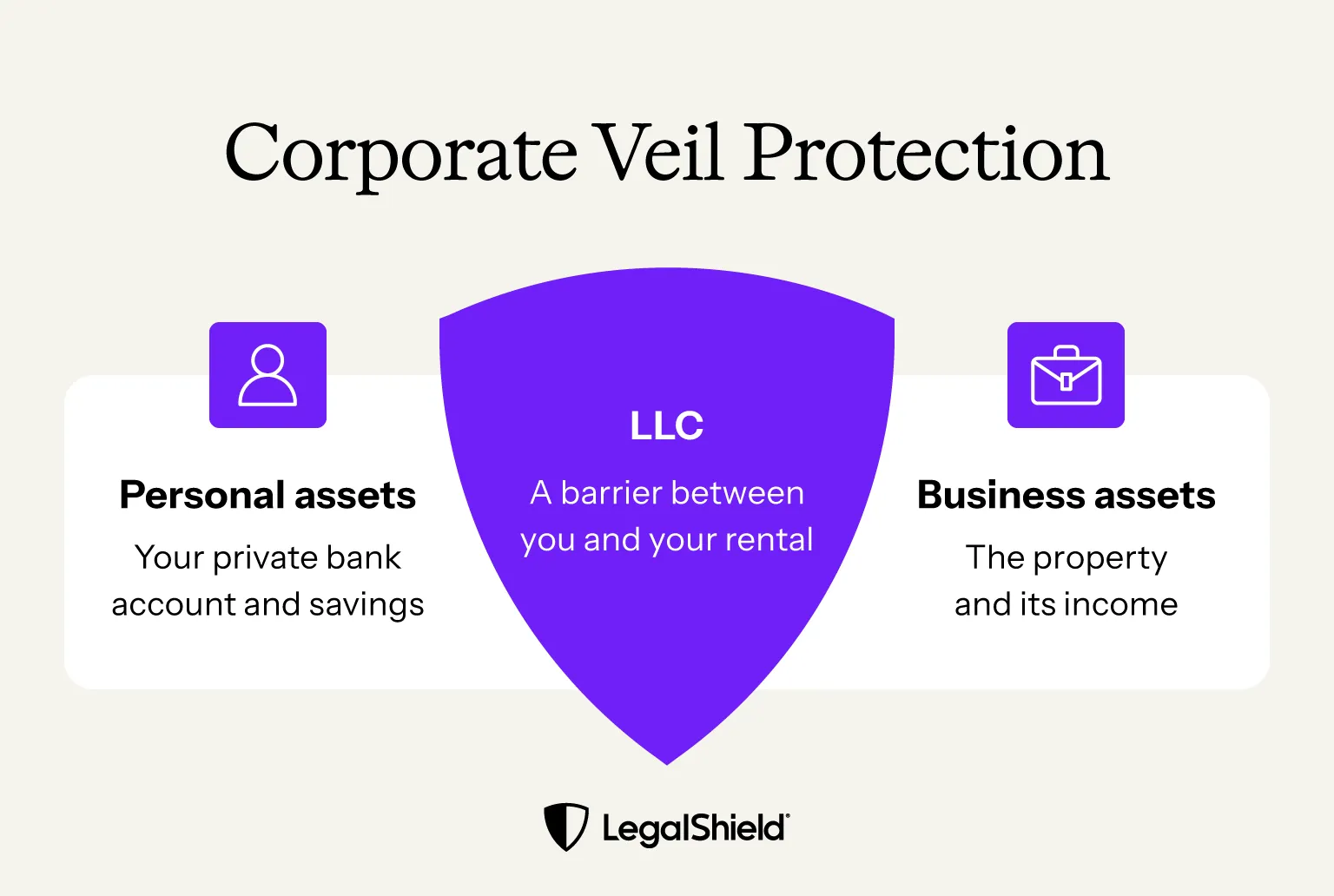
Many business owners and real estate investors hold property in an LLC to separate their business investments from their personal finances. In other words, it creates what lawyers call a “corporate veil,” meaning the business is treated as its own legal entity. It’s now separate from the people who own it.
When you maintain that separation, financial issues related to the property are limited to the business itself. For instance, if someone sues your LLC about your property, your personal bank accounts and assets would likely be protected.
But you need to keep this protection strong. That means keeping your business and personal finances separate. A dedicated bank account for property income and expenses is a great start.
Once your property is in the LLC, you'll need to maintain that LLC properly to keep the liability protection in place — including filing annual reports and meeting state compliance requirements. Our guide to starting and managing an LLC for real estate walks through everything from formation to ongoing duties.
Get help with your investment property with a LegalShield Small Business Membership
Learning how to transfer property to an LLC is a key step. But once the transfer is done, you might wonder how to build lease agreements under an LLC. Or maybe how to handle tenant contracts. Or even what documents you need to update or keep on file.
LegalShield Small Business Plans connect you with a provider law firm that can answer everyday legal questions that come up when managing property. For instance, a lawyer could review lease agreements, explain landlord requirements, or answer questions about contracts, liability, or tenant disputes.
Having someone you can call when legal questions pop up means fewer headaches for you. If you’d like ongoing, affordable legal consultation as your business grows (without the retainer), review LegalShield’s Small Business Plans.
Common questions about property transfers
Can I move my own home into an LLC?
You don’t necessarily need a lawyer to help with the transfer, but it’s a good idea. A lawyer can review documents, explain risks, and help you avoid costly mistakes.
Do I need a lawyer to help with the transfer?
No, you don’t need a lawyer to help with the transfer. But it can help. Some property owners do the transfer themselves. Others speak with a lawyer before moving forward. A lawyer can review documents, explain risks, and help you avoid costly mistakes.
Will my property taxes go up?
Maybe. In many cases, transferring property to an LLC won’t change the tax rate. But local tax rules vary. And some places may reassess the property when ownership changes. (And a transfer looks like a change in ownership.) Often, it’s helpful to check with a lawyer or tax professional before you move forward.
Can an LLC get a mortgage?
Yes, an LLC can get a mortgage. But the process is often different from getting a loan as an individual. Some lenders see LLC loans as higher risk, so they might ask for a bigger down payment, higher interest rates, or a personal guarantee from you (not the LLC). That means you could still be personally responsible for the loan — even though your LLC holds the property.
How much does it cost to transfer property to an LLC?
The cost to transfer property to an LLC can vary by state and how you complete the process. In many cases, the basic cost includes a county recording fee that ranges from $25 to $100 or more. The actual cost can depend on location or document length. Some states may also charge transfer taxes or additional filing fees.
Frequently Asked Questions
You don’t necessarily need a lawyer to help with the transfer, but it’s a good idea. A lawyer can review documents, explain risks, and help you avoid costly mistakes.
No, you don’t need a lawyer to help with the transfer. But it can help. Some property owners do the transfer themselves. Others speak with a lawyer before moving forward. A lawyer can review documents, explain risks, and help you avoid costly mistakes.
Maybe. In many cases, transferring property to an LLC won’t change the tax rate. But local tax rules vary. And some places may reassess the property when ownership changes. (And a transfer looks like a change in ownership.) Often, it’s helpful to check with a lawyer or tax professional before you move forward.
Yes, an LLC can get a mortgage. But the process is often different from getting a loan as an individual. Some lenders see LLC loans as higher risk, so they might ask for a bigger down payment, higher interest rates, or a personal guarantee from you (not the LLC). That means you could still be personally responsible for the loan — even though your LLC holds the property.
The cost to transfer property to an LLC can vary by state and how you complete the process. In many cases, the basic cost includes a county recording fee that ranges from $25 to $100 or more. The actual cost can depend on location or document length. Some states may also charge transfer taxes or additional filing fees.
Communications Director at LegalShield overseeing content creation designed to make legal protection simple and approachable. He focuses on offering straightforward, trustworthy guidance that empowers people to make informed decisions about their legal rights and responsibilities.
Dissolving an LLC can be tricky, and doing it without guidance can lead to unnecessary stress and delays. We’ve put together some helpful information so you can start the LLC dissolution process with more peace of mind.
An employment contract is an important piece of paperwork because it defines the working relationship, your expectations, and conditions. Here are some of the common components included.
Virtual business addresses can be a practical option for those forming an LLC from home, working remotely, or trying to keep their business and personal mail separate.
By the end of this blog, you’ll get a high-level summary of trademarking a name and logo, how logos differ from business names and artwork, and how much it all costs.
A DBA is a name registration that lets you run your business under a name other than your personal legal name or legal business entity. While a DBA offers branding flexibility and market expansion opportunities without creating a new legal structure, it does not provide legal liability protection, tax benefits, or function as a business license.
An indemnity agreement settles the “who is responsible” question ahead of time. One party promises, in writing, to cover certain losses tied to the work, so the other isn't left with the bill. These promises appear in construction contracts, leases, and business sales.
A certificate of good standing is official proof from your state that your business is registered and current on its requirements. Most lenders and agencies want a recent one, so it helps to know how to get it before someone asks.
Whether the goal is selling a company, bringing in a business partner, or passing it to a family member, the LLC ownership transfer often involves reviewing the LLC's operating agreement and the applicable state's rules.
•
11 min read
Author Name
,
Author Title
August 4, 2026
Thank you! You're subscribed!
Oops! Something went wrong while submitting the form.