What is an LLC for real estate? A real estate LLC is a limited liability company focused on real estate investments. Its purpose is to protect the investor's personal assets from legal liability.
Real estate investment can be exciting. But a single lawsuit, such as an unpaid-tenant claim or a slip-and-fall, could put your personal savings on the line.
Setting up an LLC offers a good way to limit these risks. It can also provide certain tax benefits that you may not qualify for as an individual.
We’ll talk about how to start an LLC for real estate, and go over some concerns about personal liability in case something goes wrong. It’s usually a good idea to talk to a lawyer to make sure you’re doing everything right.
Why some people use an LLC for their rental properties
LLC stands for Limited Liability Company. It’s the “limited liability” part that makes LLCs attractive for many kinds of businesses, especially in complex fields like real estate. Here’s what they offer:
Lower personal legal risk: If someone gets hurt on an investment property, the property owner may be liable for their injuries. If the owner is an LLC, the LLC would provide protection to the individual owner for any damages that might be due.
Reduced financial risk: If the LLC struggles financially, say it can’t pay back a loan or must file bankruptcy, the owners have financial protection. This helps keep the owners’ personal assets safe from debt collection attempts.
Tax options: LLCs have several tax classification options, including disregarded entity (pass-through) and S-Corp. This allows the owner to choose the best classification for their investment business.
Improved professional image: Ownership through an LLC can be useful when negotiating leases with new tenants or loan terms with banks.
It might feel like a hassle to set up an LLC before investing in real estate. But a lawyer can answer questions and review your real estate investment setup.
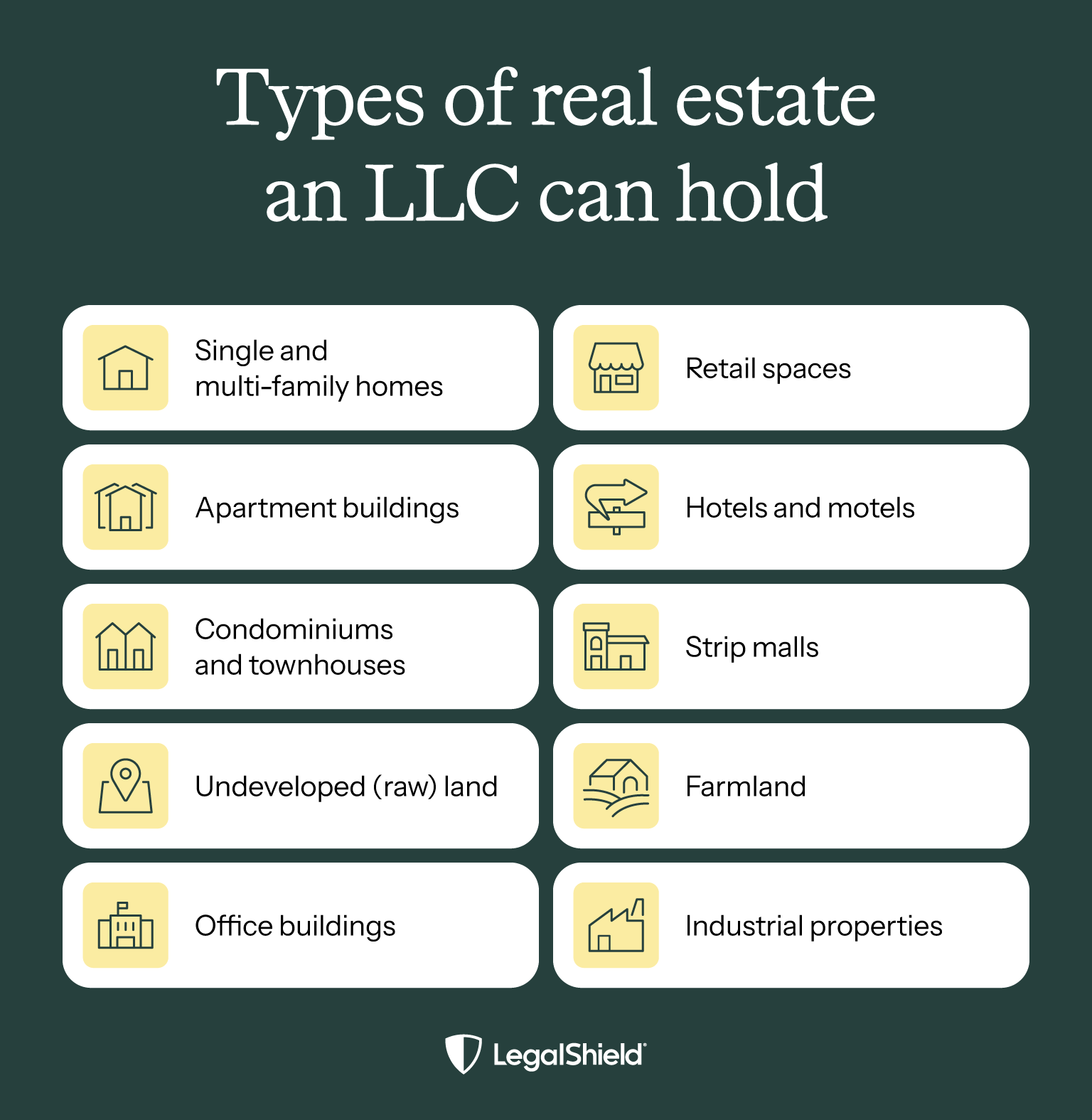
Types of property that an LLC for real estate can typically hold
By starting an LLC for real estate, you can invest in property while limiting your risk of personal liability.
Your LLC can also own as many properties as you want. Just understand that if someone sues the LLC, all of its property is potentially at risk.
How to start an LLC for real estate
Knowing exactly how to start an LLC for real estate depends on which state you’re in. With so many potential rules, it helps to consult a lawyer when starting one.
Here’s an overview of common steps and requirements:
Pick a name for your real estate business. You can choose almost any name you wish, subject to a few requirements. For instance, you can’t use certain words or a name already held by another business. Also, you need to include wording or letters indicating it’s an LLC.
Choose the right state for your company. You will usually choose the state where you live. However, if you have real estate in another state, you may need to form or register your business there. A lawyer can help guide you on the best place to form or register your business, so you know how LLC filing and registration fees could affect you.
Find a registered agent. Most adults can serve as the LLC’s registered agent as long as they provide a physical address. However, for privacy and convenience reasons, you may want to consider hiring a third-party company.
File your articles of organization. Also called a certificate of formation, this is the main document that creates the LLC. It will include information such as the LLC’s name, purpose, and registered agent.
Prepare an operating agreement. Many states don’t require you to have one, but it’s a good idea to do so. It explains how the LLC should be managed and helps maintain the legal separation between the LLC and its owners.
Get an EIN from the IRS. An LLC will need an Employer Identification Number (EIN) from the IRS if it has employees. An LLC also needs an EIN if it has employees, includes multiple members, or must file certain tax forms.
Comparing LLCs for real estate to other business types
Any business structure, such as a sole proprietorship or a corporation, can buy real estate. Below is a basic overview of other entity structures for real estate, instead of LLCs. A lawyer can help you choose the best business type for your real estate investing needs.
LLC for real estate vs. sole proprietorship
Because there’s no formal business structure with a sole proprietorship, you don’t need to worry about filing legal papers to create one. The drawback is that you have no liability protection. If something goes wrong with your property, your personal assets aren’t protected from potential legal action. This risk is reduced with an LLC.
LLC for real estate vs. corporation
A corporation is a more formal entity structure with limited options for tax classification. An LLC (or a corporation) can choose to change its default tax treatment and be taxed as an S-corporation. This is a tax structure change, not a business entity change.
One key difference is that when you operate an LLC, all your business profits are subject to self-employment taxes. When your LLC is taxed as an S-corporation, you take a salary. This reduces the amount of business profit on which you need to pay self-employment taxes on. In certain circumstances, this could be more advantageous.
Consider contacting a tax professional to help you choose the best option. You could also start by asking a LegalShield® provider lawyer for their advice on what to do.
Potential drawbacks of an LLC for real estate to consider
While forming an LLC for real estate investments is helpful, there are drawbacks. These won’t necessarily mean it’s better to proceed as a sole proprietorship or corporation. But you should at least be aware of what these are and plan for them.
Impacts existing property mortgages
Many mortgages will have a “due-on-sale” clause. This requires the borrower to pay the full mortgage balance when transferring the property. You might trigger this clause if you try to move property into an LLC.
You can sometimes avoid this by consulting with the lender and getting their written consent before the transfer. To do this, start by talking to a lawyer and the lender before starting any transfers.
Requires annual paperwork and fees
Creating an LLC isn’t a “one-and-done” task. After creating an LLC, there are ongoing administrative duties. Some of these are filing annual reports and paying fees and taxes. Failing to address them could lead to the dissolution of your LLC. Having access to a lawyer can limit this possibility and help explain each state’s requirements to you.
Use LegalShield to talk to a lawyer about your LLC for real estate
Whether you need real estate help or landlord guidance, lawyers can assist with contract review and with buying, leasing, or selling property.
With a LegalShield Small Business Plan, members get access to provider law firms that can advise on many matters, including employment law, debt collection, and business licenses. Call your LegalShield provider law firm when you need legal advice without having to pay expensive hourly consultation fees.
Yes, you may be able to put a house you already own in an LLC. A common way to do this is using a quitclaim deed. However, there are several things to consider before doing so.
The transfer could trigger a “due-on-sale” clause. This would require you to pay the entire mortgage balance immediately.
There may be certain transfer taxes and fees to pay. You could lose access to your homestead exemption, which has tax and legal advantages.
You’ll likely need to update your home insurance policy to reflect the new owner.
No, you don’t need a separate LLC for each rental property. But depending on the property, it may not be a bad idea. This is because a lawsuit involving one property can put all the LLC's properties at risk. Some states have a special LLC structure, a Series LLC, that can be used to hold real estate assets under a single LLC.
Yes, in most cases, but it’s not a perfect solution. Your LLC must be properly structured, and you must keep your business and personal activities separate. Sometimes, you personally have to sign or secure a loan for your LLC, which may expose you to personal liability.
For example, imagine you were personally guaranteed an LLC loan. If there’s a default, the lender might go after your assets in addition to the LLC’s. Also, if the lawsuit concerns actions you took as a landlord, personal liability might still apply.
Communications Director at LegalShield overseeing content creation designed to make legal protection simple and approachable. He focuses on offering straightforward, trustworthy guidance that empowers people to make informed decisions about their legal rights and responsibilities.
Dissolving an LLC can be tricky, and doing it without guidance can lead to unnecessary stress and delays. We’ve put together some helpful information so you can start the LLC dissolution process with more peace of mind.
An employment contract is an important piece of paperwork because it defines the working relationship, your expectations, and conditions. Here are some of the common components included.
Virtual business addresses can be a practical option for those forming an LLC from home, working remotely, or trying to keep their business and personal mail separate.
By the end of this blog, you’ll get a high-level summary of trademarking a name and logo, how logos differ from business names and artwork, and how much it all costs.
A DBA is a name registration that lets you run your business under a name other than your personal legal name or legal business entity. While a DBA offers branding flexibility and market expansion opportunities without creating a new legal structure, it does not provide legal liability protection, tax benefits, or function as a business license.
An indemnity agreement settles the “who is responsible” question ahead of time. One party promises, in writing, to cover certain losses tied to the work, so the other isn't left with the bill. These promises appear in construction contracts, leases, and business sales.
A certificate of good standing is official proof from your state that your business is registered and current on its requirements. Most lenders and agencies want a recent one, so it helps to know how to get it before someone asks.
Whether the goal is selling a company, bringing in a business partner, or passing it to a family member, the LLC ownership transfer often involves reviewing the LLC's operating agreement and the applicable state's rules.
•
11 min read
Author Name
,
Author Title
August 4, 2026
Thank you! You're subscribed!
Oops! Something went wrong while submitting the form.