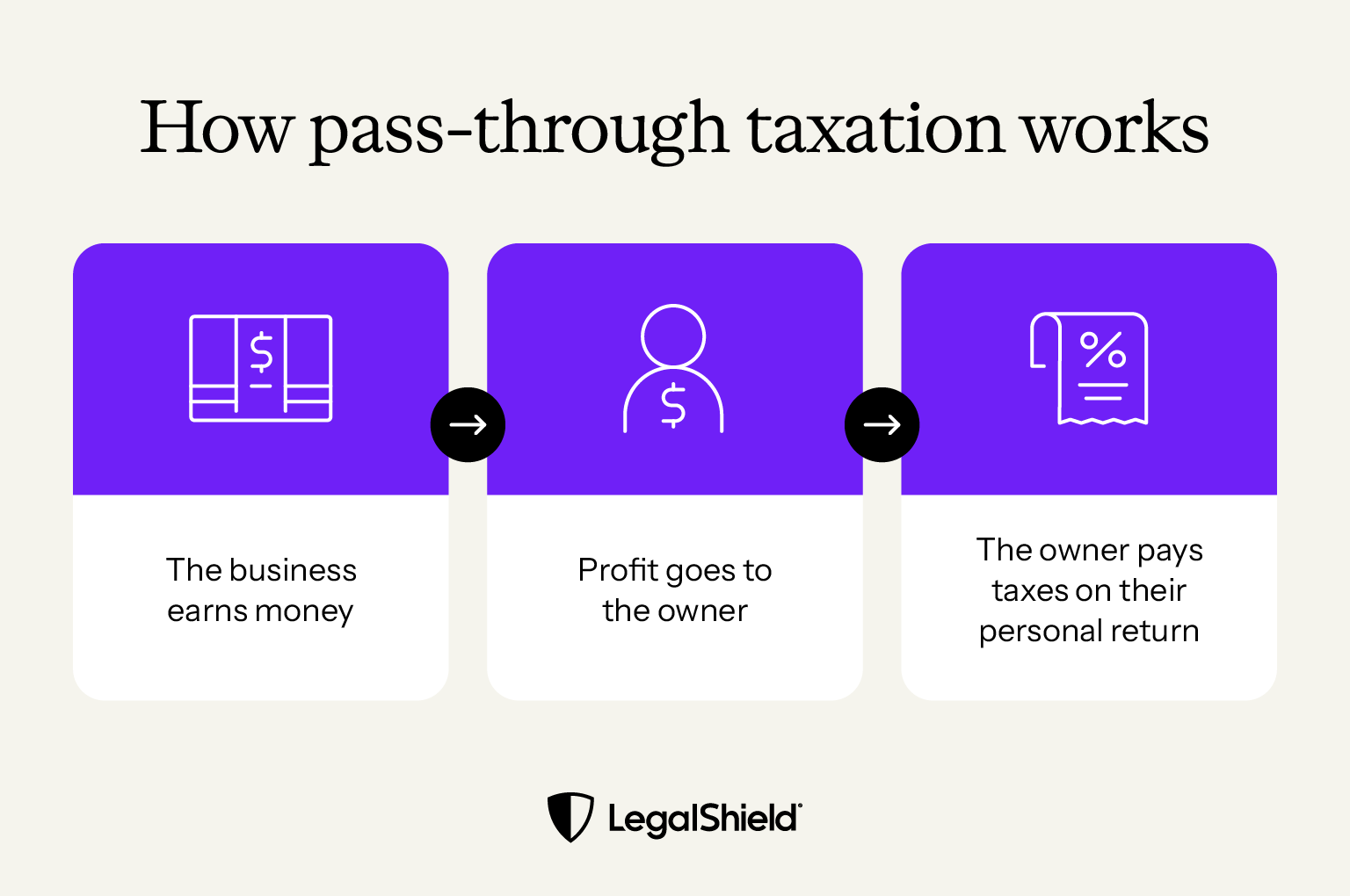
An LLC is a legal setup you can choose for your business, while S corp status is a tax status, so a business can be both at once.
An LLC has disregarded entity or partnership tax status by default. So, the real choice is whether to run an LLC with its default tax treatment or elect S corp tax status.
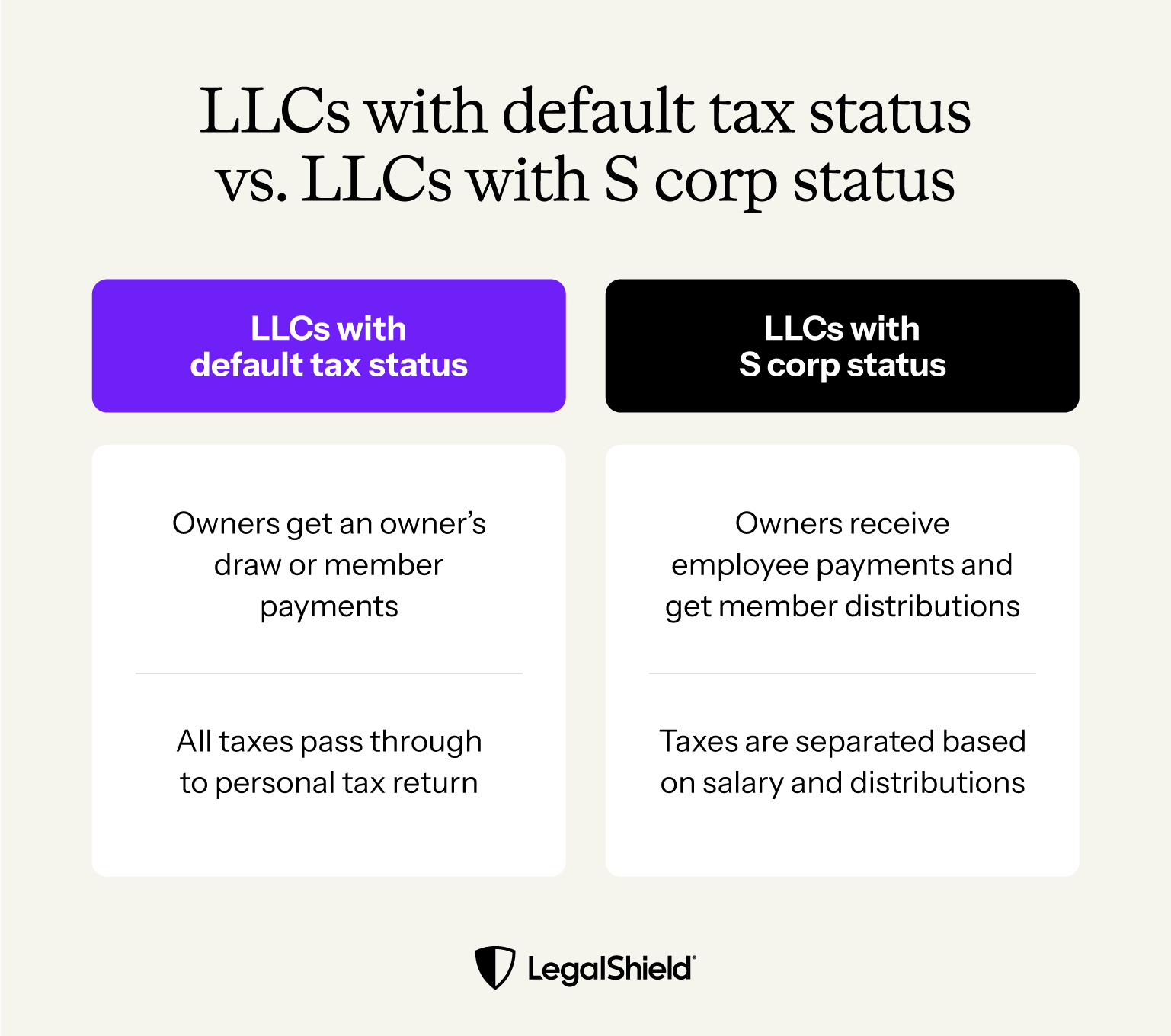
LLCs with default tax status and LLCs with S corp tax status are taxed differently.
Editor's note: This post was originally published April 15, 2025, and has been updated for accuracy, comprehensiveness, and freshness on September 23, 2026.
As a small business owner, you might be puzzling over the best way to structure your business for legal and tax purposes. You may come across S corp vs. LLC comparisons, but you can’t compare the two concepts equally. An LLC is a legal setup you can choose for your business, while S corp status is a tax status. So, a business that elects S corp tax status must also have a formal legal structure (like LLC).
The actual question many business owners face is whether to form an LLC with or without S corp status. As you think about business structures and tax treatment, a LegalShield® Small Business Membership can give you access to a law firm that can offer guidance on the legal considerations behind these choices. You may also want to consult with a CPA or an accountant for any financial matters.
Key difference between an LLC with S corp election and an LLC with default tax status
An LLC with S corp election and an LLC with default tax status (disregarded entity or partnership) have their profits taxed differently.
By default, the IRS taxes a single-member LLC as a disregarded entity and a multi-member LLC as a partnership. In both tax statuses, all profits pass through to the owners’ personal tax return, and all earnings from the LLC are subject to self-employment taxes.
While S corp status also means taxes pass through, owners who work in the business can divide earnings between a reasonable salary and distributions. Only the salary part goes through payroll taxes, potentially resulting in savings on the self-employment and distributions’ tax.
For example, let’s say a business generates $150,000 in profit:
The owner of an LLC with default tax status might pay self-employment taxes on the entire amount.
An owner-employee of an LLC with S corp status might take a $75,000 salary (subject to payroll taxes) and $75,000 in distributions (not subject to payroll taxes).
What is an LLC?
A Limited Liability Company (LLC) is a business structure that separates the person from their business and has different taxation options available. Thanks to these qualities, an LLC can provide some liability protection and possible tax benefits.
What is an S corporation?
Unlike LLCs, an S corporation is not actually a standalone business entity. It's a tax classification that corporations and LLCs can choose through the IRS, with restrictions: Businesses with an S corp election can’t have more than 100 shareholders, and all of those shareholders must be U.S. citizens.
How to convert an LLC with default tax status to an LLC with S corp status
You can convert an LLC with default tax status to an LLC with S corp status by filing IRS Form 2553. Our blog post on this change can offer some context, and a lawyer or accountant can give you guidance specific to your situation.
The importance of professional guidance
Legal guidance could help you avoid wasting time and money on choosing your business’s structure and tax status. LegalShield Provider Lawyer Bill Thrush says:
“The financial waste in failing to use legal counsel is incalculably high. Think about the amount of time the business owner will spend educating themselves on what must be done, and then actually doing those things. Every minute spent doing those things is a minute lost in terms of working in your business and generating revenue.”
Thrush often sees owners think they can manage their legal tasks themselves despite these costs. He compares this approach to doing your own dental work. While technically you could pull your own tooth, it would take a lot of work and risk. So people usually prefer a dentist, much like how Thrush believes a lawyer should handle the legal aspects of business formation.
With a LegalShield Small Business Plan, members can ask a provider law firm questions about the legal aspects of LLCs with default tax status and S corp status. A tax professional can help you with the financial implications of each tax election.
Factors to consider when choosing an LLC with default tax status vs. an LLC with S corp status
As you decide between running your LLC with its default tax status or S corp status, here are two factors that could inform your business and leadership preferences:
Current and projected profits: Depending on your plans for your business operations and finances, one tax status could fit your goals better than the other.
Tax situation: Your overall tax picture could cause one structure to give you more benefits over another.
As you work with a financial professional to manage your business’s tax status, a lawyer can help with questions about the legal responsibilities associated with running an LLC.
Get legal guidance for your small business with a LegalShield Plan
Your research on S corp status and LLCs comes down to remembering that an LLC is a legal structure and an S corp is a tax election, so they can work together. Once you sort out your LLC’s tax entity, you can turn to other setup choices, like whether expanding to more states makes sense down the road.
If you still have questions about which option fits your business, a LegalShield Small Business Plan connects you with a provider law firm that can guide you through its legal aspects. Members can also get information about compliance requirements, such as business licenses.
Legal help for small business is here
Legal advice on business issues, including document review, help with debt collection, letters or calls on your behalf, and more.
The taxes you pay as an LLC with default tax status or LLC with S corp status depend on factors like your business operations and personal tax situations. A tax professional can provide guidance based on your situation.
You can review what forms were filed when you set up your business. To obtain your EIN, you used an SS-4. But if you elected an S corp or C corp, you may have also filed a Form 2553. In both cases, the IRS issues a response letter, so you can refer to that communication as well.
If you have recently filed tax returns, you can also review your filings to confirm your tax status. S corps use Form 1120-S, while C corps use Form 1120. If your business taxes are on your own tax return, such as on a Schedule C, then your entity is most likely a disregarded entity or partnership. Check with your accountant or CPA to be sure.
Yes, an LLC owner can own another LLC with S corp status if it is a single-member LLC with default tax status. Since partnerships and corporations can’t own a business with S corp status, a multi-member LLC, an LLC with S corp status, or a C corporation can’t own a business with S corp status.
Content Specialist at LegalShield, creating educational resources about legal and consumer protection topics. She focuses on making complex legal and financial concepts accessible to readers and has contributed to various educational articles on consumer rights and protections.
Dissolving an LLC can be tricky, and doing it without guidance can lead to unnecessary stress and delays. We’ve put together some helpful information so you can start the LLC dissolution process with more peace of mind.
An employment contract is an important piece of paperwork because it defines the working relationship, your expectations, and conditions. Here are some of the common components included.
Virtual business addresses can be a practical option for those forming an LLC from home, working remotely, or trying to keep their business and personal mail separate.
By the end of this blog, you’ll get a high-level summary of trademarking a name and logo, how logos differ from business names and artwork, and how much it all costs.
A DBA is a name registration that lets you run your business under a name other than your personal legal name or legal business entity. While a DBA offers branding flexibility and market expansion opportunities without creating a new legal structure, it does not provide legal liability protection, tax benefits, or function as a business license.
An indemnity agreement settles the “who is responsible” question ahead of time. One party promises, in writing, to cover certain losses tied to the work, so the other isn't left with the bill. These promises appear in construction contracts, leases, and business sales.
A certificate of good standing is official proof from your state that your business is registered and current on its requirements. Most lenders and agencies want a recent one, so it helps to know how to get it before someone asks.
Whether the goal is selling a company, bringing in a business partner, or passing it to a family member, the LLC ownership transfer often involves reviewing the LLC's operating agreement and the applicable state's rules.
•
11 min read
Author Name
,
Author Title
August 4, 2026
Thank you! You're subscribed!
Oops! Something went wrong while submitting the form.