Getting your logo just right took effort. Understandably, the idea that another business could use something similar and confuse your customers doesn’t sit right.
Trademark registration can help. But learning how to trademark a logo means understanding more than the online application. You need to understand eligibility, availability, and how to file.
By the end of this blog, you’ll get a high-level summary of trademarking a name and logo, how logos differ from business names and artwork, and how much it all costs. We’ll also explain when legal guidance may be useful and how we can help you access it.
What is a trademark, and why does a logo need one?
The United States Patent and Trademark Office (USPTO) has a pretty specific idea of what a trademark is: “... any word, phrase, symbol, design, or combination of these things that identifies your goods or services.” The USPTO goes on to say it’s about customers recognizing your brand and telling you apart from competitors.
So, when a logo serves a brand-identifying purpose, it can qualify under this definition.
Logos are usually treated as design marks. A design mark protects the visual appearance of the logo. That could include stylized wording, layout, or graphic elements. In contrast, a word mark protects the words themselves. That might be a business name, a slogan, or a product name.
You might automatically have some limited protections the moment you use your logo in your business. These “common-law” trademark rights are usually more limited than the official federal registration, but they can be helpful as a starting point.
Unregistered rights also tend to focus on the area where you provide your products or services; the registered rights can be much broader or nationwide.
Typical trademark costs
The cost to trademark a logo can vary widely. It comes down to how many classes of goods or services you include and how complex your applications are.
There’s a basic application fee of $350 and an additional USPTO filing fee charged “per class,” which means the cost can increase based on how many categories of goods and services your logo applies to. You pay that application per class, so you’re paying $700 if you fall into two, for instance.
Choosing the right class or classes is one of the more complicated parts of registration. The class you file under determines what your protection actually covers, and getting it wrong can leave gaps or result in a refusal. This is a common point to talk through with a lawyer before you file.
The other main expense to anticipate is lawyer fees. The hourly cost can vary, and so can the number of hours spent, but lawyer fees are around $300* on average.
*Amount based on LegalShield Provider Law Firm average rates outside of included plan services. Exact costs are determined by law firms.
There are other charges, though, and they come into play if you need specific services or help. For instance, you might have to pay $200 extra if you need to use more than 1,000 characters in a particular text box.
In other words, nailing down a “typical” trademark cost is tricky without getting into a lengthy trademark cost breakdown.
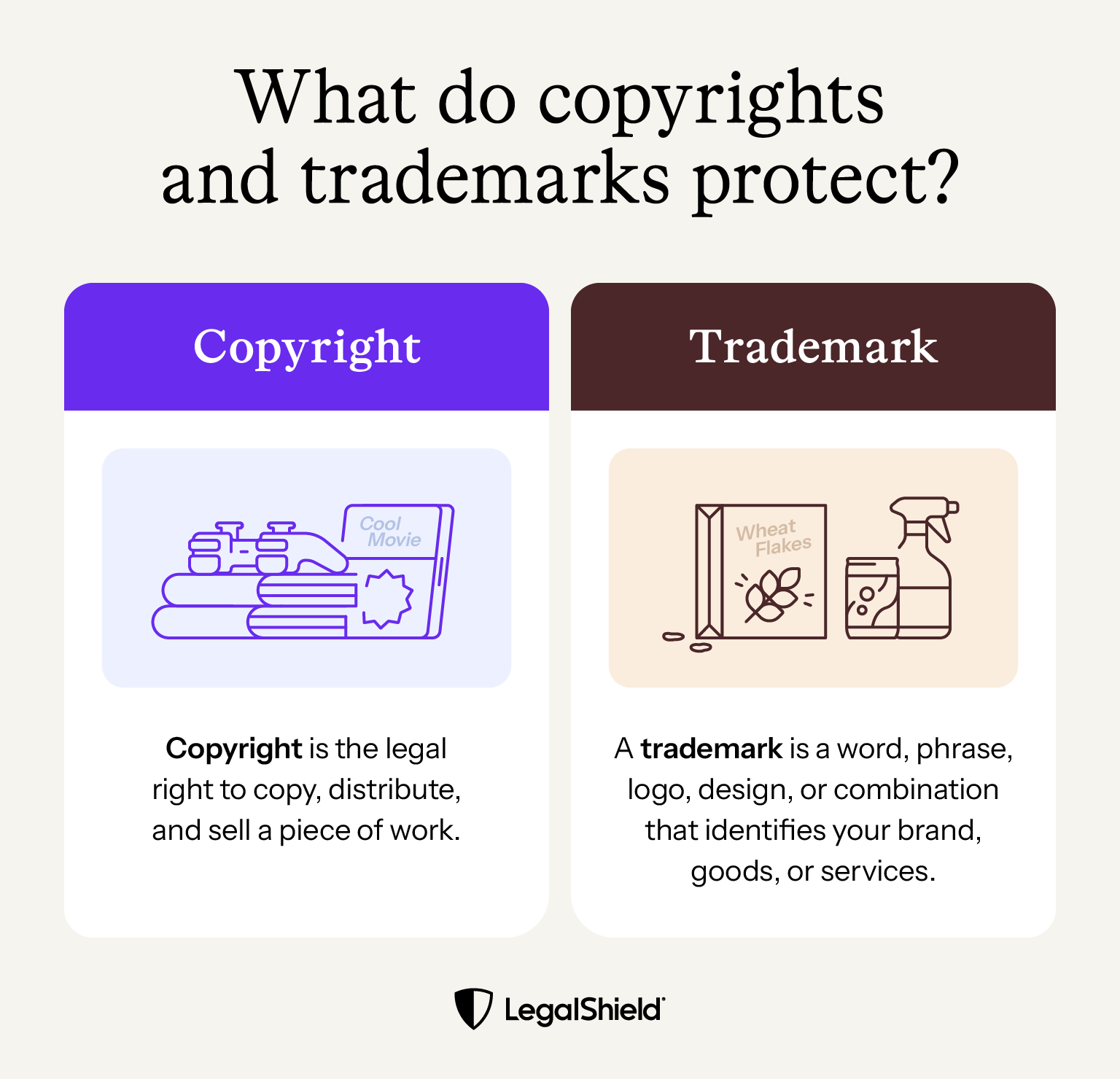
The copyright can protect the artistic design of the logo itself. The trademark applies when you’ve used the logo in commerce as a way to identify your business or distinguish it, your goods, or your services from others.
The two aren’t mutually exclusive, but the trademark falls much more squarely into the role of protecting brand identity rather than protecting creative work.
How to get a trademark for a logo
Getting a trademark for a logo usually involves these steps:
1. Confirming the logo is eligible and available
There’s no use in trademarking a logo if the logo isn’t eligible for trademark protection. So checking first is usually step one. The logo is meant to be distinctive enough to identify your business, not generic or too similar to another business’s logo.
But how do you check that your logo is distinct enough? A clearance search. That’s a search for marks that might be similar to yours across a wide variety of resources. You will want to check these resources:
Federal trademark records
Pending applications
Common-law uses
Domain name registries
The Global Brand Database
The USPTO also recommends a basic internet search. The USPTO site has a complete look at how to do a comprehensive clearance search. As you dig in there, you may see how complex this part of the process actually is.
2. Filing an application with the USPTO
With eligibility and availability confirmed, filing a trademark application through the USPTO website is usually the next step. The application itself doesn’t take an enormous amount of time, but the processing times sure can. It's normal to wait a while after completing this step, and you can see the current wait time here.
Filling in some common application details on the application page completes the step and starts the waiting period:
Legal name and address
A clear digital image of your logo
A description of the goods or services connected to the logo
The trademark class or classes
Whether you’re already using the logo in commerce or intend to use it in commerce later
There’s also a choice to make: submitting the logo in color or black and white. If you claim color as part of the mark, a later change to those colors might create trademark issues or even call for a separate filing.
3. Responding to any office actions
Once they’ve reviewed your application, the USPTO might send you an “office action.” That’s an official letter from the examining lawyer explaining an issue with the application or asking for more information. Often, that looks like a technical correction, a question about your goods or services, or a reason the USPTO isn’t ready to approve the mark.
The office action will come with a deadline to respond. The USPTO might consider your application abandoned if you miss it. That would mean starting over, essentially.
This is another point in the logo trademarking process where legal review can help a lot.
4. Maintaining your trademark after registration
Registering a logo as a trademark status doesn’t mean you’re done forever. Trademark protection is an ongoing task, requiring you to use the mark properly and keep up with maintenance deadlines.
Legal action is another aspect of maintenance. Trademarks give you the right to take legal action if other people or businesses use them. But you do have some burden to protect the trademark. This means it may be necessary to take legal action, even if you would prefer not to.
Trademarks are a complex area of law. For specifics on how to maintain your unique trademark in your unique situation, seek legal help. A LegalShield® Provider Law Firm can help you understand trademark maintenance requirements and when action may be necessary.
Common mistakes that can happen when trademarking a logo
Trademark applications can run into all kinds of problems. Here are some common mistakes that cause the bulk of those issues:
Skipping the clearance search: Skip this step, and you could spend time and money filing your application only to learn that another business has rights that would conflict with yours.
Choosing a logo that’s too generic: Common shapes, basic images, and certain wording may not be distinctive enough to protect trademark rights.
Filing under the wrong trademark class: The wrong class can leave your actual goods or services uncovered.
Missing an office-action deadline: The USPTO may consider your application abandoned if you don’t respond on time.
Confusing trademark protection with copyright protection: Copyright can protect the artwork; trademark law can protect the logo as a brand identifier. The right kind of protection is key.
Get legal advice on your business’s intellectual property
Learning how to trademark a logo is a smart step if it’s becoming a part of how customers recognize your business, and you want to protect your intellectual property. But it’s more than just submitting a design mark to the USPTO.
A LegalShield Small Business Legal Plan can connect you with a provider law firm that can help you understand how to know if your logo is distinctive, how to respond to an office action, or how to maintain your trademark.
Your logo is part of your business identity, and that’s worth taking seriously. Getting legal guidance early on can help you avoid mistakes and make better decisions. Get the details on LegalShield Small Business Plans and how they can help.
Yes, you can file a trademark application for your logo yourself through the USPTO. But legal advice is a good idea because mistakes with the clearance search, trademark class, and logo format can cause trademark issues, delays, or rejections, which adds time and cost to the process.
Trademarking a logo can be worth it, depending on your situation. If your logo is a key part of your business identity, federal trademark registration can help you claim broader protective rights and discourage competitors from using similar branding.
Generally, ™ will show that you claim a logo, name, or slogan as a trademark, even without federal registration, also known as common law rights. The ® symbol is only for marks that are actually registered with the USPTO. Registered trademarks have more enforceable rights than common law marks.
Content Specialist at LegalShield, creating educational resources about legal and consumer protection topics. She focuses on making complex legal and financial concepts accessible to readers and has contributed to various educational articles on consumer rights and protections.
Dissolving an LLC can be tricky, and doing it without guidance can lead to unnecessary stress and delays. We’ve put together some helpful information so you can start the LLC dissolution process with more peace of mind.
An employment contract is an important piece of paperwork because it defines the working relationship, your expectations, and conditions. Here are some of the common components included.
Virtual business addresses can be a practical option for those forming an LLC from home, working remotely, or trying to keep their business and personal mail separate.
A DBA is a name registration that lets you run your business under a name other than your personal legal name or legal business entity. While a DBA offers branding flexibility and market expansion opportunities without creating a new legal structure, it does not provide legal liability protection, tax benefits, or function as a business license.
An indemnity agreement settles the “who is responsible” question ahead of time. One party promises, in writing, to cover certain losses tied to the work, so the other isn't left with the bill. These promises appear in construction contracts, leases, and business sales.
A certificate of good standing is official proof from your state that your business is registered and current on its requirements. Most lenders and agencies want a recent one, so it helps to know how to get it before someone asks.
Whether the goal is selling a company, bringing in a business partner, or passing it to a family member, the LLC ownership transfer often involves reviewing the LLC's operating agreement and the applicable state's rules.
If you want to do business under a name that isn't your own legal name or your LLC's registered name, you need a trade name, also known as a doing business as (DBA) name.
•
6 min read
Author Name
,
Author Title
July 28, 2026
Thank you! You're subscribed!
Oops! Something went wrong while submitting the form.