It’s sometimes possible to lower the cost of divorce, but a truly free divorce for both parties isn't likely, since expenses like court fees, document fees, service costs, mediation, and legal help may be needed.
In general, the answer is no, you can’t get a divorce for free. That may be disappointing news if you’re interested in a free divorce, but the good news is, there are ways to lower costs.
Whether you can get a free or low-cost divorce is likely to depend on a variety of factors. Legal advice can make the process much simpler, but it can also raise costs. Luckily, for an affordable monthly cost, a LegalShield® Provider Law Firm can be in your corner as you move through your divorce. The Advanced and Premium Plans offer uncontested divorce services at no additional cost after a waiting period.
Now let’s get into the details of divorce costs and how to keep them lower.
What affects the cost of a divorce?
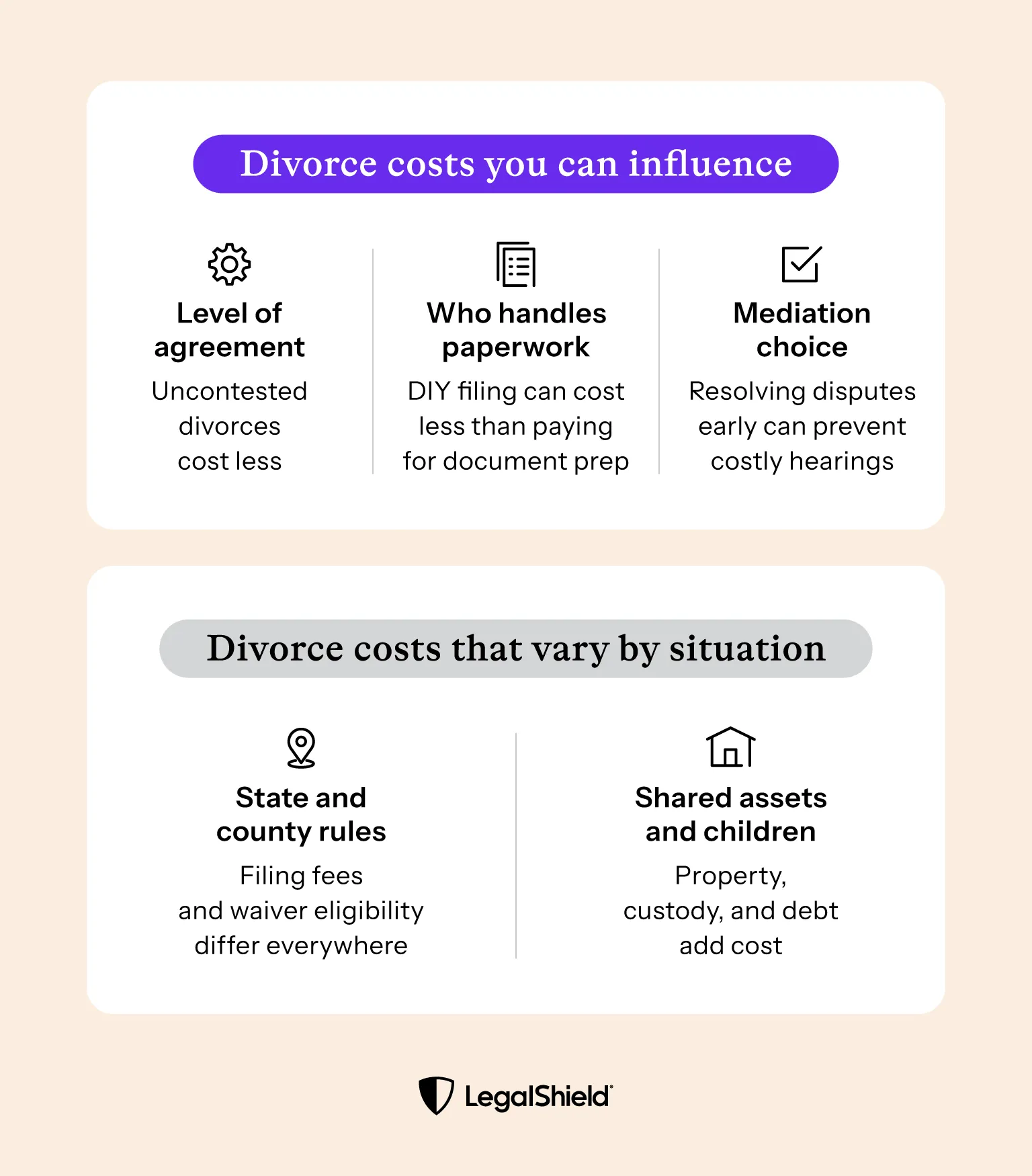
Divorce costs can range widely. A big factor is the spouses’ agreement. A simple uncontested divorce may cost less because both spouses agree on the main issues. A contested divorce may cost more because you’ve got to work through more questions, prepare and file more documents, and spend more time working on it.
Starting on the same page with your soon-to-be ex is helpful if you’re trying to understand how to get a divorce for free, or at least keep costs lower. Check out these common sources of other fees and expenses that can affect divorce cost include:
Court filing fees
Fees to serve divorce papers
Certified copies of court documents
Mediation costs
Document prep help
Legal guidance or representation
Parenting classes or other required court programs
Appraisal or valuation costs for homes, businesses, and other property
Extra court hearings if you and your spouse can’t agree on key issues
Keep in mind that each of the above costs will vary, depending on your state, county, income, whether you’ve got shared kids, and similar factors.
Low-cost divorce options
Aiming for a free divorce is not realistic. You’re almost guaranteed to incur some costs, but there are some methods that might lower costs.
Uncontested divorce
An uncontested divorce means you and your spouse agree on the major issues. That usually means property division, custody, support, and alimony. Because there’s less to dispute with an uncontested divorce, this is often one of the best paths for people looking for a lower-cost divorce.
Pro se divorce (representing yourself)
A pro se divorce means you represent yourself instead of working with a lawyer throughout the case.
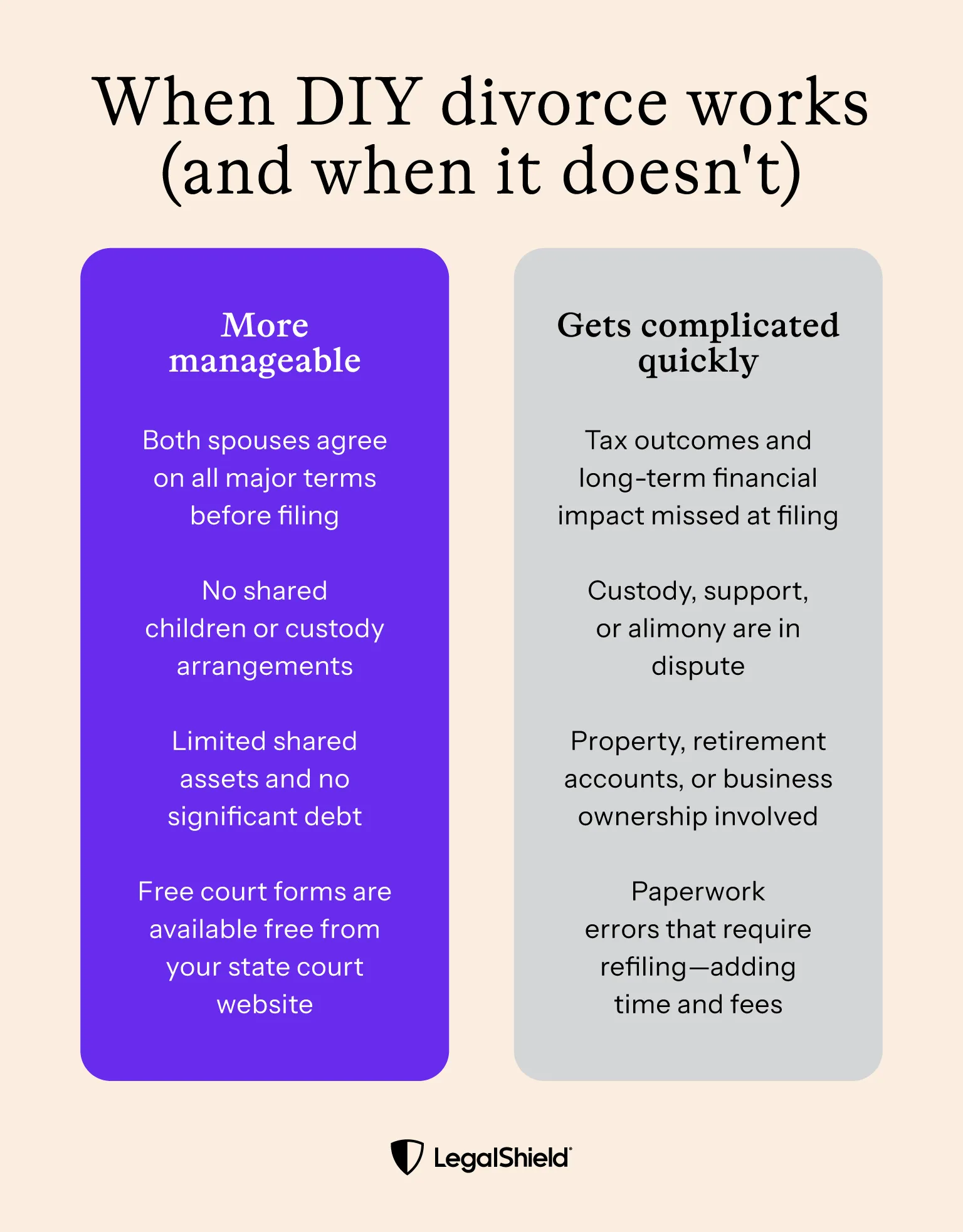
In simple, uncontested situations, this can lower costs because legal fees are one of the biggest divorce expenses. But if children, support, property, debt, or safety concerns are involved, the process can get complex quickly.
Online divorce services
Online divorce services can lower the costs of preparing some standard forms, but they often don’t include legal guidance, filing fees, and other expenses that add up fast.
These platforms may be fine for simple divorces (to the degree that any divorce can be simple), but they often don’t work well for contested divorces or situations with complex child custody, support, or property disputes.
Divorce filing fee waivers
Some courts offer filing fee waivers for people who meet income limits and other conditions. These waivers can reduce or even remove certain court fees, but they usually don’t cover every possible cost in a divorce. Fee waiver eligibility, forms, and review standards vary by state and local court.
Mediation
Mediation doesn’t directly lower costs because it’s something you typically pay for. However, it can indirectly lower costs by giving you a structured way to work through disagreements with the help of a neutral third party. Some courts even offer free or low-cost mediation programs.
This blog on going through divorce includes practical tips for managing a more civil — and potentially less costly — divorce process.
Unexpected costs of a DIY divorce
DIY may seem like the way to go if you’re looking for the cheapest option for a divorce — especially if you can find free divorce templates through your court’s website. But some of the costs may not be obvious right away. For instance, you may need to correct or refile documents, serve documents again, or deal with extra hearings because you missed something.
Before deciding on your approach, you’ll also need to think through some longer-term issues. Life after the divorce can look pretty different based on property division, debt, child custody, support, retirement accounts, and tax outcomes.
A DIY approach may still work — and stay low-cost — in simple, uncontested divorces. But it can be helpful to understand where mistakes or missing details might lead to more cost, delay, or stress later.
Get legal guidance on keeping divorce costs low with a LegalShield Membership
Low-cost divorce options may be worth exploring, but some approaches are riskier than others. Understanding how divorce works can help you see where the process may get more complex. And actually dealing with those complexities, however, might call for some legal support.
With a LegalShield Personal Membership, a LegalShield Provider Law Firm can help you with family law questions, document review, and legal guidance. Advanced and Premium Members may also get help navigating an uncontested divorce. That might include help with questions that can affect the total divorce cost.
Court forms, fee waivers, and the uncontested process can reduce costs in your divorce process. If you want legal guidance while trying to keep costs manageable, explore LegalShield® Family Law Plans or learn more about divorce support options.
Frequently Asked Questions
The quickest path is often an uncontested divorce. That’s where both spouses agree on the major issues before filing. The timeline still depends on required waiting periods, state law, local court schedules, and whether you do the paperwork right.
The time it takes to finalize a divorce depends on the state, court schedule, waiting periods, and how many issues you and your ex need to resolve. Cases that involve property, custody, support, or hard disagreements often take more time.
It’s legal to use online divorce services, but the divorce still has to go through the court process to be legally valid. Online divorce services may help prepare forms, but they rarely cover the entire divorce process. It’s helpful to check court requirements or speak with a lawyer before relying on an online process.
Communications Director at LegalShield overseeing content creation designed to make legal protection simple and approachable. He focuses on offering straightforward, trustworthy guidance that empowers people to make informed decisions about their legal rights and responsibilities.
En Estados Unidos, un divorcio sin oposición generalmente cuesta al menos $1,500, mientras que un divorcio con oposición puede empezar en $5,000 y superar los $20,000 en casos complejos. El costo total depende de los honorarios de abogados, los costos judiciales y el nivel de conflicto entre los cónyuges.
Decidir tramitar el divorcio ya es bastante difícil sin tener que preguntarte si estás llenando el formulario correcto. Cada estado maneja el proceso de manera un poco distinta, y es normal sentir dudas acerca de dónde empezar. Reunimos información sobre lo que puede suceder durante el trámite, incluyendo perspectivas de una abogada de verdad, para darte más claridad en este camino.
La mayoría de nosotros sabemos que deberíamos tener un testamento. Simplemente seguimos encontrando razones para posponerlo. Si eso te suena familiar, no estás solo/a. Sigue leyendo para aprender qué puedes hacer al respecto.
Prepararse para un divorcio implica reunir documentos financieros y personales, hacer un presupuesto de tus gastos mensuales, asegurar tus cuentas digitales e inventariar tus bienes. También es importante decidir qué tipo de divorcio se adapta a tu situación y consultar con un abogado antes de presentar la petición para proteger tus derechos.
¿Necesitas un poder notarial pero te preocupa el costo? Es natural preocuparse por pagar servicios legales, pero es importante no quedarse atrapado/a en dólares y centavos. Después de todo, no le puedes poner precio a la tranquilidad, y eso es exactamente lo que ofrece un poder notarial.
Ya sea que te estés casando, pasando por un divorcio o simplemente estés listo para un nuevo comienzo, cambiar tu nombre es un gran paso. Puede ser un proceso sorprendentemente difícil, y las tarifas varían mucho.
Planificar el futuro de tu familia toma tiempo y reflexión. Una herramienta que puede ayudar es el fideicomiso familiar: un arreglo legal que te permite decidir cómo se administra y se comparte tu propiedad con las personas que te importan.
A veces la gente tiene reacciones emocionales fuertes a la palabra "prenupcial" porque sienten que su pareja no confía en ellos. Pero un contrato prenupcial trata de establecer confianza y justicia. Puede ser una forma prudente y cariñosa de comenzar un matrimonio. Un contrato prenupcial es una manera en que dos personas resuelven cómo manejarán el dinero y los bienes antes de decir "acepto".
•
10 min read
Author Name
,
Author Title
September 28, 2026
Thank you! You're subscribed!
Oops! Something went wrong while submitting the form.