Filing for divorce typically involves going to a local court and submitting a divorce petition or similar form.
The exact process varies by state, with different factors such as residency length and the definition of a no-fault divorce.
Common mistakes in filing for divorce include filing too soon, leaving sections blank, or not proving service.
It’s difficult to estimate how long a divorce will take because of a wide range of factors.
Editor's note: This post was originally published August 17, 2023, and has been updated for accuracy, comprehensiveness, and freshness on August 17, 2026.
Deciding to file for divorce is hard enough without wondering if you're filling out the right form. Every state handles the process a little differently, and it's normal to feel unsure about where to start. We gathered information on what can happen during filing, including insights from a real lawyer, to give you more clarity during this journey.
If you’re learning how to file for divorce, you can have support available. After a waiting period, Advanced or Premium LegalShield® Plans provide access to LegalShield Provider Lawyers who can offer legal assistance during an uncontested divorce.
Before you file for divorce: What to know
The experience of filing for divorce doesn’t always line up with what people going through it expect. Rebecca A. Carter, a LegalShield Provider Lawyer with Friedman, Framme & Thrush, P.A., sees this often:
“Members often arrive to us with misconceptions about the divorce process, often shaped by secondhand accounts of a friend's experience or portrayals they have seen on television. In reality, divorce proceedings not only require a significant investment in time and patience, but also often involve a range of legal and practical considerations that the client does not anticipate.”
The factors that could affect your divorce also affect filing, so being aware of them can help you prepare to file. For example, an uncontested divorce, where you and your spouse agree on all terms, can happen more quickly than a contested divorce, where you disagree on at least one term. Filing for divorce can also take longer if you have children.
Before you start the divorce process, it’s often helpful to look into whether and where you can file. You'll need to meet your state's residency rules, which may require you or your spouse to have lived there for a set period of time. You may also have to go through a waiting period or file for separation before divorcing.
What can happen when you file for divorce
The events you’ll encounter as you file for divorce depend on your location and personal situation.
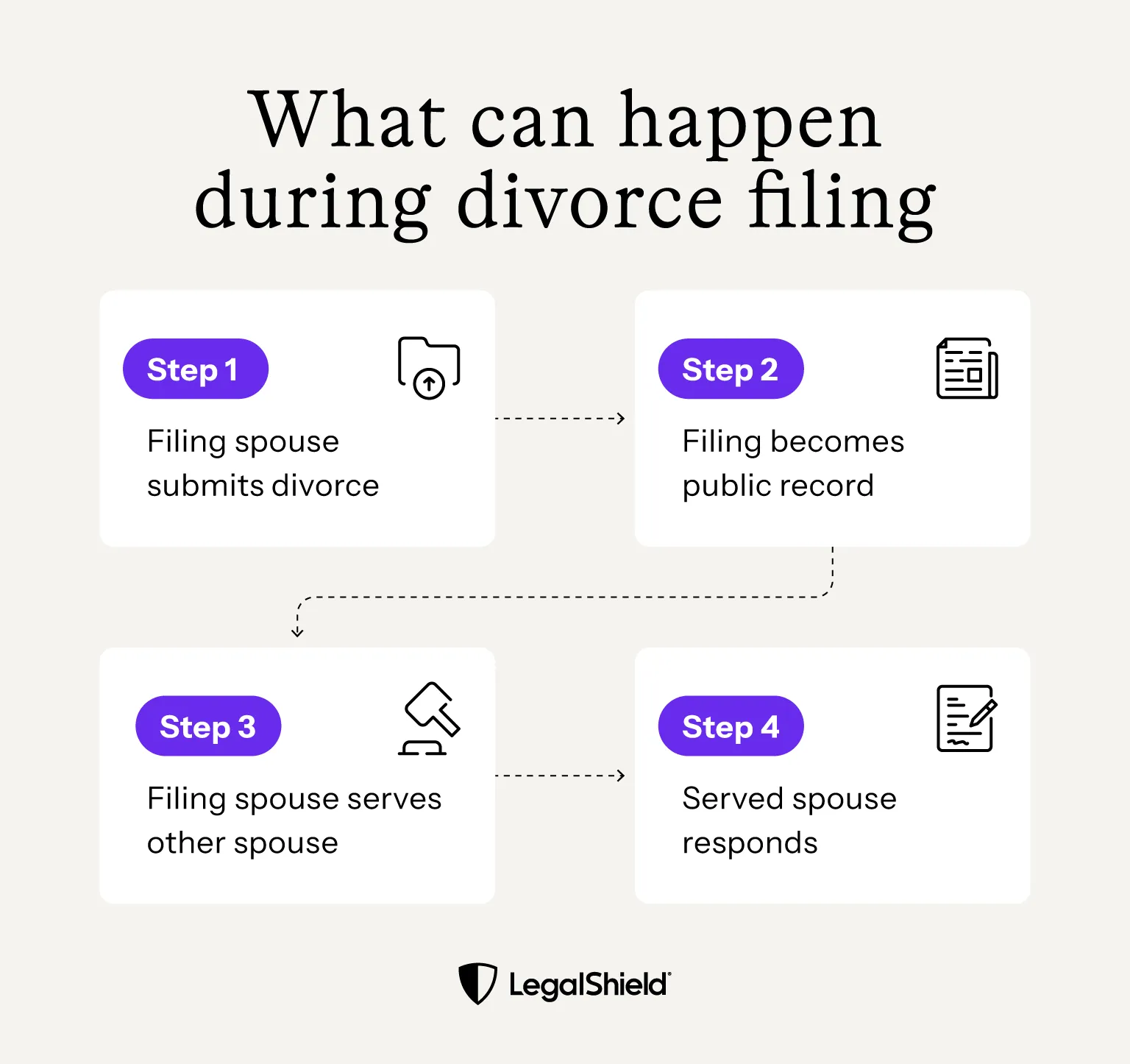
The filing spouse usually submits divorce papers to a local court, such as a district or circuit court. These forms typically include a divorce petition that states the reason for the divorce and, if applicable, requests related to property, custody, or support. From this point forward, most filings and hearings become part of the public record.
Right after someone files divorce paperwork, they will serve a copy on their spouse. The receiving spouse may then file a response within a set time frame based on state requirements.
How to get divorce papers
The exact process for getting the papers you need to file for divorce depends on the state you live in. You live, you may be able to find the paperwork files on one of your state’s websites.
How divorce filing can vary by state
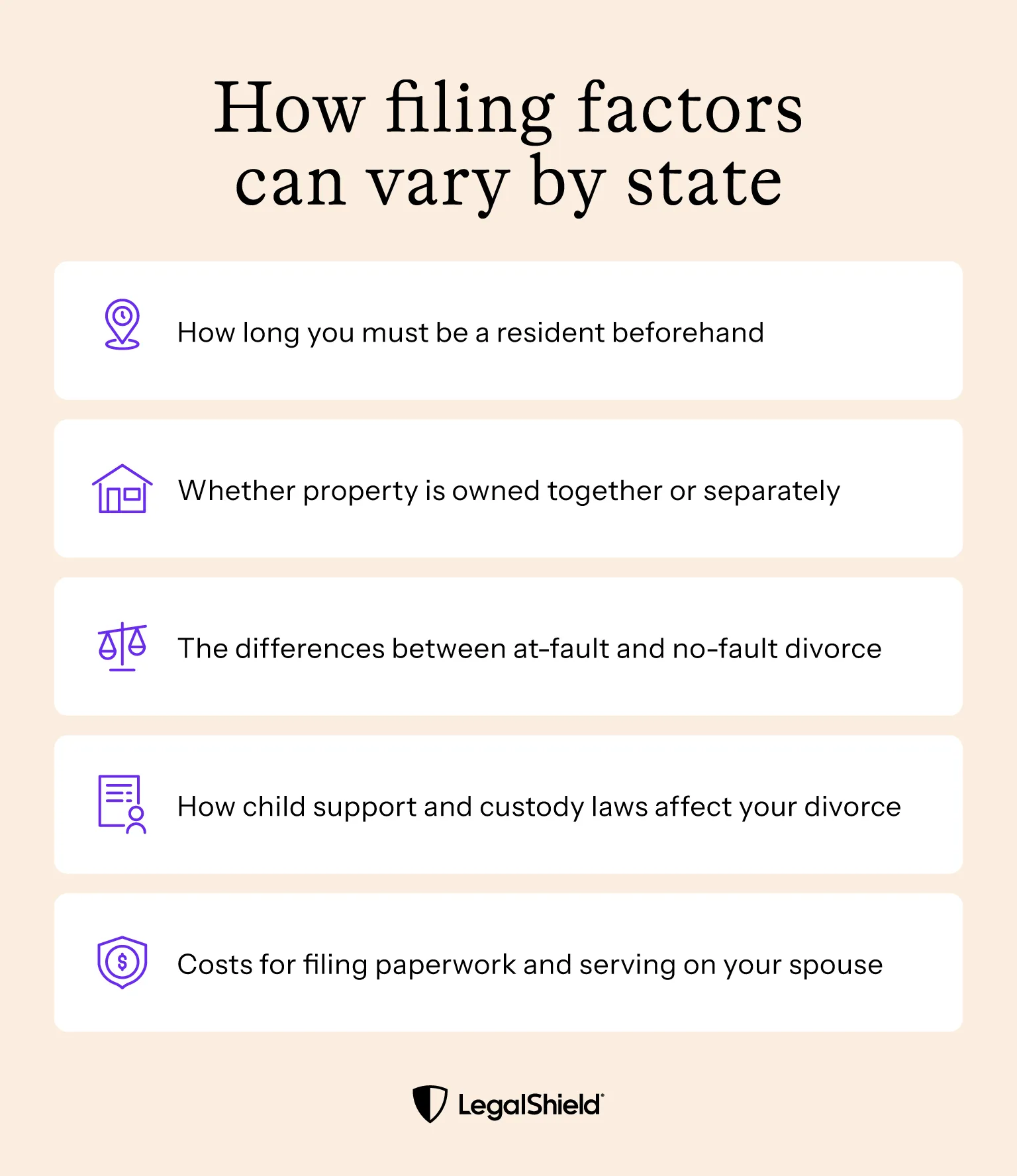
The above events can greatly vary depending on the state you live in. Carter shares just some ways that the filing process and considerations for it differ from state to state:
“For example, residency requirements can range from six weeks to a year, marital property laws can follow a ‘community property’ system, while others use ‘equitable distribution’; and there is an impactful difference between fault and no-fault divorces. Also, there are differences in law related to minor children for custody and child support.”
Different states also have their own filing costs. Filing your state’s divorce petition or a similar variant can cost anywhere from $50 to $450. Just after filing, you may also pay $20-$100 per job if you hire a process server to serve paperwork on your spouse.
A lawyer licensed to practice law in your state will understand the nuances that apply to your situation.
Common mistakes to avoid when filing for divorce
The filing process for divorce involves filling out forms according to your state’s standards. But, since there are so many details to work with and variations between states, these mistakes can happen:
Filing too soon: Submitting paperwork before fully understanding the financial, custody, and emotional implications of the decision, when the person could try mediation or counseling first.
Leaving required sections blank: Skipping form fields instead of filling them in, even when the answer is "none" or "not applicable."
Inconsistent information across forms: Entering names, dates, or other details differently on different forms, which can cause delays or rejections.
Incomplete or incorrect financial disclosures: Failing to disclose or properly categorize shared assets and debts, including retirement accounts, before submitting financial forms.
Incomplete proof of service: Having a process server deliver papers to your spouse and failing to obtain an affidavit or proof of service.
Missing supporting documents: Leaving out paperwork the court needs, such as prior court orders involving children, a prenuptial or postnuptial agreement, or existing separation agreements.
If you’re ever unsure about how to complete a divorce paper correctly, a lawyer can offer advice on getting it right the first time.
Do you need a lawyer to file for divorce?
Divorcing without a lawyer is possible, but it isn't right for every situation. Even when both spouses agree on the terms, including how to divide property, handle child custody and support, and split retirement accounts, they can get helpful guidance from a lawyer.
A lawyer can become even more valuable when the situation gets complicated. If children, retirement accounts, real estate, or a business are part of the picture, a lawyer can help make sure agreements hold up, and you miss nothing important. The same goes for situations involving a prenuptial or postnuptial agreement, a suspected hidden asset, or a spouse who already has legal representation.
How long does it take to get divorced?
As helpful as it would be to put a deadline on your divorce, nobody can tell how long a specific case will take. Carter says as much:
“This is not possible to predict, as it is impacted by many factors, including the court itself. Sometimes divorce can be completed in a few months, and other times, it takes years.”
A lawyer can help you understand what could happen in your divorce and the factors that can affect how long it’ll take. LegalShield Members have ongoing access to a provider law firm that can offer advice on family law issues like divorce as long as you don’t have existing legal counsel.
Get help filing for divorce with a LegalShield Membership
Figuring out how to file for divorce can feel like a lot to take on, especially while you're still working through everything else that comes with this decision. You don’t have to research your state’s requirements, fill out the right paperwork, and stay on top of court deadlines on your own.
With a LegalShield Membership, you can get advice on the steps involved in your uncontested divorce without paying hourly legal fees. If you're ready to see what support looks like for your situation, learn more about LegalShield Personal Plans.
Frequently Asked Questions
There is no such thing as a free divorce, but a LegalShield Plan costs less than the average $300/hour consultation fee for lawyers.
An annulment is not necessarily cheaper than a divorce. It might sound that way at first, but you have to prove highly specific legal grounds like coercion, incapacity, or fraud at the time of marriage. That level of proof can make the process more complex and therefore more expensive.
Yes, in most states. If you started with a legal separation and later decide to end the marriage, you can file to convert the separation into a divorce. The terms from your separation agreement usually carry over, but the court still has to formally end the marriage with a final decree.
The quickest path is often an uncontested divorce. That’s where both spouses agree on the major issues before filing. The timeline still depends on required waiting periods, state law, local court schedules, and whether you do the paperwork right.
Content Specialist at LegalShield, creating educational resources about legal and consumer protection topics. She focuses on making complex legal and financial concepts accessible to readers and has contributed to various educational articles on consumer rights and protections.
En Estados Unidos, un divorcio sin oposición generalmente cuesta al menos $1,500, mientras que un divorcio con oposición puede empezar en $5,000 y superar los $20,000 en casos complejos. El costo total depende de los honorarios de abogados, los costos judiciales y el nivel de conflicto entre los cónyuges.
Decidir tramitar el divorcio ya es bastante difícil sin tener que preguntarte si estás llenando el formulario correcto. Cada estado maneja el proceso de manera un poco distinta, y es normal sentir dudas acerca de dónde empezar. Reunimos información sobre lo que puede suceder durante el trámite, incluyendo perspectivas de una abogada de verdad, para darte más claridad en este camino.
La mayoría de nosotros sabemos que deberíamos tener un testamento. Simplemente seguimos encontrando razones para posponerlo. Si eso te suena familiar, no estás solo/a. Sigue leyendo para aprender qué puedes hacer al respecto.
Prepararse para un divorcio implica reunir documentos financieros y personales, hacer un presupuesto de tus gastos mensuales, asegurar tus cuentas digitales e inventariar tus bienes. También es importante decidir qué tipo de divorcio se adapta a tu situación y consultar con un abogado antes de presentar la petición para proteger tus derechos.
¿Necesitas un poder notarial pero te preocupa el costo? Es natural preocuparse por pagar servicios legales, pero es importante no quedarse atrapado/a en dólares y centavos. Después de todo, no le puedes poner precio a la tranquilidad, y eso es exactamente lo que ofrece un poder notarial.
Ya sea que te estés casando, pasando por un divorcio o simplemente estés listo para un nuevo comienzo, cambiar tu nombre es un gran paso. Puede ser un proceso sorprendentemente difícil, y las tarifas varían mucho.
Planificar el futuro de tu familia toma tiempo y reflexión. Una herramienta que puede ayudar es el fideicomiso familiar: un arreglo legal que te permite decidir cómo se administra y se comparte tu propiedad con las personas que te importan.
A veces la gente tiene reacciones emocionales fuertes a la palabra "prenupcial" porque sienten que su pareja no confía en ellos. Pero un contrato prenupcial trata de establecer confianza y justicia. Puede ser una forma prudente y cariñosa de comenzar un matrimonio. Un contrato prenupcial es una manera en que dos personas resuelven cómo manejarán el dinero y los bienes antes de decir "acepto".
•
10 min read
Author Name
,
Author Title
September 28, 2026
Thank you! You're subscribed!
Oops! Something went wrong while submitting the form.