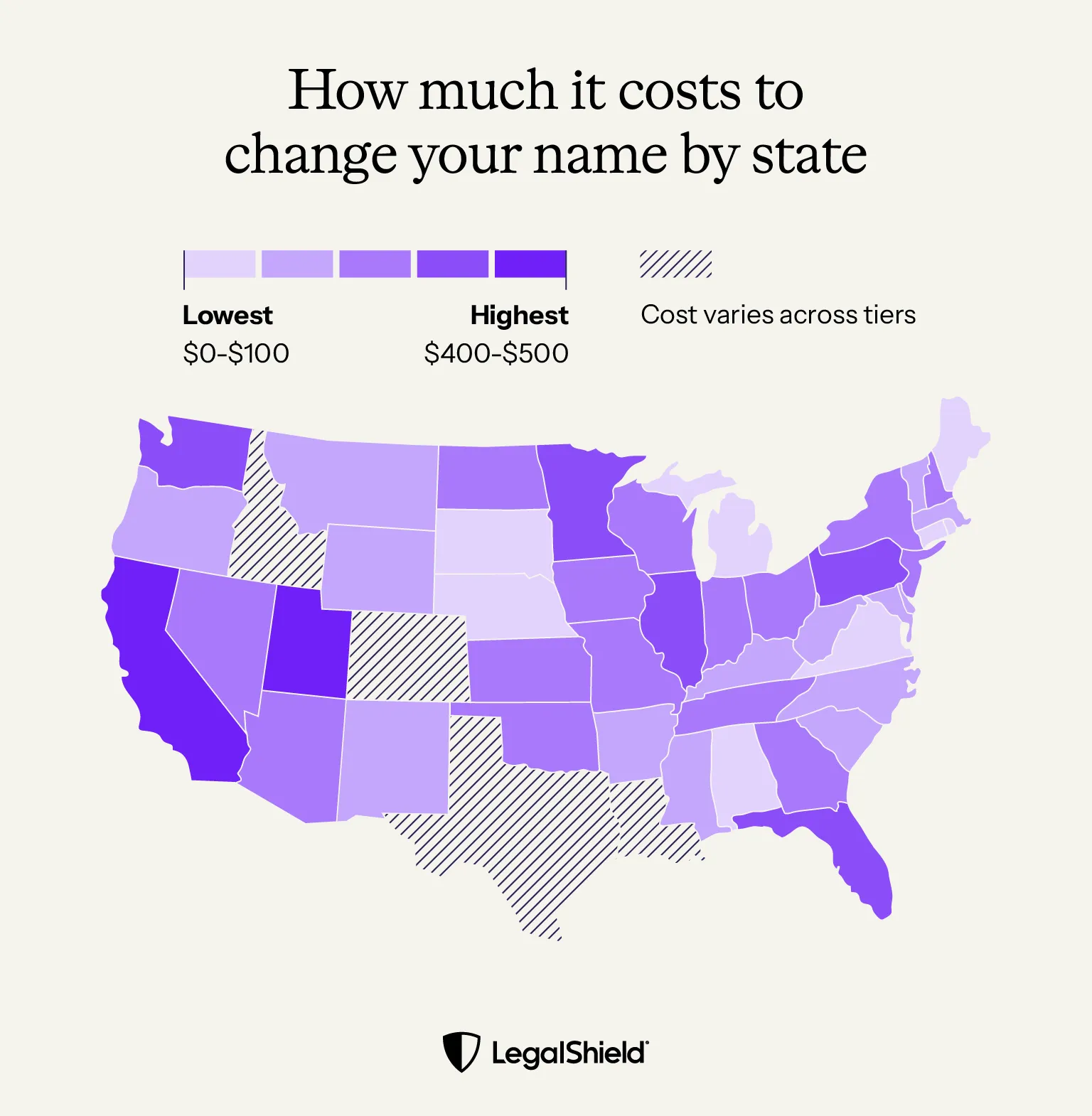
The cost to legally change your name generally ranges from $100 to $500, but it depends on where you live and why you're changing it. Court filing fees make up the biggest expense, but you may also need to pay for updated documents like your driver's license, passport, and Social Security card.
Whether you're getting married, going through a divorce, or simply ready for a fresh start, changing your name is a big step. It can be a surprisingly difficult process, and the fees vary widely.
Let's walk through how much it costs to change your name by situation, what you'll pay to update your documents, and how to keep your total expenses as low as possible. If you need extra help, uncontested name changes are included services in LegalShield® Personal Plans.
How much it costs to change your name by state
Court filing fees are usually the largest single expense in a name change. These fees cover the cost of processing your name change petition. Depending on your state and county, filing fees can vary pretty widely (consult the table below for more specifics).
Some courts charge additional fees for things like background checks or fingerprinting. In Colorado, for example, fingerprinting costs between $34.50 and $57.50, depending on the vendor. You'll also likely need at least one or two certified copies of your court order, which may bump the bill up. Check with your local courthouse for exact amounts.
Here are some estimates for the court filing fees involved.
Alabama $25
Alaska $200
Arizona $222
Arkansas $165
California $435–$450
Colorado $88–$238
Connecticut $0
Delaware $85
Florida $400
Georgia $200–$250 (depending on county)
Hawaii $50
Idaho $166
Illinois $300–$388
Indiana $157
Iowa $195
Kansas $195
Kentucky $118.50
Louisiana $300–$500 (depending on parish)
Maine $60
Maryland $165
Massachusetts $150
Michigan $50
Minnesota $310
Mississippi ~$150
Missouri $130–$175
Montana $120
Nebraska $35
Nevada ~$270
New Hampshire $170
New Jersey $250
New Mexico $132
New York $210 (county courts), $65 (NY civil courts)
North Carolina $120
North Dakota $160
Ohio Starts at $128
Oklahoma $154.14
Oregon $124
Pennsylvania $299
Rhode Island $39
South Carolina $150
South Dakota $72
Tennessee $160–$243.50
Texas $150–$450 (varies widely by county; check with your local court)
Utah $375
Vermont $150
Virginia ~$41
Washington $100–$300
West Virginia $145–$200
Wisconsin $165
Wyoming $120
Keep in mind that these prices can change, and your county courthouse is the best place to confirm the exact amount. There may also be additional costs beyond filing fees, such as background checks or certified copies of your court order.
Why the cost depends on your situation
The reason behind your name change can affect what you pay. Some situations, such as a name change after marriage, may involve different paperwork and fees than a name change handled through a court order. Let's look at the most common scenarios and how they may impact your costs.
After marriage
Getting married is one of the most common reasons for seeking a name change. If you're changing your name after getting married, your marriage license is the key document that starts the process.
You may still need to pay for updates to your driver's license, passport, and Social Security card. In the majority of cases, you won't actually need a separate court order, which may reduce the overall cost compared to other types of name changes. A LegalShield Provider Lawyer can help explain what your responsibilities are and how you need to fulfill them.
After divorce
If you want to go back to a maiden name after a divorce, you may be able to include the name change as part of your divorce proceedings. When handled this way, the name change often comes at no additional cost.
If you wait and file separately, you'll likely need to go through the standard name change petition process, which can sometimes carry additional filing fees.
General name change by court order
If you want to change your last name without getting married or change your first name, you'll need to file a name change petition with your local court. This is the most common path for people changing their name (or their children's names) for personal, cultural, or other reasons.
Filing fees, background checks, and certified copies of the court order all factor into the total cost. Some states may also require you to publish a notice of the name change in a local newspaper, which could add to your expenses.
The cost of updating your key documents
Once your name change is official, you'll need to update your key documents. Here's some of the paperwork you might need to amend.
Social Security card
You might want to do this first, as it gives you a supporting document you can use for other updates. Updating your name with the Social Security Administration will incur no cost. You'll need to fill out an application and bring your court order or marriage certificate to a local Social Security office, after which your new card will arrive via mail.
Driver's license or state ID
The fee to update your driver's license or state ID depends on your state. For example, a California driver's license update costs $46. The best way to get the exact cost and additional information is to contact your local office that handles that (usually the DMV).
Passport
If your passport is less than a year old, you can update your name at no cost. If it's older than that, you'll usually need to pay for a renewal. You can submit your name change request by mail along with your court order or marriage certificate.
Other documents to update
Beyond the big three, there are several other documents and accounts you’ll probably want to update with your new name:
Bank accounts and credit cards
Vehicle titles and registration
Estate planning documents
Employer and payroll records
Voter registration
Insurance policies
Utility accounts
You'll likely need to show a certified copy of your court order or marriage certificate. It's a good idea to order a few extra certified copies so you can handle multiple updates at the same time.
How to keep costs down
The fees for the name change process can add up, but there are a few ways to reduce what you pay.
Ask about fee waivers. Many courts offer fee waivers if you can show that paying the filing fee would be a financial hardship. Ask your local courthouse about the specifics of their process.
Include the name change in your divorce. If you're going through a divorce and want to return to a previous name, request the name change as part of your divorce decree, as this could avoid paying a separate filing fee.
Do the paperwork yourself. While a lawyer can help with the process, handling the forms on your own may save on legal fees. Having said that, bear in mind that you may end up more than offsetting any savings with costly mistakes, so getting legal help might be the way to go.
A LegalShield Personal Plan can assist you with uncontested name changes
Legally changing your name involves a lot of moving pieces, including court filings, forms, hearings, and document updates. If the process feels like a lot to manage on your own, a LegalShield legal plan can help.
LegalShield Members can get help with uncontested name changes, including assistance in preparing paperwork and attendance at the initial court hearing (if any). A provider law firm can also help answer questions about the process, review requirements in your state, and help you avoid common mistakes along the way.
Understanding how much it costs to change your name is the first step. Whether you're changing your name after a marriage, a divorce, or for other personal reasons, having the right support can make the process smoother and less stressful.
With plans starting around $1/day, a LegalShield Personal Plan can connect you with a provider law firm for help navigating name changes, family law questions, and other important life transitions at a reasonable price.
Frequently Asked Questions
The timeline varies by state, but most name changes take anywhere from a few weeks to a few months. If you are filing a name change petition in court, you'll typically wait for a court hearing date if one is needed. Once the judge signs your order, you can begin updating your documents right away.
You're not required to have a lawyer for a name change, but working with one can make the process easier. A lawyer can help you fill out the right forms, prepare for your hearing, and avoid delays. LegalShield Members can get help with uncontested name changes through a personal legal plan.
Many courts offer fee waivers for people who can show financial hardship. You must usually fill out a separate form explaining your situation. Check with your local courthouse to see if you qualify.
In some cases, yes. If you're changing your name because of a marriage or divorce, you may not need a separate court order. But for most other name changes, you'll need to file a petition and attend a hearing. The specific requirements depend on your state.
Communications Director at LegalShield overseeing content creation designed to make legal protection simple and approachable. He focuses on offering straightforward, trustworthy guidance that empowers people to make informed decisions about their legal rights and responsibilities.
En Estados Unidos, un divorcio sin oposición generalmente cuesta al menos $1,500, mientras que un divorcio con oposición puede empezar en $5,000 y superar los $20,000 en casos complejos. El costo total depende de los honorarios de abogados, los costos judiciales y el nivel de conflicto entre los cónyuges.
Decidir tramitar el divorcio ya es bastante difícil sin tener que preguntarte si estás llenando el formulario correcto. Cada estado maneja el proceso de manera un poco distinta, y es normal sentir dudas acerca de dónde empezar. Reunimos información sobre lo que puede suceder durante el trámite, incluyendo perspectivas de una abogada de verdad, para darte más claridad en este camino.
La mayoría de nosotros sabemos que deberíamos tener un testamento. Simplemente seguimos encontrando razones para posponerlo. Si eso te suena familiar, no estás solo/a. Sigue leyendo para aprender qué puedes hacer al respecto.
Prepararse para un divorcio implica reunir documentos financieros y personales, hacer un presupuesto de tus gastos mensuales, asegurar tus cuentas digitales e inventariar tus bienes. También es importante decidir qué tipo de divorcio se adapta a tu situación y consultar con un abogado antes de presentar la petición para proteger tus derechos.
¿Necesitas un poder notarial pero te preocupa el costo? Es natural preocuparse por pagar servicios legales, pero es importante no quedarse atrapado/a en dólares y centavos. Después de todo, no le puedes poner precio a la tranquilidad, y eso es exactamente lo que ofrece un poder notarial.
Ya sea que te estés casando, pasando por un divorcio o simplemente estés listo para un nuevo comienzo, cambiar tu nombre es un gran paso. Puede ser un proceso sorprendentemente difícil, y las tarifas varían mucho.
Planificar el futuro de tu familia toma tiempo y reflexión. Una herramienta que puede ayudar es el fideicomiso familiar: un arreglo legal que te permite decidir cómo se administra y se comparte tu propiedad con las personas que te importan.
A veces la gente tiene reacciones emocionales fuertes a la palabra "prenupcial" porque sienten que su pareja no confía en ellos. Pero un contrato prenupcial trata de establecer confianza y justicia. Puede ser una forma prudente y cariñosa de comenzar un matrimonio. Un contrato prenupcial es una manera en que dos personas resuelven cómo manejarán el dinero y los bienes antes de decir "acepto".
•
10 min read
Author Name
,
Author Title
September 28, 2026
Thank you! You're subscribed!
Oops! Something went wrong while submitting the form.