Yes, electronic signature laws are legally binding in the U.S. and usually have the same status as handwritten signatures. They’re also legally binding in many countries worldwide, including Canada and the United Kingdom.
Contracts are the backbone of your small business. Whether you’re collecting signatures or signing yourself, you want to be sure the documents will hold up.
You might wonder if you can trust electronic signatures. The answer is yes — electronic signatures are legally binding in the United States, Canada, and many other foreign countries. They allow you to sign documents on a smartphone or computer and are usually as acceptable as “wet” signatures made with ink on paper. In fact, they’re often preferable in modern business transactions.
This guide discusses e-signatures and what you must do to ensure they’re enforceable. We’ll also talk about the benefits of e-signing.
What is an e-signature?
E-signatures are a way to sign or collect signatures on electronic devices. You can use them on many types of legal contracts, such as contractor agreements or customer contracts.
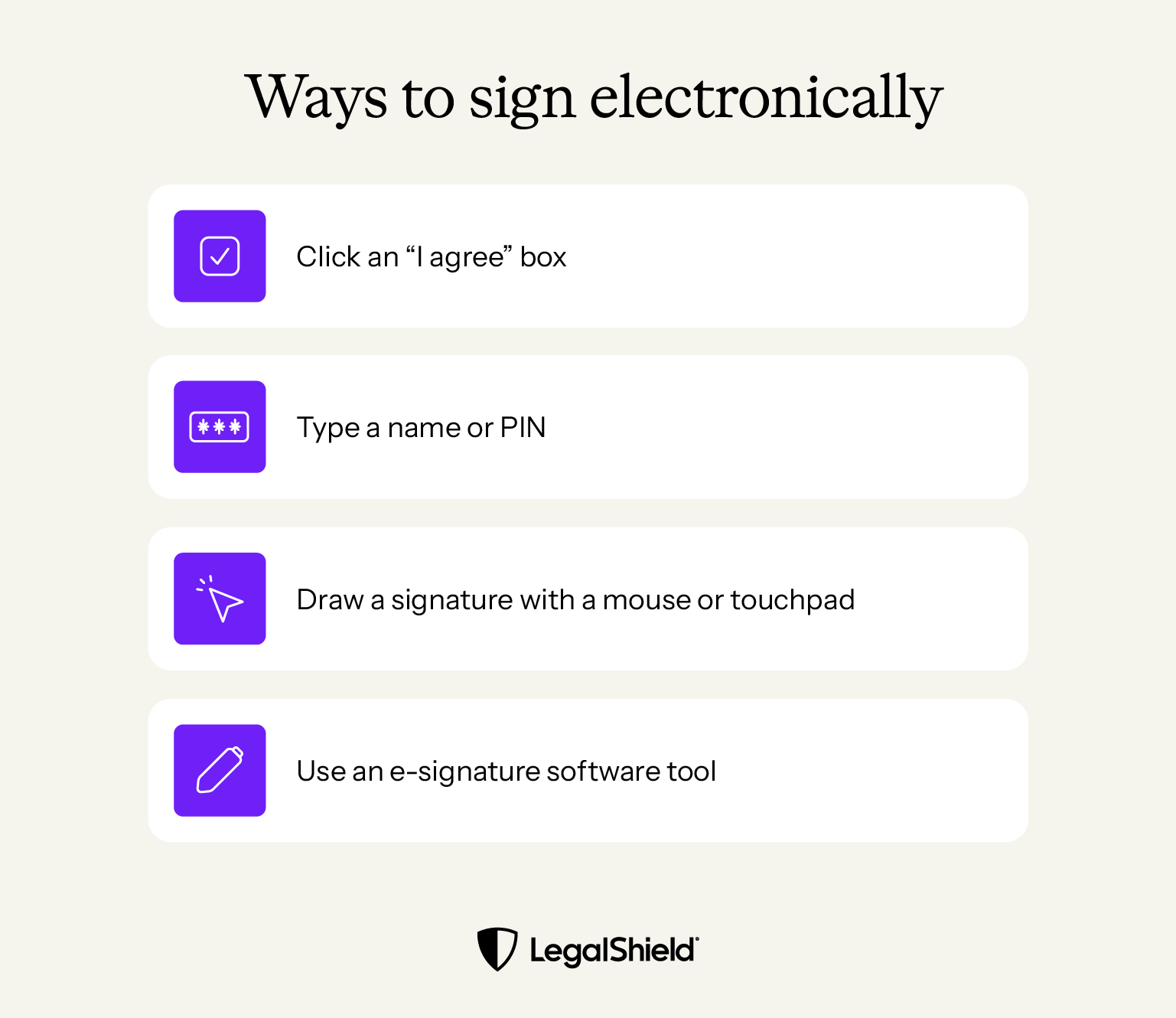
You can ask people to e-sign in several ways:
Checking the “I agree” box on a website
Typing their name or PIN into an online form
Using their finger or a mouse to sign their name
Using an e-signing software tool that routes a document to all parties and tracks signature progress
Are electronic signatures legally binding?
U.S. and many international laws make e-signatures as legally valid as wet signatures. These laws also lay out what you must do to ensure an e-signature is legally binding. When you know and follow the laws, e-signatures can be an easy and inexpensive way to handle document signing.
It’s a good idea to get contracts reviewed by a professional before you send them out for a signature. LegalShield® Small Business Plans include e-signature services to help you sign electronic documents securely.
What laws regulate electronic signatures?
Several laws make e-signatures legal and binding in the U.S.
The Electronic Signatures in Global and National Commerce (ESIGN) Act is a U.S. federal law that makes e-signatures valid in interstate and international commerce. This meansthat e-signatures can be enforceable for transactions between parties in the same state, two different states, or even two different countries.
TheUniform Electronic Transactions Act (UETA) is a law adopted by 49 states, Washington, D.C., the U.S. Virgin Islands, and Puerto Rico that validates e-signatures at the state level. Where ESIGN doesn’t apply in the U.S., the UETA usually does. These laws standardize the rules for e-signing.
New York is the only state that opted not to adopt the UETA. Instead, New York adopted its ownElectronic Signatures and Records Act (ESRA). It is similar to the UETA and makes an e-signature valid in New York.
Federal legal signature requirements
As of 2000, ESIGN makes e-signatures legal to collect everywhere federal law applies. The law outlines what you must do to make sure an e-signature is legally binding.
First, e-signatures must show a clear intent to sign. You usually have to ask signers to do something like check a box or draw their name with a mouse. There also needs to be a way for signers to opt in to signing electronically, such as by checking an “I agree” box next to a standard consent clause.
If someone doesn’t want to e-sign, they don’t have to. The document should give them clear instructions on how to get a paper copy.
You and anyone else who e-signs should get a digital copy of the signed document. There must be a way for all signers to keep a copy of the document for their records, typically by downloading and printing it.
What documents can be signed electronically?
You can use an e-signature on many personal and business documents. These are some of the types of paperwork where you can use an electronic signature:
Account opening paperwork
Insurance policy agreements and claims
Lease agreements and rental applications
Loan applications
Offer letters and employment contracts
Non-disclosure agreements
Patient intake forms
Purchase orders
Real estate documents
Service agreements
Sales contracts
Waivers and release forms
What documents can't be electronically signed?
You can’t e-sign all documents. There are exceptions under ESIGN and state laws, which can vary by location. Paperwork you can’t e-sign may include these kinds of documents:
Court orders
Deeds and mortgage documents
Birth certificates
Death certificates
Marriage certificates
Healthcare documents, like “do not resuscitate” orders
Powers of attorney
Testamentary trusts
Wills and codicils
Documents that must be notarized
If you have questions about electronic signature policy and when you can or can’t e-sign, you can get access to a knowledgeable LegalShield provider lawyer with a LegalShield Membership.
Are electronic signatures legal outside the U.S.?
Electronic signatures are legal in many places outside the U.S., but each country has its own e-signature laws. It’s a good idea to speak with a lawyer before signing international agreements.
What are the benefits of electronic signatures?
Electronic signatures have many benefits that can make them an even better option than wet signatures when the law allows you to use them. These include:
Convenience: You can usually send, sign, and return electronic documents almost immediately. You don’t have to meet in person or mail documents back and forth.
Management: You don’t have to print or file paper copies. With e-signed documents, you get an easy-to-manage digital copy sent to you, usually right after everyone signs.
Security: Many e-signing services include built-in security features. These include steps that verify the signers’ identities.
Clarity: E-signatures are often easier to read than handwritten signatures.
Audit trails: Electronic documents have timestamps when you open and e-sign them, leaving a clear audit trail.
Costs and consumption: Not having to print or ship paper copies cuts down on costs and consumption. Also, you don’t need physical storage space for electronic documents.
Sign with confidence with LegalShield
Contracts and legal documents are an important part of setting up a small business and keeping it running smoothly. With help from an affordable LegalShield Small Business Plan, you can make a sound small business contract strategy.
A LegalShield Business Plan allows you to consult with a provider lawyer about drafting, signing, and enforcing contracts. Planks also come with secure e-signature services.
This can depend on the document and the location. Electronic signatures are often valid across multiple states, but not always.
In the U.S., laws like ESIGN and UETA make e-signatures valid in cross-border agreements. Many other countries have similar laws allowing e-signatures across national borders.
You should follow these best practices for e-signing:
Communications Director at LegalShield overseeing content creation designed to make legal protection simple and approachable. He focuses on offering straightforward, trustworthy guidance that empowers people to make informed decisions about their legal rights and responsibilities.
En Estados Unidos, un divorcio sin oposición generalmente cuesta al menos $1,500, mientras que un divorcio con oposición puede empezar en $5,000 y superar los $20,000 en casos complejos. El costo total depende de los honorarios de abogados, los costos judiciales y el nivel de conflicto entre los cónyuges.
Decidir tramitar el divorcio ya es bastante difícil sin tener que preguntarte si estás llenando el formulario correcto. Cada estado maneja el proceso de manera un poco distinta, y es normal sentir dudas acerca de dónde empezar. Reunimos información sobre lo que puede suceder durante el trámite, incluyendo perspectivas de una abogada de verdad, para darte más claridad en este camino.
La mayoría de nosotros sabemos que deberíamos tener un testamento. Simplemente seguimos encontrando razones para posponerlo. Si eso te suena familiar, no estás solo/a. Sigue leyendo para aprender qué puedes hacer al respecto.
Prepararse para un divorcio implica reunir documentos financieros y personales, hacer un presupuesto de tus gastos mensuales, asegurar tus cuentas digitales e inventariar tus bienes. También es importante decidir qué tipo de divorcio se adapta a tu situación y consultar con un abogado antes de presentar la petición para proteger tus derechos.
¿Necesitas un poder notarial pero te preocupa el costo? Es natural preocuparse por pagar servicios legales, pero es importante no quedarse atrapado/a en dólares y centavos. Después de todo, no le puedes poner precio a la tranquilidad, y eso es exactamente lo que ofrece un poder notarial.
Ya sea que te estés casando, pasando por un divorcio o simplemente estés listo para un nuevo comienzo, cambiar tu nombre es un gran paso. Puede ser un proceso sorprendentemente difícil, y las tarifas varían mucho.
Planificar el futuro de tu familia toma tiempo y reflexión. Una herramienta que puede ayudar es el fideicomiso familiar: un arreglo legal que te permite decidir cómo se administra y se comparte tu propiedad con las personas que te importan.
A veces la gente tiene reacciones emocionales fuertes a la palabra "prenupcial" porque sienten que su pareja no confía en ellos. Pero un contrato prenupcial trata de establecer confianza y justicia. Puede ser una forma prudente y cariñosa de comenzar un matrimonio. Un contrato prenupcial es una manera en que dos personas resuelven cómo manejarán el dinero y los bienes antes de decir "acepto".
•
10 min read
Author Name
,
Author Title
September 28, 2026
Thank you! You're subscribed!
Oops! Something went wrong while submitting the form.