A Trustee is a type of fiduciary. Every Trustee is a fiduciary, but not every fiduciary is a Trustee.
The words fiduciary and Trustee sometimes get used like they're interchangeable, but they aren't. A Trustee is a type of fiduciary, but the fiduciary category covers many other roles. Knowing which is which matters when you're deciding who you trust with decisions you can't be there to make yourself.
A LegalShield® Personal Plan gives you ongoing access to a provider law firm that can help prepare the estate planning documents you need to get started, including your Will. We will walk through each role and help you figure out which one fits your situation.
What is a fiduciary?
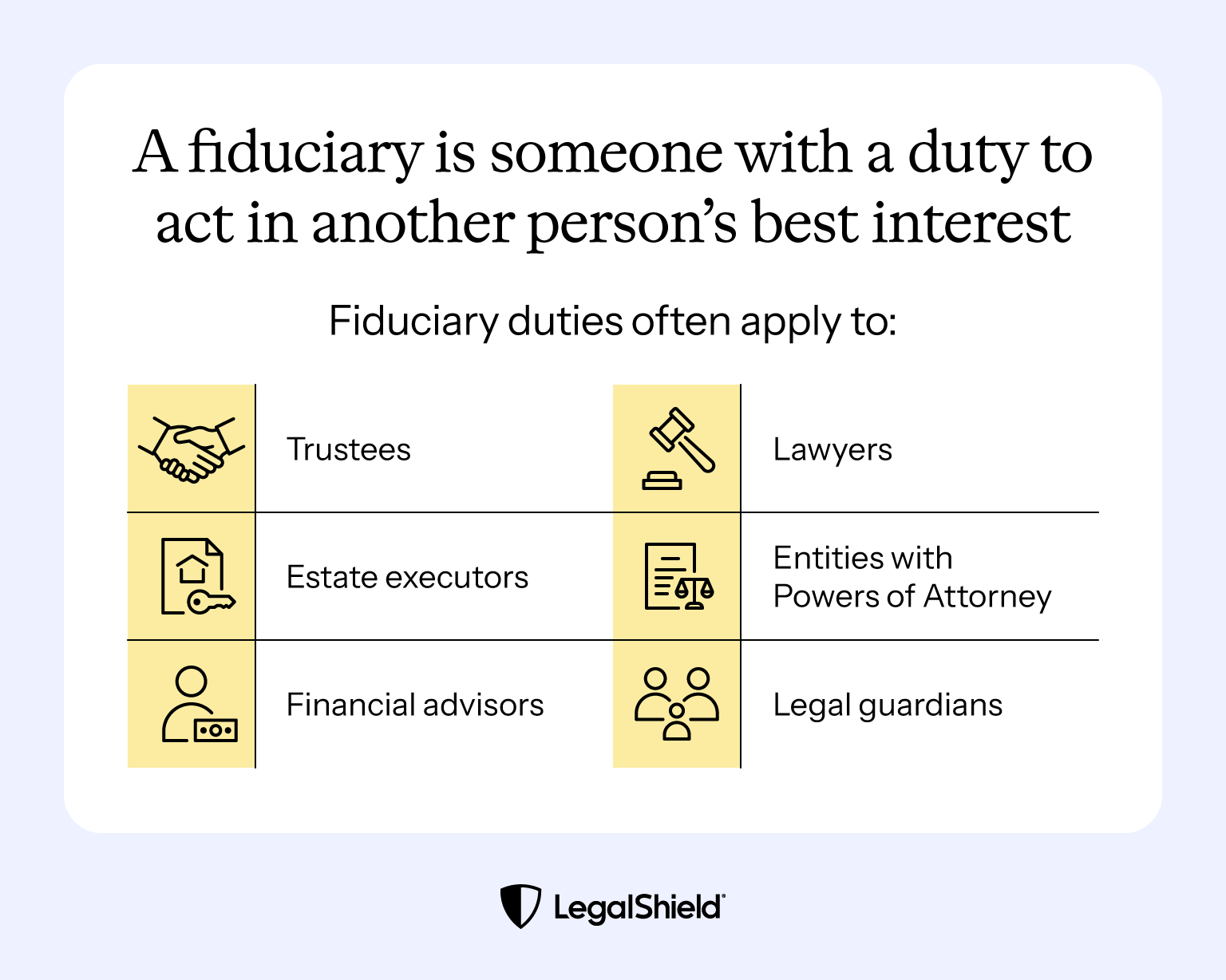
A fiduciary is someone who's legally required to act in another person's best interest, ahead of their own. Fiduciary comes from the Latin word for "trust," which is the whole idea behind the role. When you give someone fiduciary responsibility, you're trusting them to put you first in whatever decisions they make on your behalf.
The duty is binding. A fiduciary who acts in their own interest instead of yours can face legal consequences. That's what separates a fiduciary from an advisor or helper. They have a real legal obligation. Fiduciaries can be trusted friends or family members, professionals, or businesses. Some you choose yourself, while others get appointed by a court.
Types of fiduciaries
A fiduciary is a person or business that holds a duty to act in someone else's best interest. Some roles, such as Trustees, always carry that duty. Some professionals, such as financial advisors, can be fiduciaries but aren't always. Each role looks different, but the requirement to put another person's interests first is the core rule when a fiduciary duty exists. A Trustee is just one type of fiduciary on that list, which is why the two terms get confused so often.
What is a Trustee?
A Trustee is a specific type of fiduciary, responsible for managing a Trust and carrying out its instructions. A Trust is a legal setup where a person or persons, the grantor/s, transfer assets to be held by the Trustee for the benefit of someone else, the beneficiary.
The Trustee's job is defined by the Trust document, which spells out what assets are in the Trust, who benefits, and what the Trustee can and can't do. Anyone of legal adult age can serve as a Trustee. Family members, friends, lawyers, and corporate Trustees like banks or trust companies commonly serve as Trustees. Our blog on how a Trust works covers the bigger picture if you're new to Trusts.
How are fiduciaries and Trustees different?
A Trustee is always a fiduciary, but a fiduciary is not always a Trustee. The fiduciary vs. Trustee question really comes down to two things: what the role covers and who the person is answerable to.
Scope of responsibility
A fiduciary's duties depend on the role. A financial advisor handles fiduciary investment decisions, an executor manages an estate, and a person with a Power of Attorney pays someone's bills or makes certain decisions for the paerson. A Trustee's job is narrower, defined strictly by what the Trust document says to do.
Who they answer to
A fiduciary answers to whoever hired them or the party they were appointed to represent, like a client or a court that named them guardian. A Trustee specifically answers to the Trust beneficiaries. Beneficiaries have legal rights to information about how the Trust is being managed and can take the Trustee to court if they suspect mismanagement. Our breakdown of the rights of Trust beneficiaries eplains those rights.
State law also adds oversight rules specifically for Trustees. Most states require Trustees to file periodic accountings that show how Trust money has been spent, and beneficiaries can request those records to keep the Trustee honest. Other fiduciaries usually don't face that level of routine paperwork unless someone raises a concern.
When people use different types of fiduciaries
Someone setting up a Trust names a Trustee to manage it. Someone writing a Will names an executor to carry it out. Someone planning for incapacity names a Power of Attorney to step in if needed. Each of those is a type of fiduciary, but only a Trust specifically calls for a Trustee.
What matters most is picking the right person. A Trustee should be trustworthy, organized, and comfortable saying no when the documents require it. It also helps to name a backup. If the first choice can't serve when the time comes, having an alternate keeps the decision out of court.
For Trusts with large amounts of money or families that don't get along, many people appoint a professional Trustee or co-Trustee as a neutral third party. Our walkthrough of whether a Trust or Will is right for you can help you figure out which estate planning tools best fit your situation. A LegalShield Provider Law Firm can help you prepare them.
How a LegalShield Plan can help with your estate
A lawyer can walk you through your estate planning and the benefits of Trusts.
A LegalShield Premium Personal Plan gives you ongoing access to a provider law firm that can set up a Revocable Trust, prepare your estate plan with annual updates, and review personal legal documents.
If you're just starting on getting your estate plan in order, having access to a law firm means you can ask about the parts that confuse you before you sign anything. You can review the LegalShield Personal Plan coverage and pricing for the full breakdown.
Frequently Asked Questions
Yes. A Trustee is always a fiduciary by definition. The same person can also hold multiple fiduciary roles at once. Your spouse could be both the Trustee of your living Trust and the Executor of your Will. They'd be acting as a fiduciary in each role, but the specific duties would change depending on which document they're working from at the time.
Yes, if they breach their Trustee fiduciary duties. A Trustee who mismanages the Trust or fails to follow the Trust document can be sued by the beneficiaries and held personally responsible for any losses. That's part of why some people prefer professional Trustees, who carry insurance and have experience with the legal requirements.
A Trustee manages a Trust. An executor manages an estate after someone dies, carrying out the instructions in their Will. Both are fiduciaries, but they're created by different documents and have different responsibilities. An executor's job is usually temporary, wrapping up after probate ends. A Trustee's job can last years or even decades, depending on the Trust's terms.
The two roles can also overlap. If someone dies leaving both a Will and a Trust, the same person might serve as the executor of the estate and the Trustee of the Trust, though some people pick different individuals to split up the workload. The executor handles assets that pass through the Will, while the Trustee handles assets already inside the Trust.
Communications Director at LegalShield overseeing content creation designed to make legal protection simple and approachable. He focuses on offering straightforward, trustworthy guidance that empowers people to make informed decisions about their legal rights and responsibilities.
We’ll provide more information about the trustors vs. trustees comparison, what to consider when filling these roles, and how they work together in Revocable and Irrevocable Trusts.
A power of attorney with springing powers is a legal document that grants someone else the authority to act on your behalf only after a specific event occurs.
There’s no rule that says a lawyer has to set up your Trust for it to be valid. However, Trusts are complex and doing it yourself without a lawyer's help comes with risks.
A Certificate of Trust proves your Trust is real and names who can act for it, while your beneficiaries and assets stay private. It lets your Trustee handle Trust business, like opening accounts or transferring property.
A limited power of attorney often comes in handy when you need help for a short time or for a single purpose. This legal document can help in situations like when you’re traveling, serving in the military, caring for an aging parent, or sending a child to study abroad.
We’ll cover some of the most common scams, the red flags that give them away, how to protect yourself, and what to do if you’ve already been caught out.
An executor is responsible for ensuring your final wishes get carried out, so it’s important that you choose someone who is responsible and can bear the emotional burden.
An employer identification number is a nine-digit number the IRS uses to identify a taxpayer. The estate needs its own, and getting one is usually simpler than it sounds. Learn more about estate EINs.
•
5 min read
Thank you! You're subscribed!
Oops! Something went wrong while submitting the form.







.jpg)