Common ways to avoid probate include setting up a Living Trust, naming beneficiaries on financial accounts, using Transfer-on-Death or Payable-on-Death designations, and holding certain property jointly. The right approach depends on the asset, state laws, and your goals.
You’ve probably heard the word “probate” plenty of times in your life, but do you actually know what it is? Probate is the court process for handling a person’s estate after they pass away. It’s a process that can take time, add costs, and create extra work for loved ones during an already difficult time. That’s why people often want to know how to avoid probate.
The probate process can involve court filings, notices, deadlines, fees, and probate documents. For some estates, this is a relatively smooth process. Others take longer because of disputes, unclear documents, or state-specific rules.
The right approach can depend on your state probate laws, assets, and family situation. LegalShield® Provider Law Firms can help you navigate those factors with consultation, but in the meantime, here’s a broad look at ways estates can avoid probate.
How to keep your estate out of probate: Common tools and strategies
Nothing guarantees that your assets stay out of probate. But there are several proven estate planning tools that can make it much more likely. Keep in mind that the right approach depends on the property, how it’s owned, who you want to receive it, and your state’s probate laws.
Set up a Living Trust
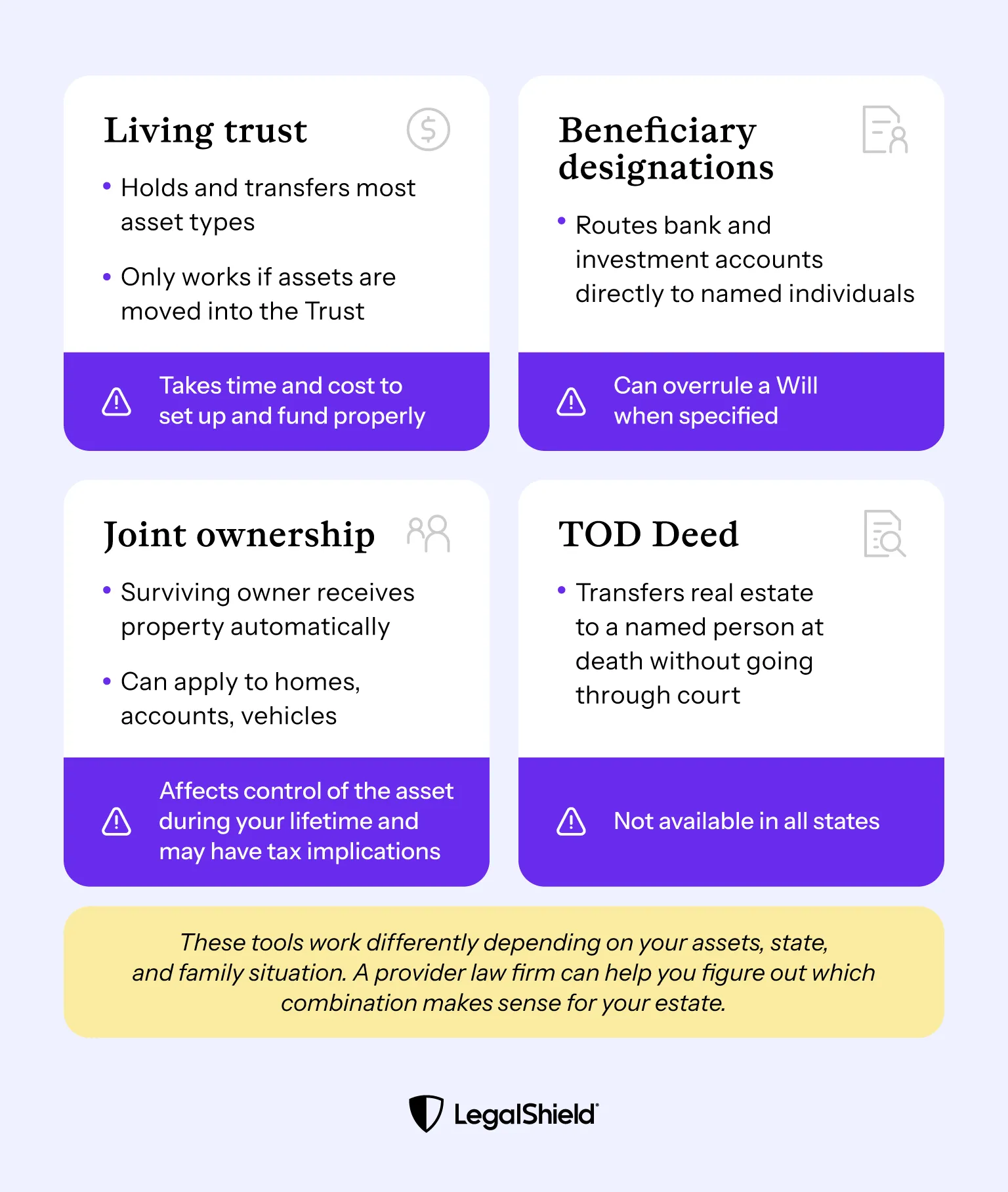
A Living Trust is a legal document that can hold and manage assets and help transfer them without probate after your death.
This is one of the more direct probate-avoidance tools. However, there’s a big caution: The Trust usually only works as intended if you transfer the assets into the Trust.
The cost and process vary widely, depending on your estate, your state, and the type of Trust. This guide to the cost of a Living Trust explains some of the factors that affect the price.
Name beneficiaries on financial accounts
Certain financial accounts can pass directly to named beneficiaries without going through probate. Bank accounts — like checking, savings, and certificates of deposit (CDs) — can often use a Payable-on-Death (POD) designation. Investment, brokerage, and life insurance accounts typically use a Transfer-on-Death (TOD) or a beneficiary designation. The account type determines which designation applies, and not every institution offers both.
It’s worth reviewing your beneficiary designations after major life events: marriage, divorce, the birth of a child, or the death of a loved one. Outdated designations can create confusion or even send assets somewhere different from where you intended.
Consider joint ownership
In some cases, two people can own certain property in a way that lets the surviving owner get it automatically when the other person dies. This concept, called joint tenancy with right of survivorship, may apply to a home, bank account, vehicle, or other jointly owned property.
This approach may help keep that property out of probate, but it can also affect who can use, sell, borrow against, or manage the property while you’re alive.
Adding a joint owner can also have tax consequences — including potential gift tax implications and effects on the property's cost basis when it's eventually sold. Before making any changes to how a property is titled, it's worth speaking with both a lawyer and a tax professional.
Look into Transfer-on-Death Deeds
A TOD can let real estate pass directly to a named beneficiary after the owner dies. These deeds are not available in all states, but when they are available, they can help keep homes and other real estate out of probate.
Because the rules for TOD Deeds vary, it’s helpful to learn more about how to transfer property without probate and ask a lawyer whether this option is available where you live.
Know your state's small estate options
Some states give smaller estates a bit of a break, such as fewer court steps or a shorter overall process. That depends on the value of the estate and the rules in your state.
These small estate rules can be quite specific. For example, in most states, simplified small estate options are generally not available if there is a valid Will. So if you want to do this right, it's a good idea to chat with a legal professional. They can help explain whether a simplified process applies to your estate and what your local laws say.
Does a Will avoid probate?
Unlike a Living Trust, a Will doesn't avoid probate — it goes through it. A Will tells the court who should receive your assets and who should handle your estate, but the court still oversees the process. Having a Will can make probate smoother and clearer, but it doesn't replace the court's involvement.
Which assets have to go through probate?
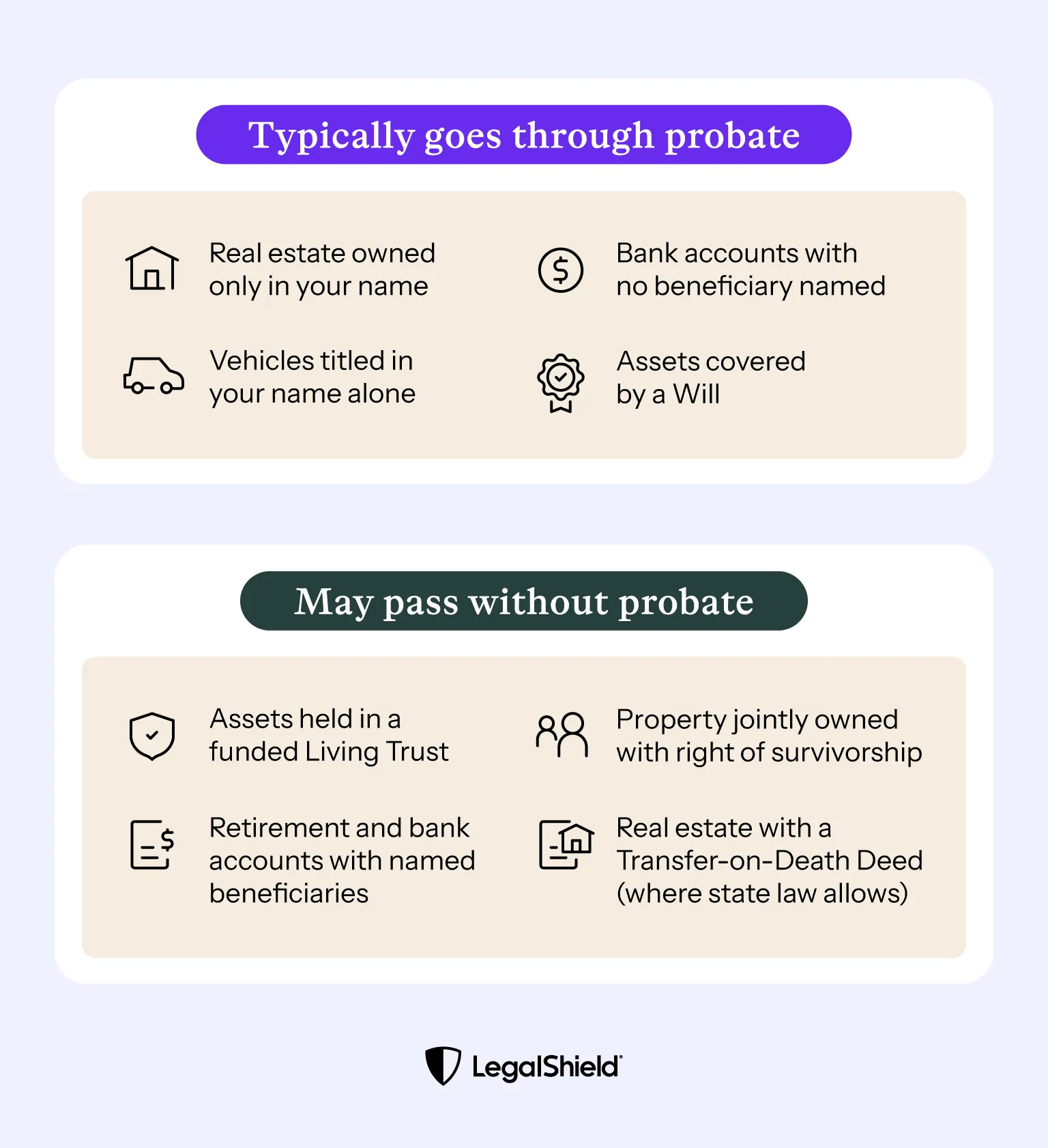
Not all assets have to go through probate. Some common kinds of assets may not be subject to probate:
Assets held in a properly funded Living Trust
Bank, retirement and investment accounts with a POD, a beneficiary designation or a co-owner
Life insurance proceeds when there’s a named beneficiary
Property that’s jointly owned with right of survivorship
Real estate covered by a TOD Deed, where allowed by state law
This is again where state-level rules matter. If you’re unsure when probate is required, a lawyer can review the assets and explain which ones may call for court involvement.
How a LegalShield Plan can help with estate planning
Knowing how to avoid probate often starts with understanding which tools fit your estate. But there are lots of tools available: Living Trusts, beneficiary designations, joint ownership, and more. They can all work differently in different contexts.
A LegalShield Membership connects members with a provider law firm that can answer estate planning questions and offer legal guidance. Members may also get help with a Will, Living Will, or Power of Attorney, and can have certain legal documents reviewed.
LegalShield Premium Plan members can get a Living Trust prepared by a provider law firm for a flat fee. Members on other plans may access Living Trust preparation at a reduced rate through the plan's discount benefit. Explore the estate planning services on each LegalShield Plan to find the one that fits your needs.
Frequently Asked Questions
Probate costs vary by state, court, estate size, and how many disputes there are. Common probate costs include court fees, filing fees, and legal fees.
The length of the probate process can vary depending on the estate and the local court. State rules, creditor claims, missing documents, unclear ownership, and family member disagreements can all affect the timeline.
No, it’s not too late to plan if you already have a Will. A Will is a key estate planning document, but it doesn’t prevent probate on its own. If the goal is to keep certain assets out of probate, a lawyer can help you understand whether tools like Living Trusts, beneficiary designations, or TOD Deeds might fit your situation.
Communications Director at LegalShield overseeing content creation designed to make legal protection simple and approachable. He focuses on offering straightforward, trustworthy guidance that empowers people to make informed decisions about their legal rights and responsibilities.
We’ll provide more information about the trustors vs. trustees comparison, what to consider when filling these roles, and how they work together in Revocable and Irrevocable Trusts.
A power of attorney with springing powers is a legal document that grants someone else the authority to act on your behalf only after a specific event occurs.
There’s no rule that says a lawyer has to set up your Trust for it to be valid. However, Trusts are complex and doing it yourself without a lawyer's help comes with risks.
A Certificate of Trust proves your Trust is real and names who can act for it, while your beneficiaries and assets stay private. It lets your Trustee handle Trust business, like opening accounts or transferring property.
A limited power of attorney often comes in handy when you need help for a short time or for a single purpose. This legal document can help in situations like when you’re traveling, serving in the military, caring for an aging parent, or sending a child to study abroad.
We’ll cover some of the most common scams, the red flags that give them away, how to protect yourself, and what to do if you’ve already been caught out.
An executor is responsible for ensuring your final wishes get carried out, so it’s important that you choose someone who is responsible and can bear the emotional burden.
An employer identification number is a nine-digit number the IRS uses to identify a taxpayer. The estate needs its own, and getting one is usually simpler than it sounds. Learn more about estate EINs.
•
5 min read
Thank you! You're subscribed!
Oops! Something went wrong while submitting the form.







.jpg)