

Personal Property
6 min read
How Does a Springing Power of Attorney Work?
A power of attorney with springing powers is a legal document that grants someone else the authority to act on your behalf only after a specific event occurs.



Trustors, also called grantors, are people who create and direct the funding of a trust, and trustees manage and administer a trust’s assets. The same person can sometimes act in both roles.
The decisions around what you want to happen after you die can be difficult. If you’re thinking about your estate, planning ahead can help protect your family and make it easier for them to honor your wishes. A trust is an estate planning tool that can help your property and belongings go to those you intend. When you create and direct the funding of one, you’re acting as a trustor. As such, you’ll typically name a trustee who will manage your trust.
A lawyer can offer guidance as you make this decision. LegalShield® Personal Plans give you access to affordable estate planning legal help. Every LegalShield Membership includes Will preparation from a provider law firm, and Premium members can get help with Revocable Trusts for a fee.
If you’re looking for information about the roles in a trust, we’ll provide more information about the trustors vs. trustees comparison, what to consider when filling these roles, and how they work together in Revocable and Irrevocable Trusts.
Before learning the roles of trustor and trustee, it helps to know the difference between Revocable and Irrevocable Trusts. These differences can vary by state, so check your local laws.
Revocable Trusts, also called Living Trusts, typically offer trustors more flexibility. The trustor can still control this type of trust, and they can choose to act as the trustee and name a successor trustee for after they pass. They can also direct the transfer of assets, name a new trustee, or change or revoke the trust.
As the name implies, it’s usually hard to revoke an Irrevocable Trust to change its terms after creation.
A trustor no longer legally owns the assets they place in one of these trusts. This gives them less control, but it may provide tax benefits and help protect assets from the trustor’s creditors. The trustor also usually can’t name a new trustee or change the beneficiaries.
In trust planning, the trustor is the person who creates the trust. Typically, they are the person (or people, if a married couple) who owns the assets going into the trust.
After a trust is created, the trustor will direct the funding and handle any administration. While often the same person as the trustor, trustees typically execute documents with their title as trustee.
Other terms for a trustor that you might see on legal or financial documents include settlor, grantor, or creator. Depending on the type of trust, the trustor(s) can also serve as the trustee(s). This is most common with Revocable Living Trusts.
The trustor’s responsibilities involve a variety of tasks related to creating a trust:
Directing the transfer of assets into the trust (and sometimes managing them, depending on the type of trust)
A trustee is the person you choose to manage the trust. Their job is to preserve and administer the trust for its named beneficiaries.
Trustees have the rights and responsibilities laid out by the trustor in the trust documents, as long as they don’t violate state and federal laws.
In general, to manage a trust, trustees are expected to perform tasks in the best interest of the trust:
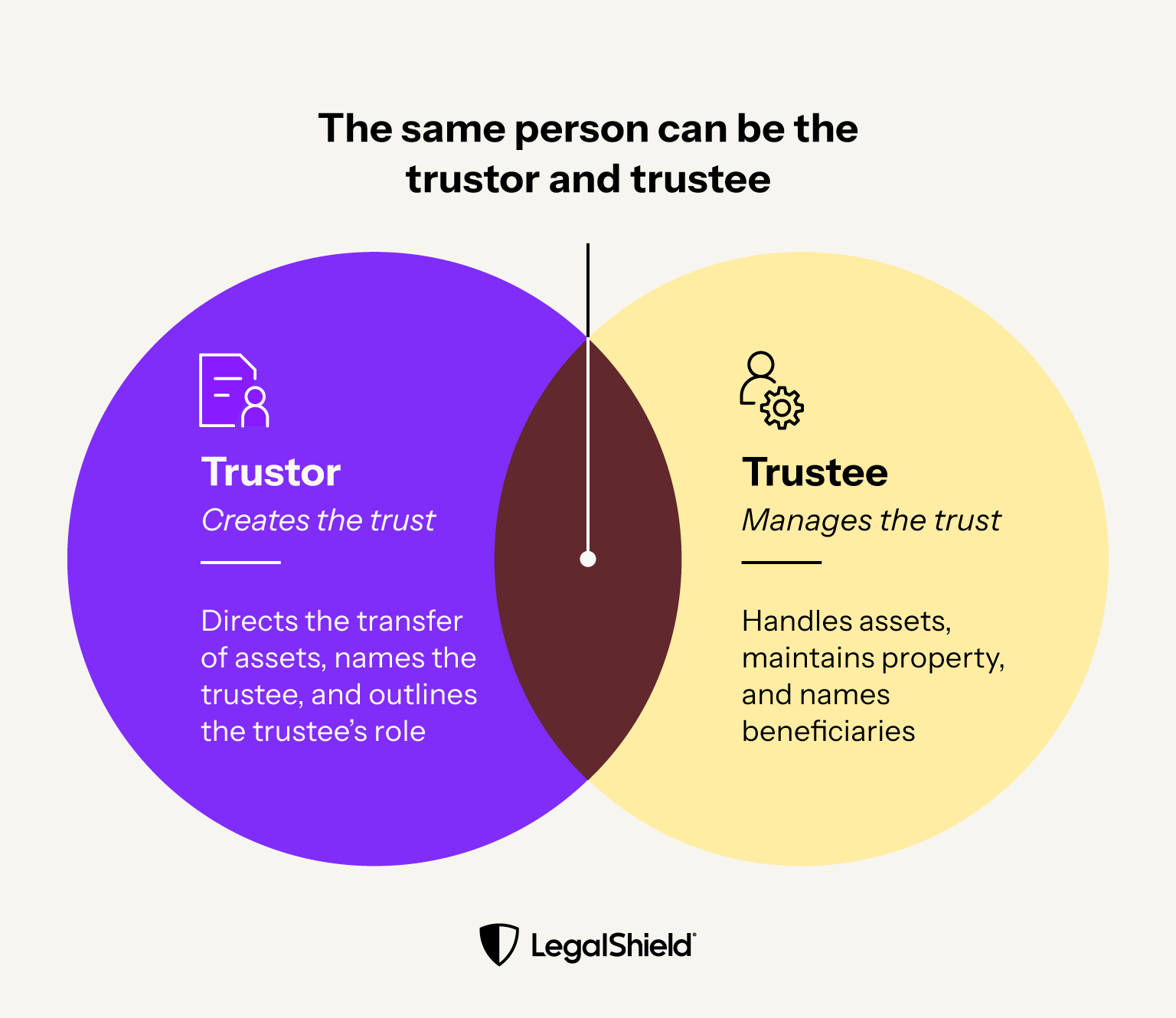
The same person can serve as trustor and trustee, depending on the type of trust. A trustor creates and directs the funding of the trust, and a trustee manages it. Revocable Trusts often name the trustor as a trustee. That arrangement is much less common with an Irrevocable Trust and depends on the trust’s terms and goals.
Depending on the type of trust, one person can be both trustor and trustee and also be the trust’s beneficiary, the person who receives the assets or currently has them. In a Revocable Trust, the trustor can be the beneficiary, but in an Irrevocable Trust, they often can’t.
If you don’t have a law degree, these differences can be easy to mix up. LegalShield Provider Law Firms can offer guidance throughout the Revocable Trust process so you can move forward with a clearer picture of how your trust is set up.

Setting up a trust requires choosing a trustee and successor trustee. The selected person will usually have access to the assets in the trust. They’ll also have duties you’re relying on them to carry out after you die. Giving careful consideration to who you choose can help you get reassurance that they’ll honor your wishes.
You might name a family member or friend as the successor trustee, but you can also name a bank, a trust management company, or other professional. When selecting a corporate trustee, it could be helpful to meet with them before appointment and make sure they’re willing to perform the work.
If you name yourself as trustee, then the important choice is the successor trustee, who will manage the trust when you are incapacitated or after you pass away.
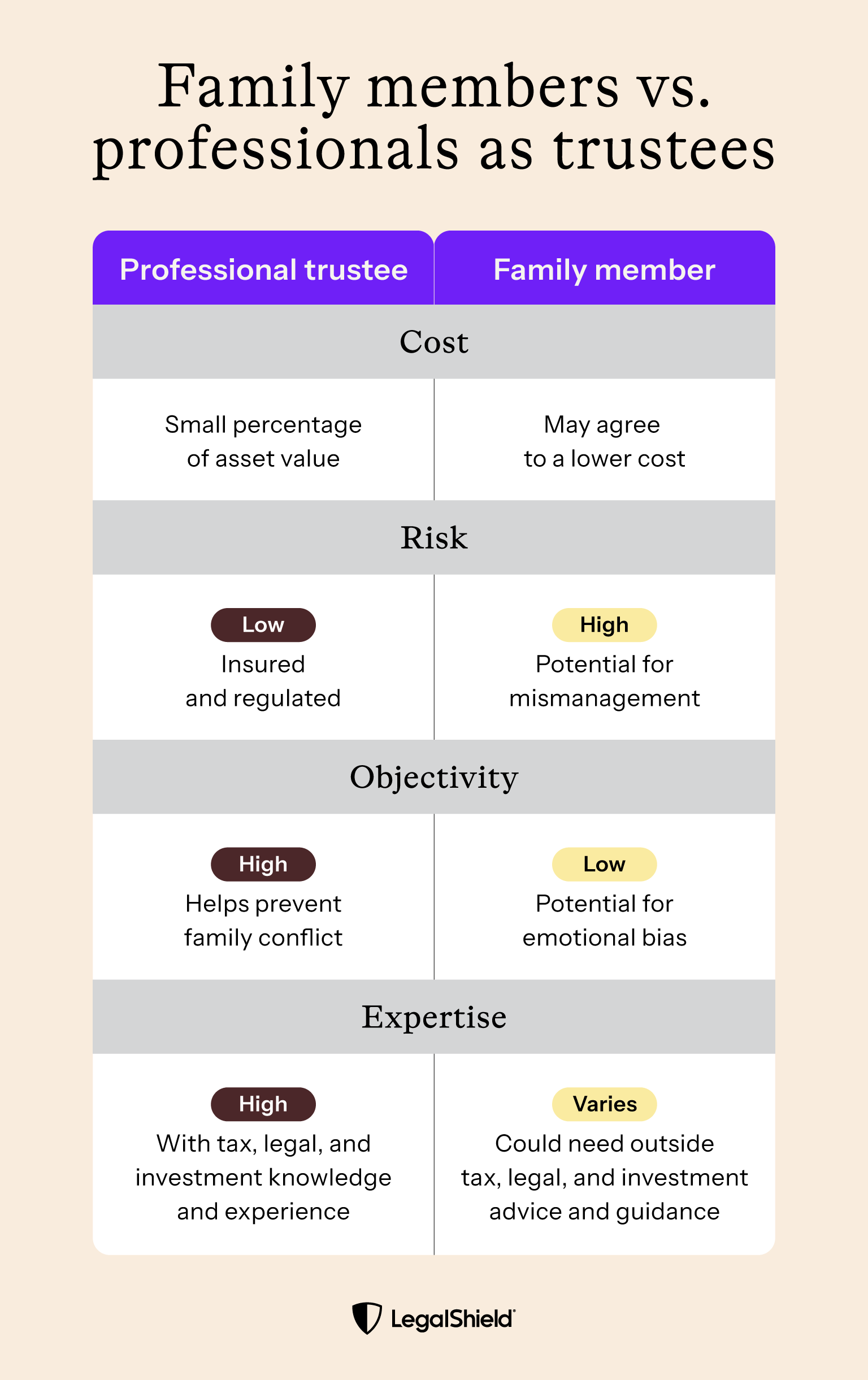
Whatever route you go, some things you may want to think about include whether or not the person has time to manage the trust and is willing to take it on. You might also consider whether the person is financially responsible and can stay impartial when working with beneficiaries. One final factor to think about is whether the person lives close enough to perform a trustee’s duties.
Trust rules vary by state, so check the requirements where you live as you set up your trust.
An estate plan can help protect your loved ones, but knowing exactly what to do can be confusing. Trusts can be an important part of an estate plan, but it can be difficult to know where to get started. You might also wonder whether you should act as both the trustor and the trustee, or whether you need a Will and a trust.
A LegalShield Provider Law Firm can prepare your Revocable Trust for a set fee when you have a Premium Personal Plan. Also, LegalShield Memberships include legal consultations on an unlimited number of matters, like estate planning and elder care law.
Get legal guidance with a LegalShield Personal Plan and pay an affordable monthly fee instead of hourly rates averaging upward of $300/hour. You can work with provider law firms to help take the stress off your family and make your wishes known.
*Amounts based on LegalShield Provider Law Firm average rates. Exact costs are determined by law firms.

Other names for a trustor include grantor, settlor, and creator.
A Trustee manages a Trust. An executor manages an estate after someone dies, carrying out the instructions in their Will. Both are fiduciaries, but they're created by different documents and have different responsibilities. An executor's job is usually temporary, wrapping up after probate ends. A Trustee's job can last years or even decades, depending on the Trust's terms.
The two roles can also overlap. If someone dies leaving both a Will and a Trust, the same person might serve as the executor of the estate and the Trustee of the Trust, though some people pick different individuals to split up the workload. The executor handles assets that pass through the Will, while the Trustee handles assets already inside the Trust.
When a trustor dies, the trustee administers the trust according to the trust’s directions. When a trustee dies or can’t serve anymore, a successor trustee takes control.
Yes, a trustor can name more than one trustee. Often the case with married persons, two people can serve as co-trustees. Whether these co-trustees must act together or can act on their own depends on the terms of the trust and the laws in your state. Trustors can also name successor trustees to act if the original trustee dies or can’t serve.
TTEE means trustee. It’s the abbreviation you might see on legal or asset funding documents.
Communications Director at LegalShield overseeing content creation designed to make legal protection simple and approachable. He focuses on offering straightforward, trustworthy guidance that empowers people to make informed decisions about their legal rights and responsibilities.
A power of attorney with springing powers is a legal document that grants someone else the authority to act on your behalf only after a specific event occurs.
.jpg)
There’s no rule that says a lawyer has to set up your Trust for it to be valid. However, Trusts are complex and doing it yourself without a lawyer's help comes with risks.

A Certificate of Trust proves your Trust is real and names who can act for it, while your beneficiaries and assets stay private. It lets your Trustee handle Trust business, like opening accounts or transferring property.

A limited power of attorney often comes in handy when you need help for a short time or for a single purpose. This legal document can help in situations like when you’re traveling, serving in the military, caring for an aging parent, or sending a child to study abroad.

We’ll cover some of the most common scams, the red flags that give them away, how to protect yourself, and what to do if you’ve already been caught out.

An executor is responsible for ensuring your final wishes get carried out, so it’s important that you choose someone who is responsible and can bear the emotional burden.

An employer identification number is a nine-digit number the IRS uses to identify a taxpayer. The estate needs its own, and getting one is usually simpler than it sounds. Learn more about estate EINs.

The distinction between an heir and a beneficiary is particularly important because they may receive estate assets in different ways.