An employer identification number (EIN) is a nine-digit number the IRS uses to identify a taxpayer. After a death, the estate becomes its own taxpayer, so executors typically request an EIN for the estate rather than using the deceased's Social Security number.
If you've been named an executor, you're working through a long list of unfamiliar tasks while you're still grieving. Then the bank adds one more: before it opens an estate account, it needs a tax ID number, an EIN.
An employer identification number is a nine-digit number the IRS uses to identify a taxpayer. The estate needs its own, and getting one is usually simpler than it sounds. It's one of the first steps in settling an estate.
Why does an estate need its own EIN?
When someone dies, the IRS stops treating their finances as personal and more like an entity. The estate, meaning the money and property the person left behind, becomes a separate taxpayer with its own responsibilities. That's why the estate generally can't keep using the Social Security number of the person who died (the IRS calls this person the decedent on its forms).
According to Michael Fiffik, Managing Partner, Fiffik Law Group:
It is customary to open a bank account in the name of the decedent’s estate as part of the administration of a probate estate. The bank will not open the account without an EIN for the estate.
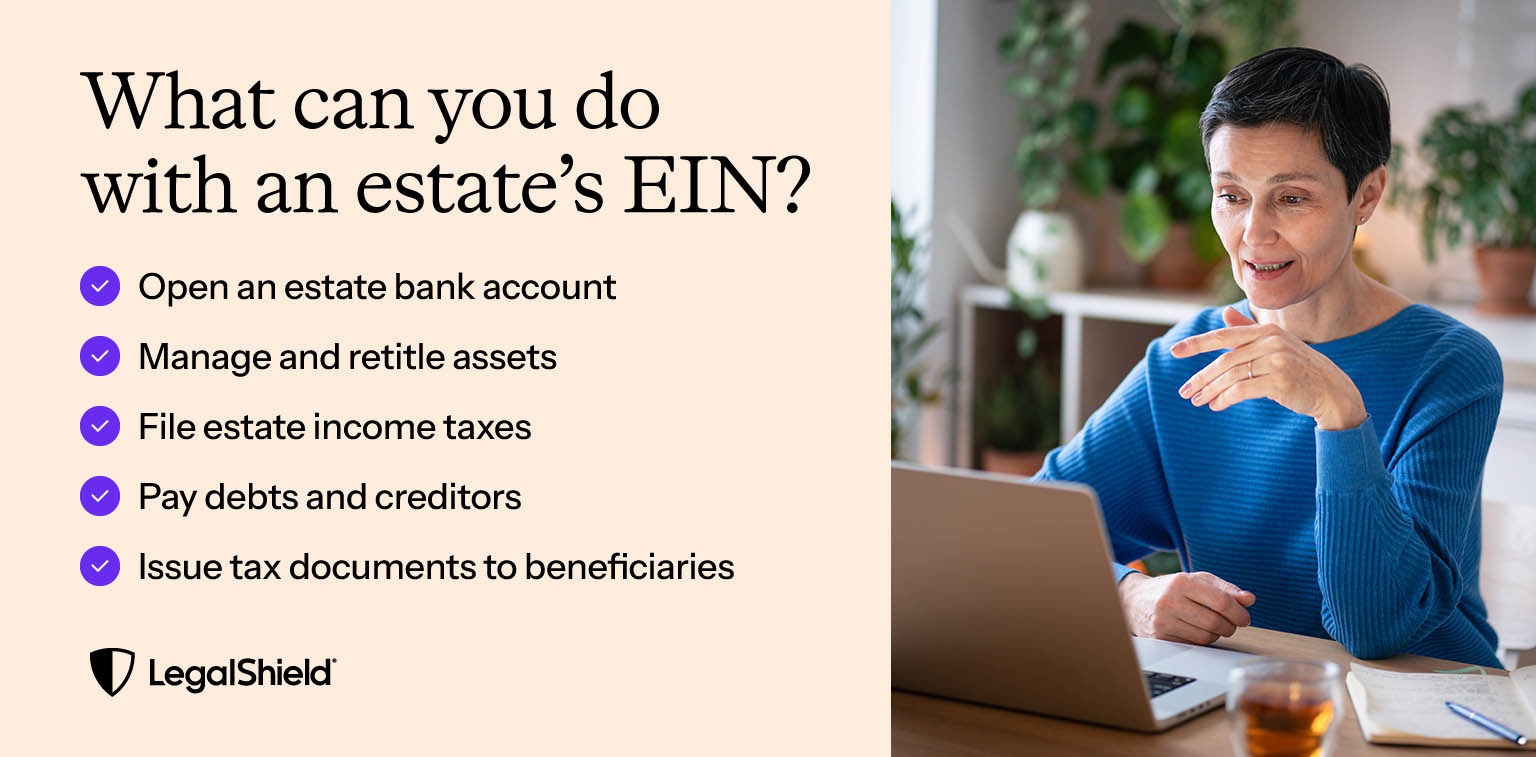
The estate’s EIN becomes the way that the estate identifies itself. Banks generally ask for an EIN for an estate account before they agree to open one. The number also appears on returns filed using Form 1041.
Whether your court papers call you an executor, an administrator, or a personal representative, settling an estate with a Will comes with real legal responsibilities. With a LegalShield® Personal Plan, you can bring your questions to a provider law firm as you work through the estate.
What you need before you apply
The application goes quickly if you gather a few details first, and most executors have these on hand already:
Proof of your authority: Letters Testamentary or Letters of Administration from the probate court show you can act for the estate. If yours haven't been issued yet, learning how to get Letters Testamentary is usually the first stop.
The deceased person’s details: The person's full legal name, Social Security number, and date of death.
Your own information: Your name, Social Security number or individual taxpayer identification number (ITIN), and mailing address as the responsible party (more on that role below).
The estate's mailing address: This is often the executor's address, since that's where the mail should be sent.
The probate location: The county and state where the estate is being probated. If you're not sure the estate needs court involvement at all, reviewing when probate is required can help you confirm.
How to apply for an EIN for an estate
Most executors apply for an EIN through the IRS online application, which is available during weekday hours. The IRS doesn't charge anything when you apply directly. Applicants typically encounter a few questions along the way: who the EIN is for (estates have their own category), and the details you gathered above.
Online applicants can download the confirmation letter (CP 575) as soon as the application is processed. If that letter is misplaced later, the IRS can issue a replacement known as an EIN verification letter (147C).
Applying online isn't the only path, either. Executors can also file Form SS-4 by fax, which typically takes about four business days, or by mail, which can take several weeks.
Who is the "responsible party" on an estate's EIN?
The IRS requires the responsible party to be a natural person, not a company. For an estate, that means the executor, administrator, or personal representative must be listed on the EIN application by name. A law firm or other organization can't fill that role.
That said, you don't have to click through the application yourself. A third party, such as an accountant, can be authorized as a designee to submit it on your behalf. You still remain the responsible party as the individual handling the estate.
Plan your estate with support from a LegalShield Membership
That covers how to get an EIN for an estate. This is the number that is used to do estate-related business. The first stop for most executors is setting up an estate account, since banks typically ask for the EIN and often the CP 575 letter before opening one.
With a LegalShield Personal Plan, you can talk through your responsibilities with a provider law firm along the way. That includes consultation on an unlimited number of personal legal matters and document review. Premium members may have access to simplified probate in limited circumstances; a provider law firm can confirm whether an estate qualifies.
Handling an estate firsthand is also a reminder to get your own paperwork in order. Learn more about estate planning services available with a LegalShield Membership.
Frequently Asked Questions
Often, yes. Under IRS guidance for executors, estates generally file Form 1041, but banks require an EIN before opening an estate account, whether or not there is income. Even a small, simple estate usually ends up needing the number.
No, the IRS doesn't charge for an EIN when you apply directly, whether online or with Form SS-4. Some third-party websites charge a service fee to submit the same application, so it's worth going straight to the source when possible.
Communications Director at LegalShield overseeing content creation designed to make legal protection simple and approachable. He focuses on offering straightforward, trustworthy guidance that empowers people to make informed decisions about their legal rights and responsibilities.
We’ll provide more information about the trustors vs. trustees comparison, what to consider when filling these roles, and how they work together in Revocable and Irrevocable Trusts.
A power of attorney with springing powers is a legal document that grants someone else the authority to act on your behalf only after a specific event occurs.
There’s no rule that says a lawyer has to set up your Trust for it to be valid. However, Trusts are complex and doing it yourself without a lawyer's help comes with risks.
A Certificate of Trust proves your Trust is real and names who can act for it, while your beneficiaries and assets stay private. It lets your Trustee handle Trust business, like opening accounts or transferring property.
A limited power of attorney often comes in handy when you need help for a short time or for a single purpose. This legal document can help in situations like when you’re traveling, serving in the military, caring for an aging parent, or sending a child to study abroad.
We’ll cover some of the most common scams, the red flags that give them away, how to protect yourself, and what to do if you’ve already been caught out.
An executor is responsible for ensuring your final wishes get carried out, so it’s important that you choose someone who is responsible and can bear the emotional burden.







.jpg)