A Will executor is the person the document names to carry out the deceased person’s wishes and manage their estate after death. Their responsibilities may include filing the Will with the probate court, gathering documents, maintaining estate property, attending court, settling debts, and distributing assets to beneficiaries.
Naming an executor is an important choice. But the role of a Will executor comes with a lot of potential to-dos, like paperwork, court filings and appearances, managing financial accounts, issuing creditor notices, and fielding family questions. All of that, during an already emotional time, can feel overwhelming. This person is responsible for ensuring your final wishes get carried out, so it’s important that you choose someone who is responsible and can bear the emotional burden.
This blog explains what an executor is, what they do, and what to think about when choosing one. And a LegalShield® Membership can take that further by connecting you with a provider law firm that can provide estate planning support.
What is a Will executor?
A Will executor is the person named in a Will to manage the deceased’s estate and carry out the instructions from their Will. They don’t personally own the estate’s property. Instead, they’re responsible for moving the estate through the requisite legal and administrative steps.
Generally, this person must be an adult who is willing and able to handle the paperwork, deadlines, financial details, and communication with the court, beneficiaries, and other parties. That person typically is a trusted family member, friend, or professional.
In some cases, there’s more than one Will executor. They’re called co-executors, and they share responsibility for managing the estate.
What does an executor of a Will do?
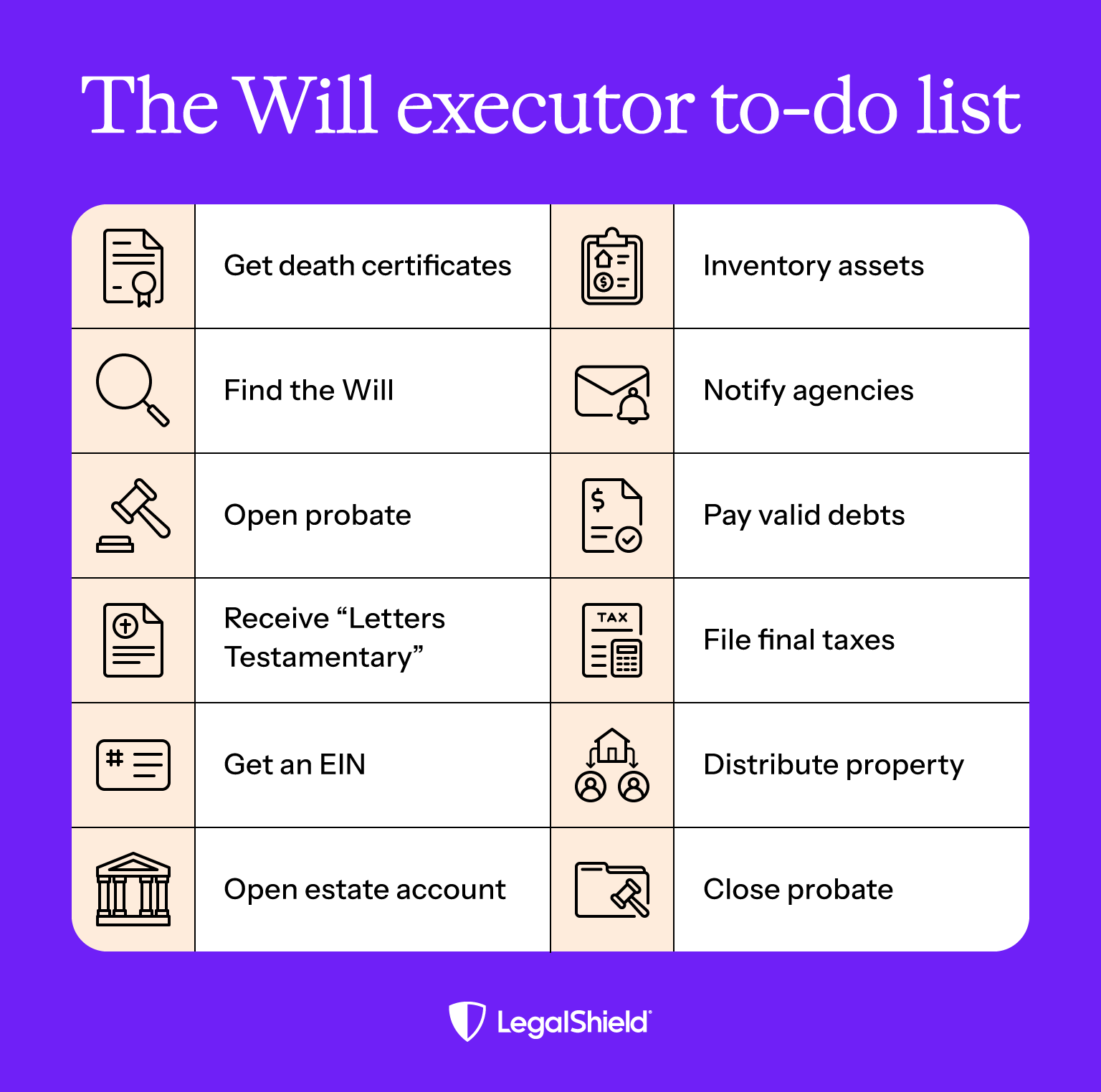
The broad strokes of what an executor does are all about managing the estate after someone dies. The exact duties of an executor of a Will, however, can vary, depending primarily on the Will, the estate, and state law. Let’s take a closer look at some tasks an executor of a Will may be charged with:
Collecting the death certificate and organizing other documents
First up for most executors is collecting certified copies of the death certificate and organizing important documents. Funeral homes are often the resources for death certificate requests. But, as with many other processes, the exact steps can vary by state or even local office. Executors often need the original Will, account statements, property records, and similar paperwork.
Filing a copy of the Last Will and Testament
The original Last Will and Testament must be filed with the appropriate probate court, and an executor is usually responsible for that, or a lawyer is retained in order to open the probate and file the Will. Filing the Will doesn’t always mean an executor can take action right away, but it’s a key first step in the estate administration process.
Taking an oath
It’s called an “executor’s oath” or “fiduciary affirmation,” and it’s how the court formally appoints an executor to act on behalf of the estate. The executor may need to attend court in person for this step. Whether an executor of an estate takes the oath or signs the affirmation is a matter for the court’s process. After that, though, the court can issue documents known as Letters Testamentary that demonstrate an executor's authority to handle estate matters.
Notifying appropriate parties
Executors may need to notify a handful of people, agencies, and organizations after the death. That handful may, depending on the estate and state law, include these parties:
Financial institutions
Government agencies
United States Postal Service
The local DMV
Utilities, insurance, and subscription services
Loved ones
Beneficiaries
Settling debts, claims, and taxes
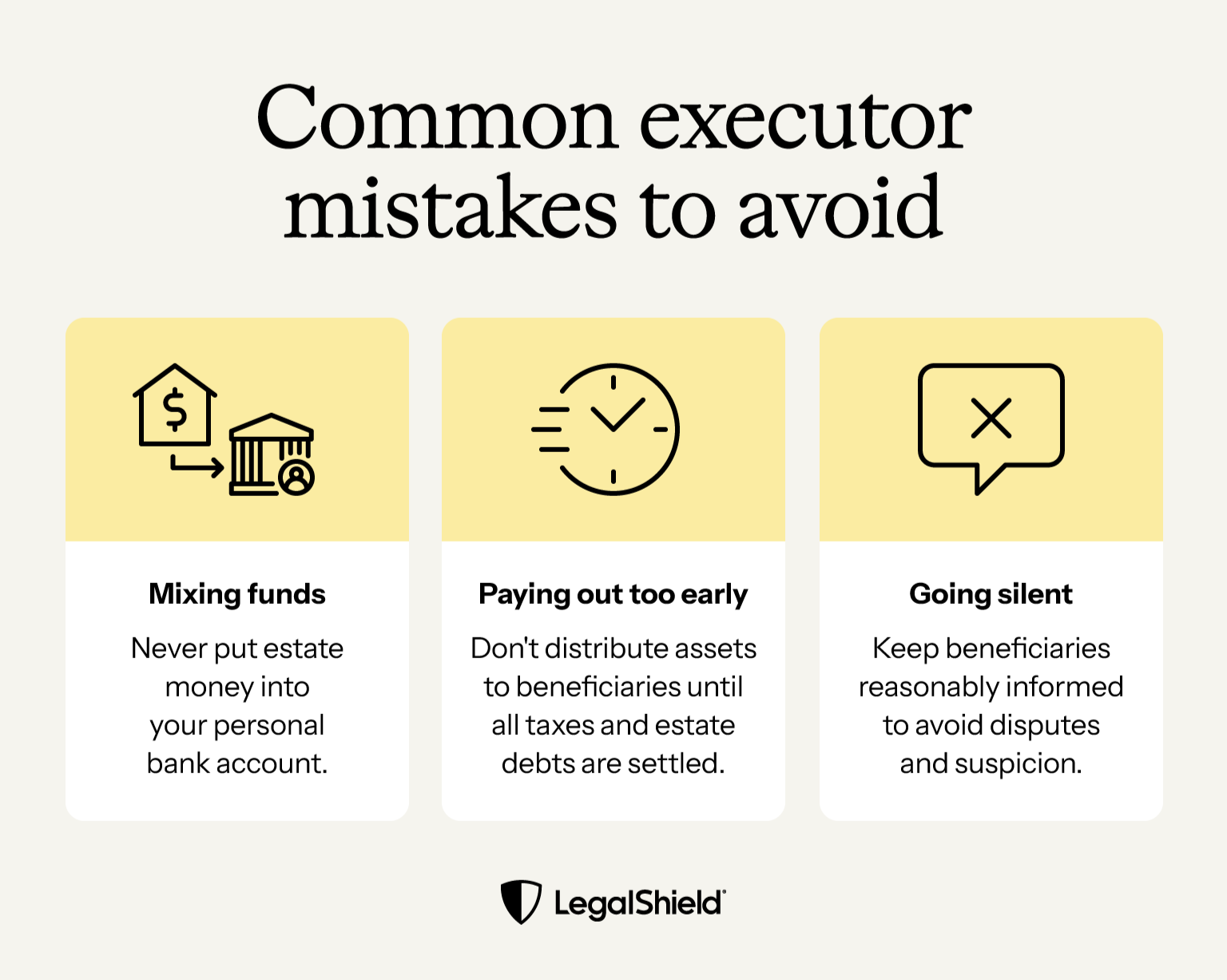
Some estates have debts, creditor claims, expenses, and taxes. An executor usually has to identify and address those before distributing assets to beneficiaries. That might mean notifying creditors, reviewing bills, and, when appropriate, making payments from estate funds.
A common tripping point is the order of payment. If an executor distributes estate property too early, giving assets to beneficiaries before taxes or debts are paid, they may need legal guidance on how to correct the issue. The probate court generally controls timing and the process, and permission to distribute prior to the final distribution order is required.
Executors usually also open bank accounts for the estate in order to manage the estate’s finances. Michael Fiffik, Managing Partner at Fiffik Law Group explains:
“It is customary to open a bank account in the name of the decedent’s estate as part of the administration of a probate estate. The bank will not open the account without an EIN for the estate.”
Fiffik also explains that the executor will need to file an IRS form SS-4.
Posting bonds (if necessary)
In certain situations, such as when the executor lives in a different state, the probate court may require them to post a probate bond. Also called a fiduciary bond, this document aims to protect the estate and beneficiaries if an executor mismanages assets or fails to fulfill their duties.
Maintaining estate assets
It’s easy to focus on the distribution part, but executors are also responsible for protecting and maintaining estate assets while the estate is getting settled. That can look like maintaining insurance coverage, paying necessary bills, and ensuring property isn’t damaged, lost, or misused before distribution.
Submitting an inventory of the estate’s assets
The court, beneficiaries, and other interested parties need a way to understand what property is part of the estate. That’s why an executor usually has to compile and submit an inventory of assets to the court. This can include investments, business interests, bank accounts, personal property, and other items of value.
Distributing assets to beneficiaries
This is the part most people know and remember: An executor distributes the assets to the Will’s beneficiaries, less valid debts, claims, expenses, and taxes. Then, there’s the wrap-up: Executors might need to keep distribution records, file final court paperwork, and take any state-required steps to close the estate.
How to choose an executor
The executor decision is both practical and personal. Being willing and, importantly, able to handle paperwork, deadlines, money details, and communication during a difficult time can be key. And someone you trust with all of that information can be especially helpful.
Here are some things to consider as you choose:
Choosing with a lawyer’s help. A lawyer can help you sift through eligibility, whether your first choice is sensible, and whether a backup executor makes sense.
Choosing someone who is available enough to serve. The whole executor process takes time — a lot of it. Someone with heavy personal or work obligations may struggle to get things done. Or if they live far away, travel will be required.
Looking for financial competence. Executorship is a financial gig. They need to manage the estate’s funds, track expenses, pay valid claims, and maintain records.
Bonus points for organization. Organized executors miss fewer important steps, such as completing forms, meeting deadlines, sending notices, making payments, and filing court documents.
Considering their impartiality. An executor might need to talk with multiple beneficiaries, sometimes making decisions that affect them. Someone who can reduce conflict and stay calm and fair can be helpful.
Naming someone you trust. An executor will not only have their hands on your sensitive information, but they’ll be responsible for carrying out your last wishes. Someone who will follow the Will, respect your wishes, and act in the best interests of the estate may be ideal.
Get a LegalShield Membership for estate planning support
The executor role may be the most important one in the entire estate plan. The right person moves estate administration forward with precision, care, and efficiency. And when loved ones are already dealing with a difficult loss, that’s important.
Whether you’re choosing an executor or understanding how to act as one, legal advice can bring a ton of value and clarity. A LegalShield Membership can connect you with a provider law firm for estate planning guidance. That can mean you have affordable access to answers about executor choice, updating a Will, and estate planning documents.
The rules governing executors' compensation depend on the terms of the Will and state law. Some Wills are clear about whether and how an executor should be compensated, while others leave that to state law or court approval.
Executors are granted powers to work on the estate’s behalf to settle its affairs. These powers are set forth in the Will, by the court, and state law.
Yes, a beneficiary can be an executor. In fact, that’s pretty common. But they have to act in the best interests of the estate —not just their own interests as a beneficiary.
If it’s for estate purposes, an executor may be able to withdraw estate funds if the court has given them legal authority to do so. Withdrawing money for personal use isn’t allowed.
Communications Director at LegalShield overseeing content creation designed to make legal protection simple and approachable. He focuses on offering straightforward, trustworthy guidance that empowers people to make informed decisions about their legal rights and responsibilities.
We’ll provide more information about the trustors vs. trustees comparison, what to consider when filling these roles, and how they work together in Revocable and Irrevocable Trusts.
A power of attorney with springing powers is a legal document that grants someone else the authority to act on your behalf only after a specific event occurs.
There’s no rule that says a lawyer has to set up your Trust for it to be valid. However, Trusts are complex and doing it yourself without a lawyer's help comes with risks.
A Certificate of Trust proves your Trust is real and names who can act for it, while your beneficiaries and assets stay private. It lets your Trustee handle Trust business, like opening accounts or transferring property.
A limited power of attorney often comes in handy when you need help for a short time or for a single purpose. This legal document can help in situations like when you’re traveling, serving in the military, caring for an aging parent, or sending a child to study abroad.
We’ll cover some of the most common scams, the red flags that give them away, how to protect yourself, and what to do if you’ve already been caught out.
An employer identification number is a nine-digit number the IRS uses to identify a taxpayer. The estate needs its own, and getting one is usually simpler than it sounds. Learn more about estate EINs.








.jpg)