A probate bond is basically an insurance policy that helps keep an estate’s executor or administrator accountable. It protects beneficiaries and creditors from financial loss caused by fraud, theft, or mismanagement.
When you're putting together an estate plan, one of the most important decisions you'll make is who you trust to carry it out. That person — your executor or administrator — will be responsible for managing your estate during probate, following state laws, and honoring the probate court's orders. A probate bond helps make sure they do.
If the executor or administrator makes a mistake or does something wrong intentionally, a probate bond is a financial safety net for your heirs and creditors. People may also call it an administrator bond, executor bond, fiduciary bond, estate bond, or surety bond. Whatever you call it, the goal stays the same: to protect the people who rely on the estate.
Let’s find out more about probate bonds:
Probate bond purpose
Protects the estate from financial harm caused by the executor's misconduct or mistakes
Who may need to get a bond
Court-appointed administrators or executors
Who pays for a probate bond
Usually paid by the estate, but the executor might have to pay upfront and request reimbursement
Who pays for claims
The bond pays first, but the executor has to repay that amount
Common necessary situations
The executor lives in a different state
Someone dies without a Will
The Will doesn't directly state that it waives the bond requirement
The beneficiaries or creditors request a probate bond
A beneficiary is a minor or incapacitated person
The probate court orders a bond
Understanding probate
When someone passes away, a probate court supervises the distribution of their estate. The court validates a Will or appoints an estate administrator if the person didn’t have a Will. The court oversees the process, but the executor or administrator handles the day-to-day responsibilities.
The probate process includes paying outstanding debts, such as medical bills, and giving the remaining assets to beneficiaries. It also allows ownership transfers of assets that belonged only to the deceased.
Not every asset has to go through probate. In fact, some parts of estate planning can help your heirs avoid probate:
Assets held in a living Trust
Life insurance and other accounts with named beneficiaries
Those designated as Payable or Transfer on Death
Property held in joint tenancy with right of survivorship
Depending on the size and complexity of your estate, the probate process can take months to over a year. And the details usually become public record.
How a probate bond works
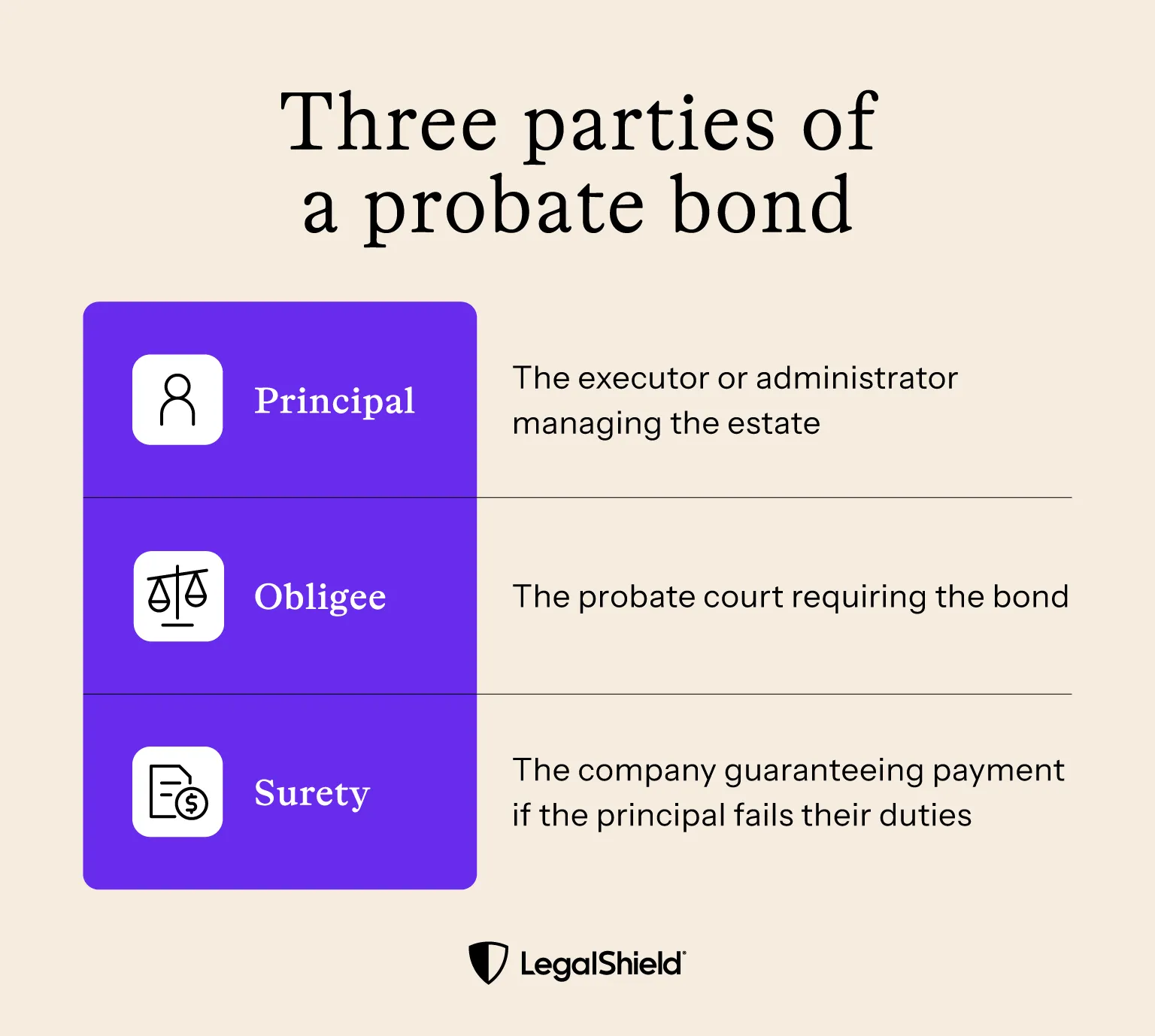
A probate bond is an agreement among three main parties:
Principal: The estate’s administrator (appointed by the court when there’s no Will) or executor (named in the Will to manage the estate)
Obligee: The probate court that requires the bond
Surety: The company that issues the bond and guarantees payment if needed
A probate bond creates accountability. The probate court expects the executor to follow the rules and manage the estate’s money honestly. If the executor doesn’t do this, someone can file a claim against the bond.
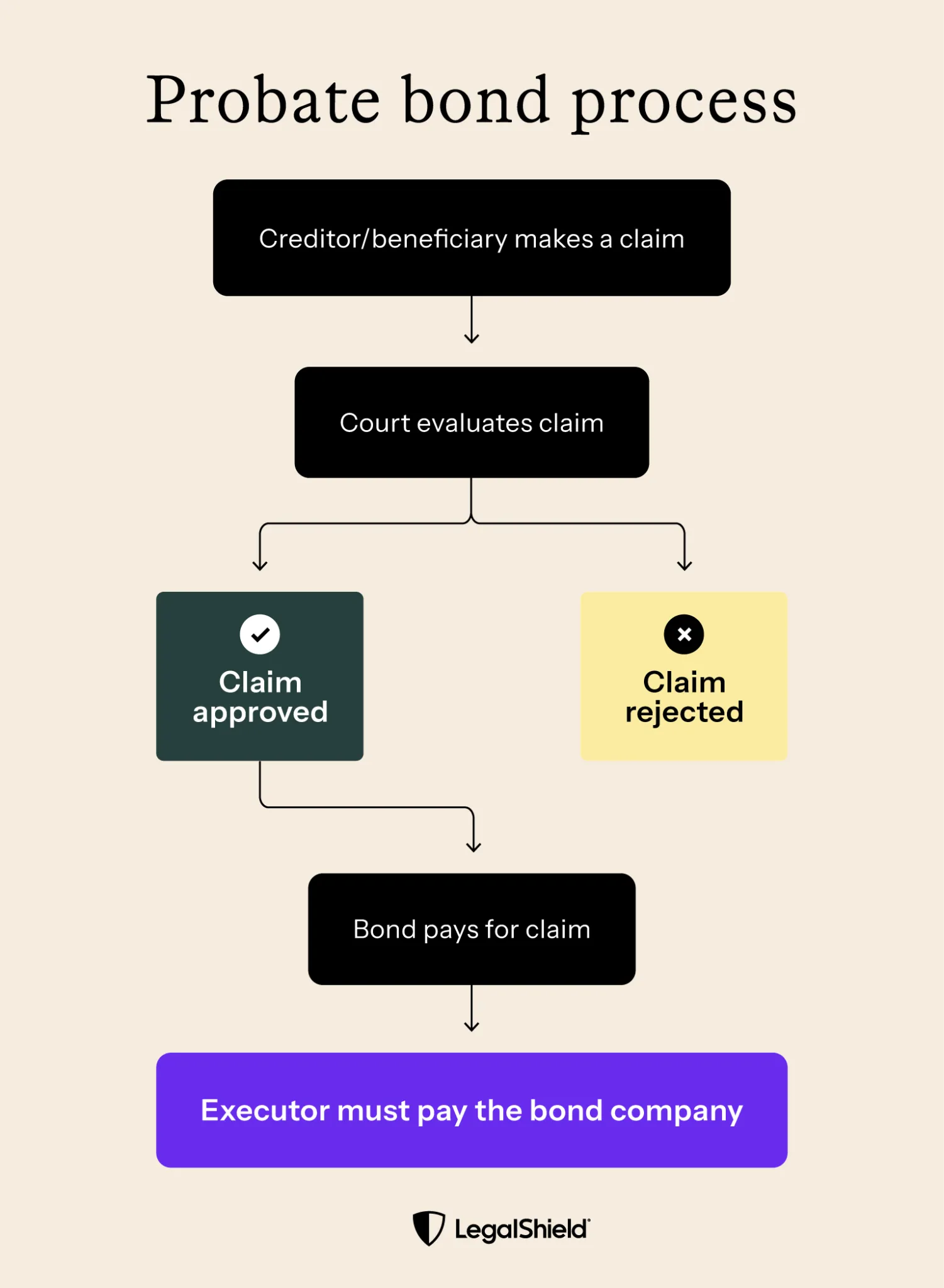
Here’s how the claims process works:
A creditor or beneficiary reports a problem to the probate court
The court reviews the claim and decides if the executor breached their duties
The surety company pays valid claims up to the bond amount
The executor has to pay the surety back for the full claim amount
The executor has a fiduciary duty to administer the estate in a way that follows the law and your wishes. A bond helps support that duty. The bond keeps beneficiaries and creditors from losing money if the executor does something wrong.
The executor is personally responsible for repaying the surety company if a claim is paid out. That's one reason a bond creates real accountability — the executor has personal financial skin in the game.
When a bond is needed
A probate bond is most commonly required because the Will calls for it, state law mandates it, or a beneficiary or creditor requests one. The probate court then confirms the requirement and determines the bond amount based on state laws, the estate's details, and the people involved. The court can also require a bond on its own if it has concerns about the executor or the circumstances of the estate.
Courts commonly require probate bonds in these types of situations:
The deceased died intestate (without a Will)
The executor lives in a different state
A beneficiary is a minor or an incapacitated person
Beneficiaries or creditors request a bond
There are conflicts among the beneficiaries
The Will doesn’t waive a bond
State laws require one
There are concerns about executor misconduct
Even if a Will states that a bond isn’t needed, the judge can overrule that waiver if there’s a good reason.
How to get a probate bond
If a probate bond is required, the person you've named as executor will need to go through an approval process with a surety company. Here's what that typically involves:
Be appointed by the court as the estate’s executor or administrator.
Contact a licensed surety company that handles probate bonds
Complete the bond application
Go through the underwriting review process
In case you’re wondering, underwriting is a process that looks at the risk of issuing you a probate bond. The surety company checks the executor’s credit score and the estimated estate value. They might also decide whether you’re able to handle estate finances. If the estate is complex, they might see the bond as a high risk.
How much a probate bond costs
A probate bond’s cost is called a premium. The premium for a well-qualified applicant is typically a small percentage of the bond amount, but it varies.
In most cases, the estate pays the bond premium. The executor or administrator might have to pay it upfront and file for reimbursement.
The probate court usually decides the amount of a probate bond based on how much the estate is worth. They may also consider expected income and other financial factors.
Probate bond denials
Remember that the executor or administrator has to repay claims against a probate bond. Surety companies don't want to lose money. If the applicant has poor credit, a history of legal issues, or financial instability, it could look like they might not repay a bond claim. The company might deny the application.
If a surety company doesn’t approve a bond application, there may be other options. An executor might be able to get a bond from a different company, but the costs may be higher. The probate court could appoint a different executor. Or, it could add a co-administrator with a better financial profile.
Probate bonds and estate planning
So, now you know that a probate bond may be required during probate. That gives you the chance for smarter planning. An executor’s low credit score could lead to a bond denial, and that might mean the court would appoint someone of their choosing.
You may want to choose an executor who has a strong financial profile. Or, you could select co-executors to allow someone with a lower credit score to still serve.
You can state in your Will that your executor doesn’t need a probate bond. However, in some cases, it may not be up to you. The probate court can require one anyway, based on the circumstances of your estate, your beneficiaries, or your executor after your passing.
Use your LegalShield plan to get advice from a lawyer
Estate planning and probate have lots of moving parts, but you don’t have to navigate them alone. With an affordable LegalShield Membership, you can ask a provider lawyer in your state about all of your estate planning needs. Get the experienced legal guidance you need to protect your loved ones.
Common questions about probate bonds
What happens if my executor has bad credit?
An executor might qualify for a probate bond with bad credit if an executor can find a surety company that works with higher-risk applicants. The premium might be higher, though. If your executor cannot get a bond, , the court could appoint someone else to manage the estate For this reason, it is good to choose the right person, and his or her successor, to serve as executor.
How long does a probate bond stay in place?
A probate bond is usually active during the whole probate process. That can last several months or over a year. When the court closes the estate and releases the executor, the probate bond ends.
Can the family decide to skip a probate bond?
Families might want to waive the requirement of a probate bond, but the probate court has the final say.
Communications Director at LegalShield overseeing content creation designed to make legal protection simple and approachable. He focuses on offering straightforward, trustworthy guidance that empowers people to make informed decisions about their legal rights and responsibilities.
We’ll provide more information about the trustors vs. trustees comparison, what to consider when filling these roles, and how they work together in Revocable and Irrevocable Trusts.
A power of attorney with springing powers is a legal document that grants someone else the authority to act on your behalf only after a specific event occurs.
There’s no rule that says a lawyer has to set up your Trust for it to be valid. However, Trusts are complex and doing it yourself without a lawyer's help comes with risks.
A Certificate of Trust proves your Trust is real and names who can act for it, while your beneficiaries and assets stay private. It lets your Trustee handle Trust business, like opening accounts or transferring property.
A limited power of attorney often comes in handy when you need help for a short time or for a single purpose. This legal document can help in situations like when you’re traveling, serving in the military, caring for an aging parent, or sending a child to study abroad.
We’ll cover some of the most common scams, the red flags that give them away, how to protect yourself, and what to do if you’ve already been caught out.
An executor is responsible for ensuring your final wishes get carried out, so it’s important that you choose someone who is responsible and can bear the emotional burden.
An employer identification number is a nine-digit number the IRS uses to identify a taxpayer. The estate needs its own, and getting one is usually simpler than it sounds. Learn more about estate EINs.
•
5 min read
Thank you! You're subscribed!
Oops! Something went wrong while submitting the form.






.jpg)