A Living Trust is a legal arrangement created during a person's lifetime to hold and manage assets, then pass them to beneficiaries without going through probate. Setting one up typically involves drafting a Trust document, signing it correctly, and transferring assets into the Trust's name.
If you recently updated your Will, you might also be wondering about your plans for your property after you pass away or become unable to manage it. It could be time to start thinking about a Living Trust.
A Living Trust lets you decide now what happens to your home, savings, and other assets when you die. It keeps your estate out of probate court, which saves your family time and legal costs. For more context on how a Trust fits into a broader plan, our Living Trust vs. Will blog postcovers how different estate planning tools work together.
Revocable vs. irrevocable: Which type of Living Trust is right for you?
Before setting up a Living Trust, it's worth knowing which type fits the situation.
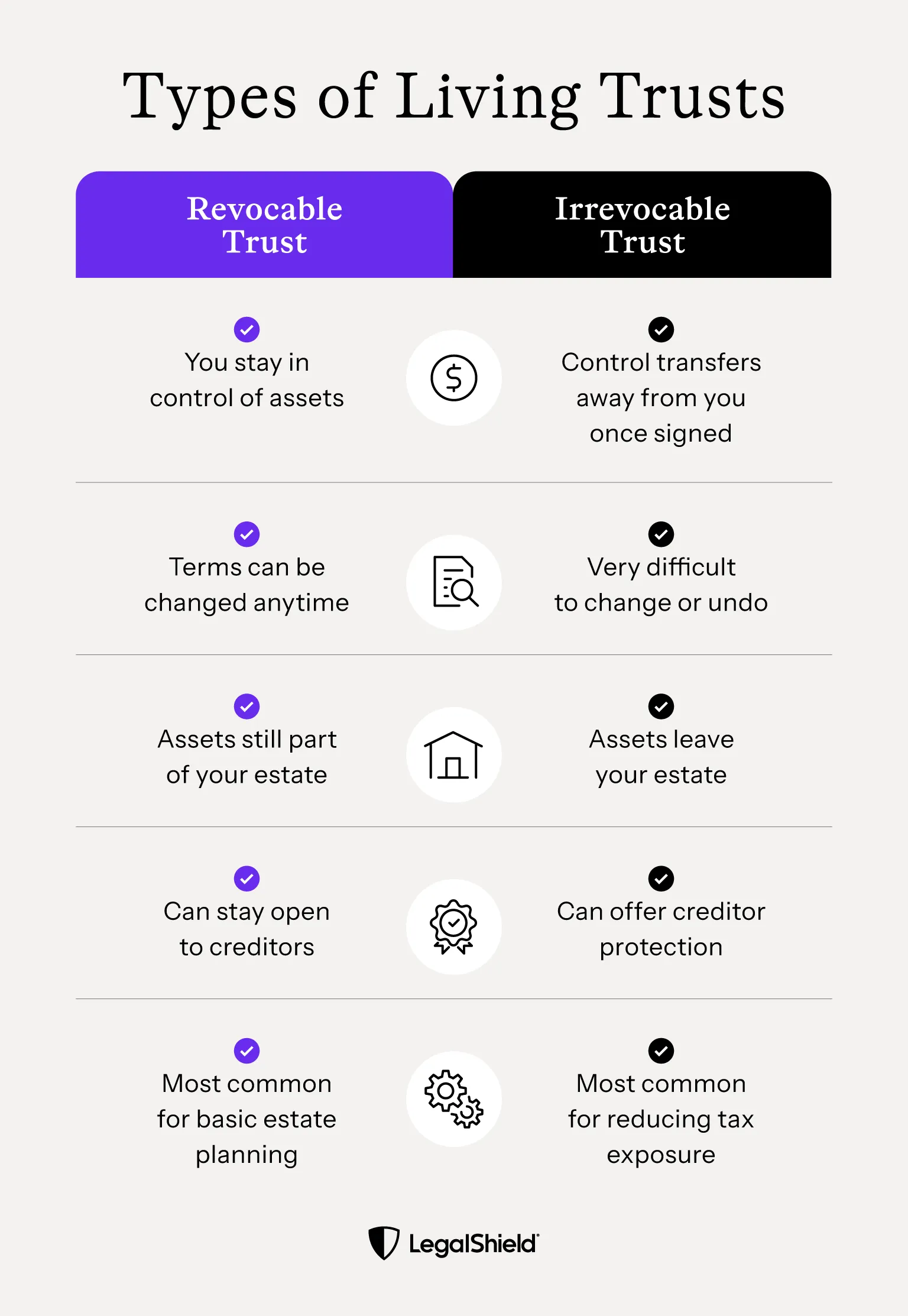
A Revocable Living Trust is the most common type. You create it during your lifetime, transfer assets into it, and stay in full control. The terms can be changed, assets can be added or removed, and the whole thing can be canceled at any time. While you're alive, it functions much like any other regular account that you manage yourself. When you die, your Successor Trustee distributes the assets to your beneficiaries without going through probate court.
An Irrevocable Trust works differently. Once signed, it's very difficult to change or undo. In exchange for giving up control, assets legally leave the estate, which can offer protection from creditors and may reduce estate tax exposure for larger estates.
Irrevocable Trusts are also used in Medicaid planning as a strategy for structuring assets to meet eligibility requirements for Medicaid long-term care benefits. They aren't the right starting point for most basic estate planning situations, but they serve a specific and important purpose when the circumstances call for it.
Key people involved in a Living Trust
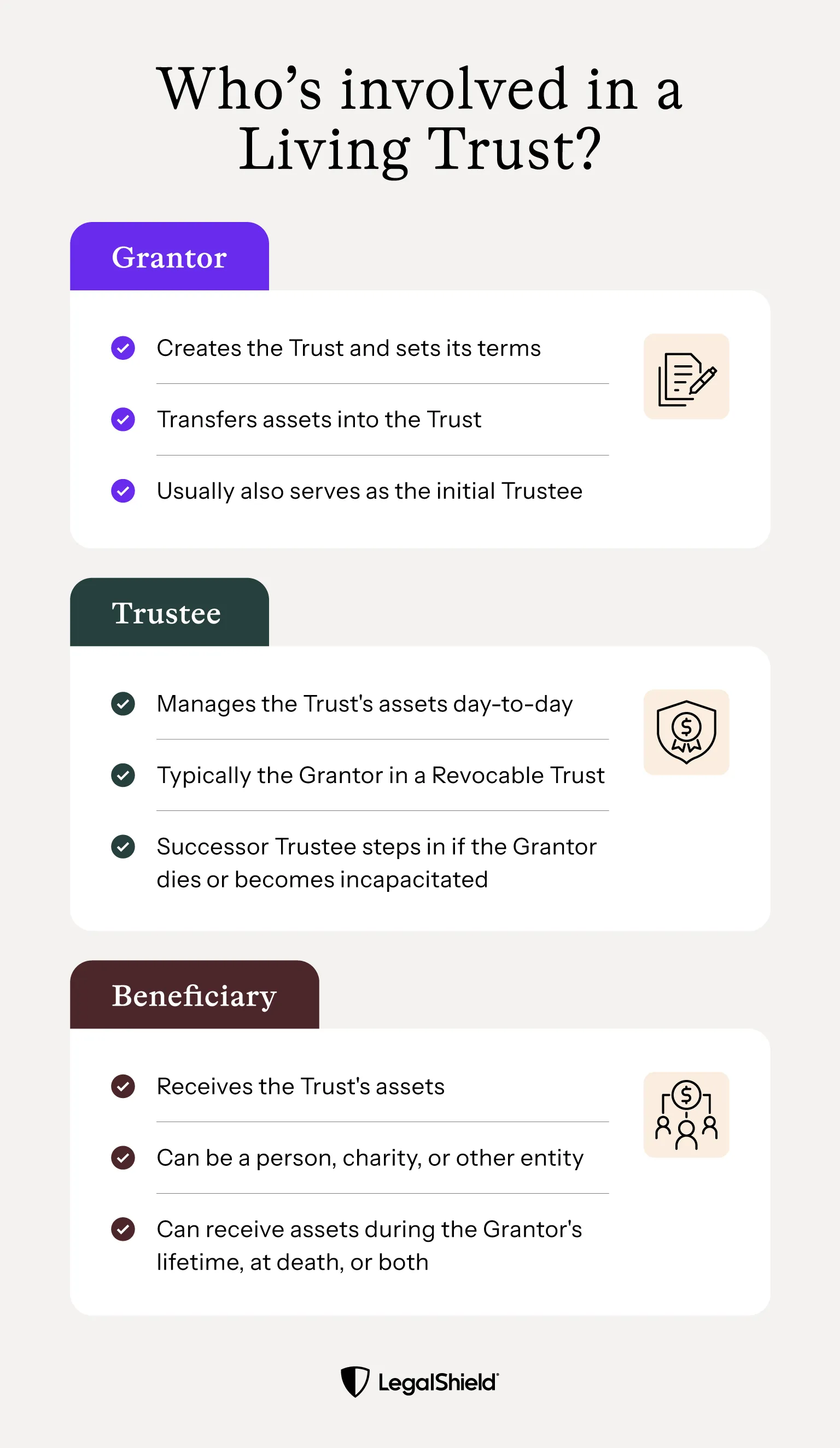
Every Living Trust involves three key roles. In many cases, the same person fills more than one of them:
Grantor. The person who creates the Trust, transfers assets into it, and sets the terms for how it operates. In a Revocable Living Trust, the Grantor typically also serves as the initial Trustee, staying in control of their own assets during their lifetime. A Grantor may also be the lifetime beneficiary of a Trust.
Trustee. The person who manages the Trust's assets according to its terms. For a Revocable Trust, that's usually the Grantor while they're alive and capable. A Successor Trustee steps in if the Grantor becomes incapacitated or dies.
Beneficiary. The recipients of the Trust's assets. Beneficiaries can receive assets during the Grantor's lifetime, at death, or both. They can be individuals, charities, or other entities. Our rights of Trust Beneficiaries blog clarifies what the people named in a Trust are actually entitled to.
Deciding who fills each role, especially who serves as Successor Trustee, carries real legal responsibility. A lawyer familiar with estate planning can help you think through these appointments and make sure the Trust document reflects the right choices.
What setting up a Living Trust can involve
The requirements vary by state, and a specific situation may add steps or complexity. What follows is a general overview of how the process often looks, since every Trust and every state is different. LegalShield® Provider Law Firms can answer questions about your specific state.
Taking stock of assets
A common starting point is listing everything owned, including real estate, bank accounts, investment accounts, vehicles, and valuable personal property. This inventory shapes the rest of the process, since each asset eventually gets transferred into the Trust's name.
Choosing a Trustee and Successor Trustee
For a Revocable Living Trust, the Grantor typically serves as Trustee during their lifetime. The more significant decision is who to name as Successor Trustee. That's the person who steps in if the Grantor becomes incapacitated or dies. This choice deserves careful thought.
Naming Beneficiaries
A Trust document names who receives the assets and under what conditions. Assets can go to individuals, charities, or other entities. Conditions can be built in, like requiring a beneficiary to reach a certain age or use funds for a specific purpose. Naming contingent beneficiaries in case a primary beneficiary dies first is also part of this stage.
Drafting the Trust document
The Trust document sets out all the terms. This is where having a lawyer adds the most value. A lawyer familiar with estate planning can make sure the Trust documents meet the state's specific requirements and reflect actual intentions, not just a generic template that may not hold up. Reviewing estate planning basics can help build a fuller picture before getting into the details.
Signing and notarizing the document
A Living Trust becomes legally valid by carefully following the state's execution rules. Most states require notarization, and some also require witnesses. A Trust that doesn't meet the state's execution requirements may not hold up.
Funding the Trust
Funding the Trust means transferring assets into its name. Real estate requires a properly prepared and recorded deed. Bank and investment accounts need to be retitled. Other assets may require written assignment documents. Reviewing how a Trust works can help clarify why this step is so important.
5 common mistakes when making a Living Trust
Setting up a Living Trust is more manageable than most people expect, but a few common mistakes can undermine the whole thing.
Not funding the Trust
Creating and signing a Trust document is only half the work. Until assets are actually transferred into the Trust's name, the Trust is just a piece of paper. Any asset left outside the Trust still goes through probate at death. This can defeat the primary reason most people set one up.
Using a generic template that misses state requirements
Trust execution requirements vary by state. A template designed for one state may be missing something required in another. Errors at this stage aren't always obvious until someone tries to use the Trust. That's the worst possible moment to discover a problem.
Failing to update after major life changes
Many things can change a family's situation after a Trust is created: marriage, divorce, the birth of a child or grandchild, the death or incapacity of a beneficiary or Trustee, or significant changes in assets. Trusts that haven't been reviewed after major life events may no longer reflect the Grantor's intentions.
Improper deed preparation or account retitling
Funding a Trust isn't just a matter of writing down what goes in it. Real estate requires a properly prepared and recorded deed, and financial institutions have their own procedures for retitling accounts. Mistakes at this stage can leave assets outside the Trust without the Grantor realizing it.
Missing notarization or witness requirements
Most states require notarization, and some require one or more witnesses, before a Trust document is legally valid. Requirements vary by state, and a Trust that doesn't meet them may not hold up when it matters most.
How LegalShield can help with your estate planning needs
Setting up a Living Trust involves more moving parts than most people expect. Whether you're starting from scratch or want a lawyer to review a draft, a provider law firm accessible through a LegalShield Premium Plan can help make sure the details are right.
Members on the Premium Plan can have a basic Revocable Living Trust prepared through a provider law firm for a fee of $250. The plan also covers annual reviews and updates for the same fee. Members can consult with a lawyer on personal legal matters through their membership, including estate planning questions beyond the Trust itself.
If a Trust document has already been drafted, a LegalShield Provider Law Firm can review it and flag any state-specific issues before signing. Explore LegalShield estate planning services to find the right Personal Plan for your situation.
Frequently Asked Questions
Any asset not transferred into the Trust's name passes through probate at death, as if the Trust didn't exist. The Trust document alone does nothing. Funding it is what makes the Trust legally operational.
It depends on how it's set up. DIY options can be low-cost but carry real risk if they miss state-specific requirements. Costs vary depending on complexity and location — a lawyer familiar with your state's requirements can give you a clearer picture. Our blog on Living Trust costs breaks down the main factors in detail.
A Living Trust has features that a Will lacks, such as avoiding probate and increased privacy. But it also has potential drawbacks, such as more complexity and cost. Wills can also be complex, depending on how much control you want over the assets that are being distributed.
In most states, yes, but requirements vary. Some states also require witnesses. A Trust that doesn't meet the state's execution requirements may not be legally valid.
Yes, this is common for a Revocable Living Trust. The Grantor typically serves as the initial Trustee, managing the Trust's assets during their lifetime just as they would their other accounts.
Yes, you’re allowed to create a Living Trust without a lawyer. However, you should consult with a lawyer for assistance. Each state has its own laws on Trusts, and a simple mistake could invalidate the Trust. Consulting with a lawyer can help avoid these mistakes. With LegalShield, you can pay a low monthly fee and get access to a provider law firm for all of your estate planning questions.
Communications Director at LegalShield overseeing content creation designed to make legal protection simple and approachable. He focuses on offering straightforward, trustworthy guidance that empowers people to make informed decisions about their legal rights and responsibilities.
We’ll provide more information about the trustors vs. trustees comparison, what to consider when filling these roles, and how they work together in Revocable and Irrevocable Trusts.
A power of attorney with springing powers is a legal document that grants someone else the authority to act on your behalf only after a specific event occurs.
There’s no rule that says a lawyer has to set up your Trust for it to be valid. However, Trusts are complex and doing it yourself without a lawyer's help comes with risks.
A Certificate of Trust proves your Trust is real and names who can act for it, while your beneficiaries and assets stay private. It lets your Trustee handle Trust business, like opening accounts or transferring property.
A limited power of attorney often comes in handy when you need help for a short time or for a single purpose. This legal document can help in situations like when you’re traveling, serving in the military, caring for an aging parent, or sending a child to study abroad.
We’ll cover some of the most common scams, the red flags that give them away, how to protect yourself, and what to do if you’ve already been caught out.
An executor is responsible for ensuring your final wishes get carried out, so it’s important that you choose someone who is responsible and can bear the emotional burden.
An employer identification number is a nine-digit number the IRS uses to identify a taxpayer. The estate needs its own, and getting one is usually simpler than it sounds. Learn more about estate EINs.
•
5 min read
Author Name
,
Author Title
September 16, 2026
Thank you! You're subscribed!
Oops! Something went wrong while submitting the form.







.jpg)