Americans’ attitudes towards Wills are shifting: New survey reveals surprising trends
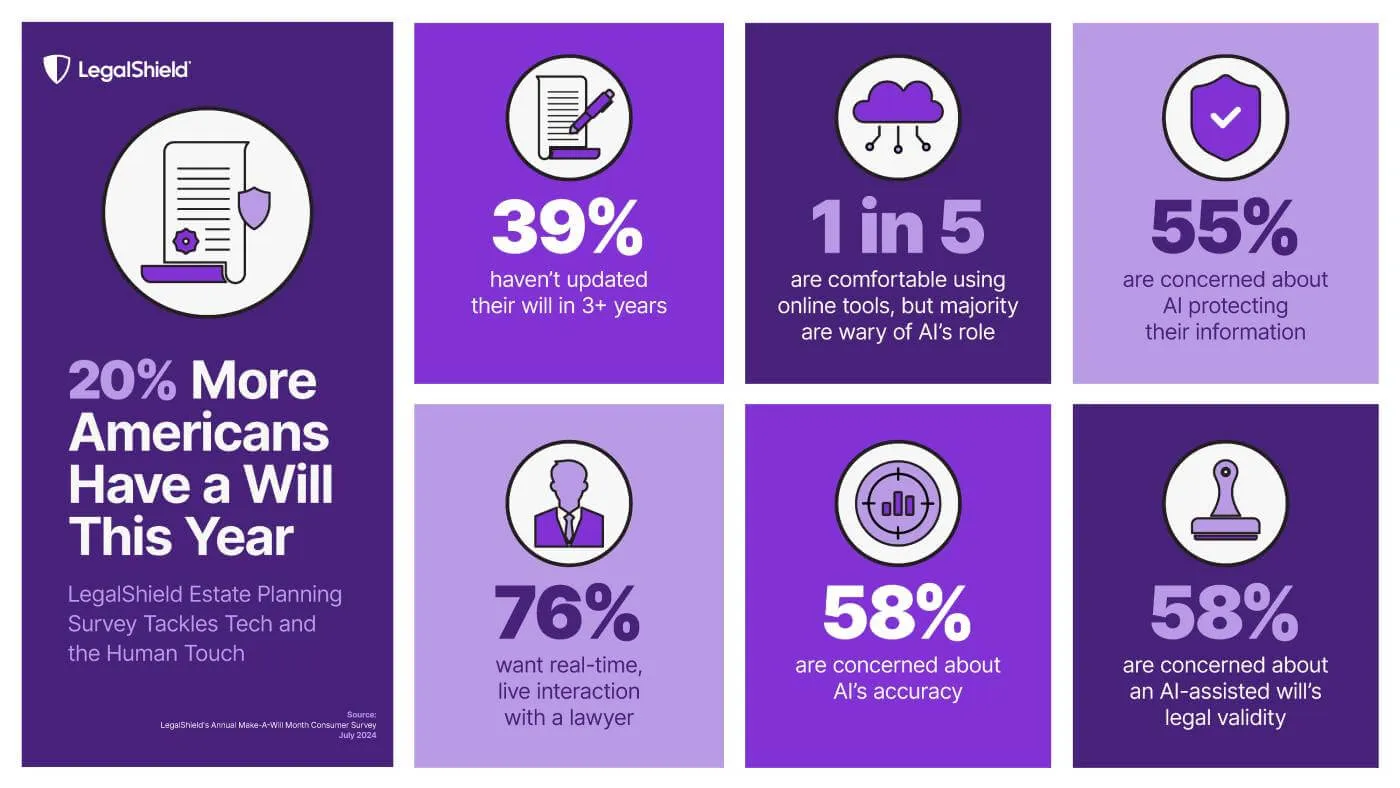
Estate planning is undergoing a significant transformation, with LegalShield’s recent survey uncovering noteworthy changes in how Americans approach preparing Wills. The survey highlights a significant 20% bump in the number of prepared Wills compared to last year, signaling a growing awareness of the importance of legacy planning across generations.
Generational preferences revealed
The survey also sheds light on preferences among different generations:
Traditional legal guidance: 50% of Americans still prefer the conventional approach of working directly with a lawyer to draft their Wills. This preference underscores the value placed on personal legal advice.
Digital tools on the rise: 44% are now open to utilizing online resources for estate planning, with Millennials leading this digital shift. Their comfort with technology is driving a new trend toward integrating online tools into the estate planning process.
AI adoption: The survey reveals a surprising generational divide in the use of AI for estate planning. Gen X emerges as the most AI-receptive generation, with 77% of Will-holders reporting AI involvement in their Will creation. In a twist, only 35% of Gen Z—often seen as digital natives—have embraced AI when it comes to preparing Wills.
The hybrid approach: Merging tradition with innovation
Many Americans continue to value direct legal interaction, but a significant number are recognizing the benefits of online tools. LegalShield is at the forefront of this hybrid approach, offering a range of services from online resources to phone consultations. “There’s no one-size-fits-all approach to estate planning,” says Ashley Higginbotham, supervising attorney at Deming Parker LLC. “Direct client interaction allows us to craft Wills that truly reflect individual wishes and provide clarity for families.”
Addressing the digital legacy dilemma
In today’s digital age, one concerning trend is the lack of attention for digital assets in estate planning. The survey reveals that 58% of respondents haven’t addressed what happens to their digital assets after they’re gone. Even more shocking, nearly a quarter of respondents haven’t even updated their Will in up to three years.
“Digital assets are rapidly becoming a crucial part of most estates,” Higginbotham warns. “Without clear instructions, families may struggle to access or manage a loved one’s online presence after they’re gone.”
LegalShield’s commitment to evolving needs
With a network of provider law firms handling approximately 50,000 Wills annually, LegalShield is well-positioned to meet the diverse needs and preferences of Americans across generations. LegalShield offers a comprehensive suite of services, including online tools, phone consultations, and in-person meetings, to ensure that estate planning is accessible, personalized and effective.With increasing numbers of Americans recognizing the importance of having a Will, LegalShield is here to help every step of the way. Whether through traditional legal advice, online resources, or a combination of both, the key is to take proactive steps in managing your estate.
We’ll provide more information about the trustors vs. trustees comparison, what to consider when filling these roles, and how they work together in Revocable and Irrevocable Trusts.
A power of attorney with springing powers is a legal document that grants someone else the authority to act on your behalf only after a specific event occurs.
There’s no rule that says a lawyer has to set up your Trust for it to be valid. However, Trusts are complex and doing it yourself without a lawyer's help comes with risks.
A Certificate of Trust proves your Trust is real and names who can act for it, while your beneficiaries and assets stay private. It lets your Trustee handle Trust business, like opening accounts or transferring property.
A limited power of attorney often comes in handy when you need help for a short time or for a single purpose. This legal document can help in situations like when you’re traveling, serving in the military, caring for an aging parent, or sending a child to study abroad.
We’ll cover some of the most common scams, the red flags that give them away, how to protect yourself, and what to do if you’ve already been caught out.
An executor is responsible for ensuring your final wishes get carried out, so it’s important that you choose someone who is responsible and can bear the emotional burden.
An employer identification number is a nine-digit number the IRS uses to identify a taxpayer. The estate needs its own, and getting one is usually simpler than it sounds. Learn more about estate EINs.
•
5 min read
Author Name
,
Author Title
September 16, 2026
Thank you! You're subscribed!
Oops! Something went wrong while submitting the form.






.jpg)