Conservatorships and guardianships protect minor children and adults who are unable to make decisions for themselves. Conservatorships often focus on finances, while guardianships usually include more decisions about a person’s general well-being and daily care.
When a loved one can’t take care of themselves, a conservatorship or guardianship can help protect them. These legal arrangements allow a trusted party to make decisions on behalf of a minor child, elderly adult, or incapacitated adult.
It can be hard to know when it’s time to set up a guardianship or conservatorship, and how to do it. Getting guidance from a legal professional can help. With a LegalShield® Membership, you can get legal advice on family law issues without paying a typical law firm's hourly rates. In this guide, you can find more information on conservatorship vs. guardianship, as well as alternatives to these options.
What is guardianship?
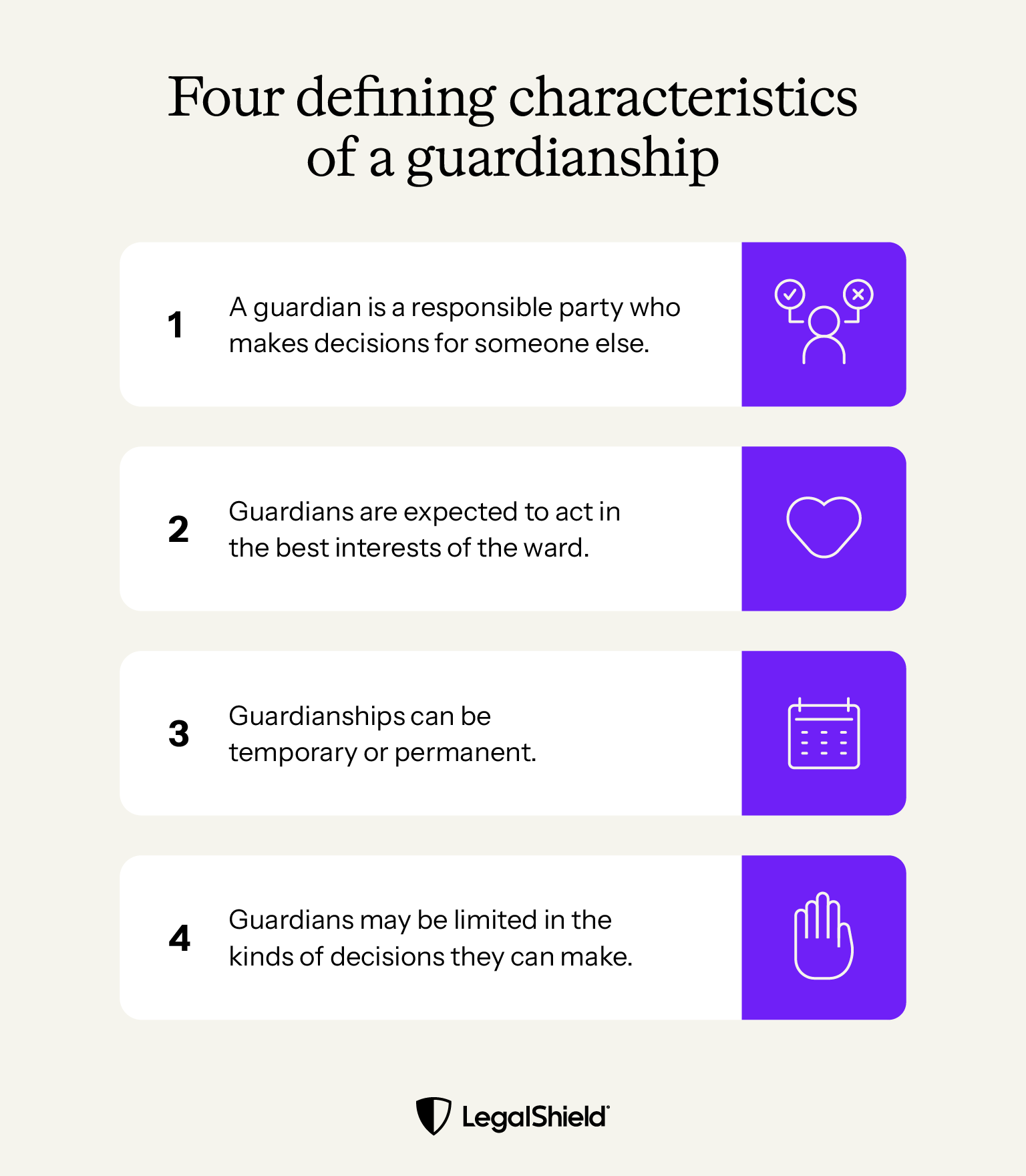
A guardianship gives someone the legal right to make decisions for a loved one. This includes choices about day-to-day care and medical treatment. The person a guardian looks after is called a ward.
There are several reasons you might need a guardianship. Often, they arise out of an already difficult situation, like a death or an incapacitating illness. For example, an adult family member may need guardianship of a minor child who has lost both of their parents in an accident. Or a grown child might need to seek guardianship for a parent who can’t care for themselves due to Alzheimer’s or dementia.
In most situations, children under 18 without a parent or legal guardian need a guardianship because minors can’t legally act on their own. But when it comes to adults, deciding to establish guardianship for a grown person can be tough. You don’t want to take away a loved one’s ability to make choices for themselves, but it’s also important that they’re safe, cared for, and their needs are met.
Talking things through with a lawyer can provide legal insight during an emotional time.
Common types of guardianship
There’s more than one type of guardianship. What works will depend on the situation and the needs of those involved. Different types of guardianship include:
Temporary guardianship: A guardianship that has a set end date or is in place until there’s a more permanent arrangement.
Emergency guardianship: A type of temporary guardianship put in place when a ward is in immediate danger or needs removal from their current situation.
Guardianship of a minor: Guardianship of a child under age 18. The child’s guardian usually steps in if there are issues with child custody or no custodians. They can make decisions about a child’s upbringing, including their healthcare and education. It usually ends when the child turns 18.
Adult guardianship: Guardianship of a person over age 18. Often needed due to an illness, age-related decline, a cognitive condition, or incapacitation.
Limited guardianship: A guardianship that grants the right to make certain, limited decisions. For example, the right to make only healthcare decisions.
Guardianship of a person: The right to make decisions about a ward’s daily life and personal affairs. The guardian ensures the ward's basic needs are met, including housing, food, and medical care.
Guardianship of an estate: Guardianship over a ward’s finances, including income, property, and assets. The guardian has no control over the ward’s self. This arrangement is a lot like a conservatorship, discussed in more detail below.
Guardian ad litem: A temporary guardianship. Guardians ad litem (GALs) represent the interests of a minor child or incapacitated adult during guardianship or custody proceedings.
When you're grieving a death in the family or helping a loved one through an emergency or illness, it can help to get clarity on legal issues from a knowledgeable lawyer. A legal professional can help you explore your options so you can make informed choices for your family. A lawyer can also guide you through making arrangements according to your state’s laws, which can vary.
What is conservatorship?
A conservatorship is similar to a guardianship, but a conservator’s role is usually limited to financial decisions. The person under the conservatorship is called a conservatee. The conservator is responsible for managing the conservatee’s assets. This includes bank accounts, investments, and real estate. They must also pay the conservatee’s bills, taxes, and debts.
A minor child might need a conservator to manage money left to them. An adult with developmental disabilities or an elderly adult experiencing mental decline might also need help with finances from a conservator.
Guardianship and conservatorship are not mutually exclusive. Sometimes, a loved one requires both, and the same individual can serve in both roles. In some states, the courts use the terms conservatorship and guardianship interchangeably.
Common types of conservatorship
As with guardianships, there is more than one type of conservatorship. This includes these types:
General conservatorship: A conservatorship with broad powers to manage the conservatee’s finances. Sometimes it also grants the power to make personal care decisions for the conservatee, such as arranging health care. It’s used in situations involving a minor child or a severely disabled or incapacitated adult.
Limited conservatorship: Grants the right to make limited decisions about a conservatee’s finances. Often, the choice for people with developmental disabilities who can make their own decisions but need some guidance.
Lanterman-Petris-Short (LPS) conservatorship: A legal conservatorship for people with serious mental illness. Named after the related bill’s authors, this legal conservatorship gives the conservator the right to make mental healthcare decisions. This may include placing the conservatee in a psychiatric treatment facility.
Probate conservatorship: A conservatorship for adults who can no longer make their own financial decisions.
Key differences between guardianship and conservatorship
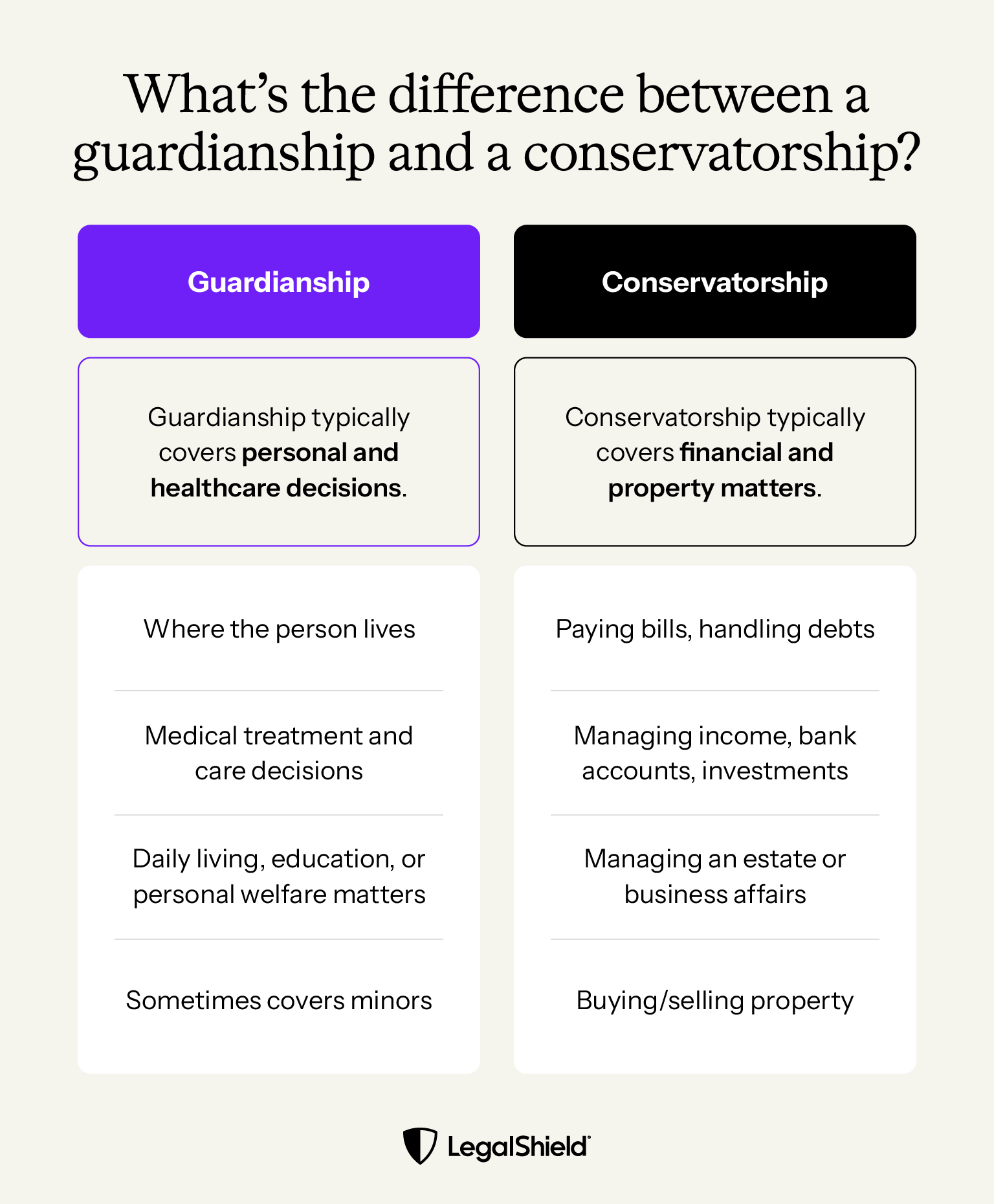
There are key differences between guardianship and conservatorship, as well as between a guardian, a conservator, and their roles. The exact differences, as well as legal terms used, can vary from state to state. You can learn more by speaking with a LegalShield Provider Law Firm.
In the meantime, the table below can provide a quick overview:
Guardianship
Conservatorship
Main focus
Management of an individual’s day-to-day life and care
Financial management
Person protected
Minor children, elderly adults, adults with cognitive conditions, and incapacitated adults
Minor children, elderly adults, adults with cognitive conditions, and incapacitated adults
Level of court supervision
More court oversight because decisions affect someone’s daily life and basic needs
The court reviews financial documents. There is generally less oversight than with a guardianship
Terminology for person under protection
Ward
Conservatee
Alternatives to guardianship and conservatorship
Several estate planning options make good alternatives to a guardianship or conservatorship. And they allow you to make arrangements in advance without involving a lengthy and costly court process. They include these kinds of legal documents:
Living Wills: A Living Will lets you outline your end-of-life decisions before you become unable to do so. These forms are state-specific, and they can also address things like organ donation.
Living Trusts: A Living Trust protects your assets and makes a plan to transfer them after you’re gone. You manage the trust while you’re able, but you name someone who can do it for you if you become sick or incapacitated.
Durable Powers of Attorney: A DPOA names someone who can act legally on your behalf if you can’t. Your DPOA can pay your bills and taxes, purchase property in your name, sign contracts, and more.
Healthcare Powers of Attorney: A HCPOA names someone to make decisions about your routine healthcare matters if you can’t.
These legal documents can be part of a broader estate plan that may include making a Will and other trusts. They let you (or your loved one) make important decisions so that everyone’s prepared. You can get peace of mind knowing you have control over the future and can avoid the stress of seeking a conservatorship or guardianship in court.
Get advice on difficult decisions with a LegalShield Membership
Professional advice can help you navigate fraught situations. Get affordable legal guidance from LegalShield Provider Lawyers on ways to safeguard your family or ensure that someone you trust handles your affairs. Members can receive legal services related to guardianship and conservatorship at a discounted rate.
With a LegalShield Personal Plan, you get access to a provider law firm that can help with a range of family law and estate planning issues, from questions about child custody to how to create a Will. Whatever life throws your way, you can build plans for your family’s future.
Frequently Asked Questions
Yes, someone can be both a guardian and a conservator at the same time. In fact, it’s a common arrangement. In many states, courts use these terms interchangeably.
There are temporary guardianships and conservatorships. They’re often used in emergency situations until a permanent arrangement is in place. Guardianship of a minor usually ends when they turn 18.
Guardians and conservators are usually family members. Often, the courts prioritize appointing family to these roles. When no family is available, others can serve, including trusted friends, neighbors, or qualified professionals.
Monitoring can vary by state and by court. Usually, guardians and conservators must submit regular reports. They include details on a ward’s condition or a conservatee’s finances. Courts review them to ensure proper management and whether to continue the guardianship or conservatorship.
Content Specialist at LegalShield, creating educational resources about legal and consumer protection topics. She focuses on making complex legal and financial concepts accessible to readers and has contributed to various educational articles on consumer rights and protections.
En Estados Unidos, un divorcio sin oposición generalmente cuesta al menos $1,500, mientras que un divorcio con oposición puede empezar en $5,000 y superar los $20,000 en casos complejos. El costo total depende de los honorarios de abogados, los costos judiciales y el nivel de conflicto entre los cónyuges.
Decidir tramitar el divorcio ya es bastante difícil sin tener que preguntarte si estás llenando el formulario correcto. Cada estado maneja el proceso de manera un poco distinta, y es normal sentir dudas acerca de dónde empezar. Reunimos información sobre lo que puede suceder durante el trámite, incluyendo perspectivas de una abogada de verdad, para darte más claridad en este camino.
La mayoría de nosotros sabemos que deberíamos tener un testamento. Simplemente seguimos encontrando razones para posponerlo. Si eso te suena familiar, no estás solo/a. Sigue leyendo para aprender qué puedes hacer al respecto.
Prepararse para un divorcio implica reunir documentos financieros y personales, hacer un presupuesto de tus gastos mensuales, asegurar tus cuentas digitales e inventariar tus bienes. También es importante decidir qué tipo de divorcio se adapta a tu situación y consultar con un abogado antes de presentar la petición para proteger tus derechos.
¿Necesitas un poder notarial pero te preocupa el costo? Es natural preocuparse por pagar servicios legales, pero es importante no quedarse atrapado/a en dólares y centavos. Después de todo, no le puedes poner precio a la tranquilidad, y eso es exactamente lo que ofrece un poder notarial.
Ya sea que te estés casando, pasando por un divorcio o simplemente estés listo para un nuevo comienzo, cambiar tu nombre es un gran paso. Puede ser un proceso sorprendentemente difícil, y las tarifas varían mucho.
Planificar el futuro de tu familia toma tiempo y reflexión. Una herramienta que puede ayudar es el fideicomiso familiar: un arreglo legal que te permite decidir cómo se administra y se comparte tu propiedad con las personas que te importan.
A veces la gente tiene reacciones emocionales fuertes a la palabra "prenupcial" porque sienten que su pareja no confía en ellos. Pero un contrato prenupcial trata de establecer confianza y justicia. Puede ser una forma prudente y cariñosa de comenzar un matrimonio. Un contrato prenupcial es una manera en que dos personas resuelven cómo manejarán el dinero y los bienes antes de decir "acepto".
•
10 min read
Author Name
,
Author Title
September 28, 2026
Thank you! You're subscribed!
Oops! Something went wrong while submitting the form.