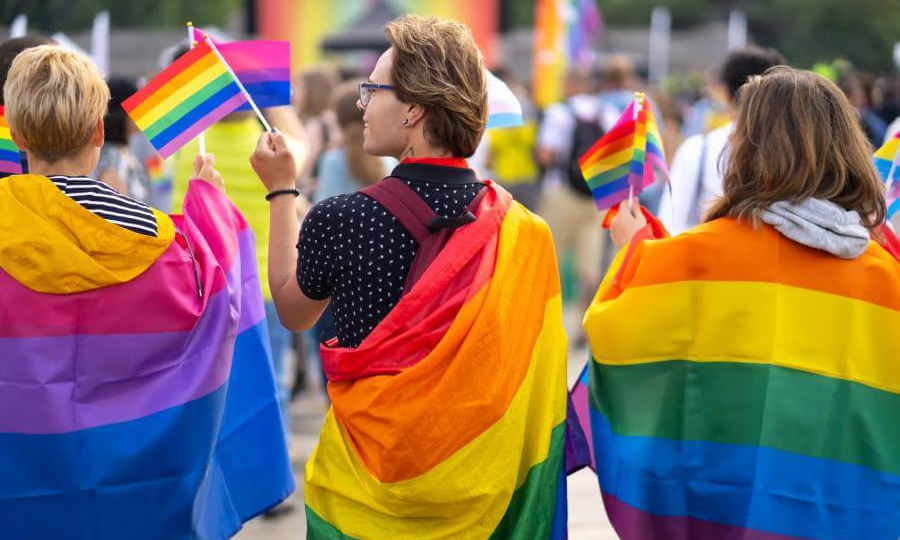
Happy Pride Month!
Every June, millions showcase their rainbow flags and clothing and gather in the streets to celebrate the "Lesbian, Gay, Bisexual, Transgender and Queer" (LGBTQ) community. Pride Month began to honor the 1969 Stonewall Uprising in Manhattan, which was a tipping point for the LGBTQ community. Today, people gather by the thousands to celebrate everything from parades to parties, to concerts, and everything in between, showing the significant impact of the community.
While celebrating Pride Month can be thrilling, it is essential to remember to stay safe, be aware of your surroundings, and know that large crowds can often bring legal issues.
How to stay safe at Pride parades this June
Anything that brings a massive crowd together in one centralized location can be hazardous. While most people don't often think too much into it, it's crucial to be aware that large gatherings can bring violent incidents, traffic accidents, trampling, medical emergencies and more. It would help if you had an emergency plan before standing shoulder to shoulder with strangers in crowds of hundreds or thousands. That said, it's always a good idea to prepare before going to one of these events.
Here are 8 tips to keep in mind:
1. Don't go alone.
You should always bring a buddy for any event that gathers a large crowd. Before going to the party or parade, discuss an emergency plan with them in case you lose each other in a crowd.
2. Tell someone your plans.
Before you head out, ensure your loved ones know where you'll be for the night and give them ways to contact or find you. If you can, share your phone's location with them.
3. Charge your phone and devices and bring extra chargers.
One of the biggest reasons people end up in dangerous situations is because their phones die, and they have no way of getting home or contacting their friends or family. Make certain your phone battery and other devices (watches, laptops, etc.) are all charged up, and bring extra chargers.
4. Write down friends' or family's contact info.
Just in case your phone does die, or something happens to it, write down your parade buddy's number and your loved ones' numbers.
5. Be aware of your surroundings.
When you arrive at the event, scan the crowd and navigate an emergency escape route with your parade buddy. Figure out an emergency meeting spot in case you lose each other. Always be aware of what people are doing around you and stay alert to any risk of danger.
6. See something, say something.
If you see anything suspicious or violent, report it to an event organizer or bar staff ASAP. Alert any bystanders of the situation and remove yourself as quickly as possible.
7. Trust your gut.
In these situations, don't second guess yourself. If you feel unsafe or threatened in any way, walk away and go home. Remember, nothing is worth risking your safety.
8. Record what's happening if you can.
A chaotic incident at an event can turn into a legal landmine quickly. If you see an incident, try to take a video of it on your phone, so you can show officials video evidence.
A provider lawyer can help
Having emergency legal protection in the palm of your hand before attending events like this can be a lifesaver. Talk to a provider lawyer about more ways to legally protect yourself and stay safe during Pride this June.