Navigating homeownership involves decisions ranging from financial considerations to legal matters. Our goal was to help unravel the intricacies of homeownership. We uncovered insights into age distribution, gender dynamics, relationship status, legal assistance use, and perceptions regarding legal counsel and realtor sufficiency.
In our LegalShield survey conducted April 2024, we surveyed 1,218 adults, ages 18 and older who live in the United States. The sample was balanced by age, among other demographic variables, according to the U.S. Census. Let's delve into our research findings and explore how these insights can inform your journey as a homeowner.
Age distribution
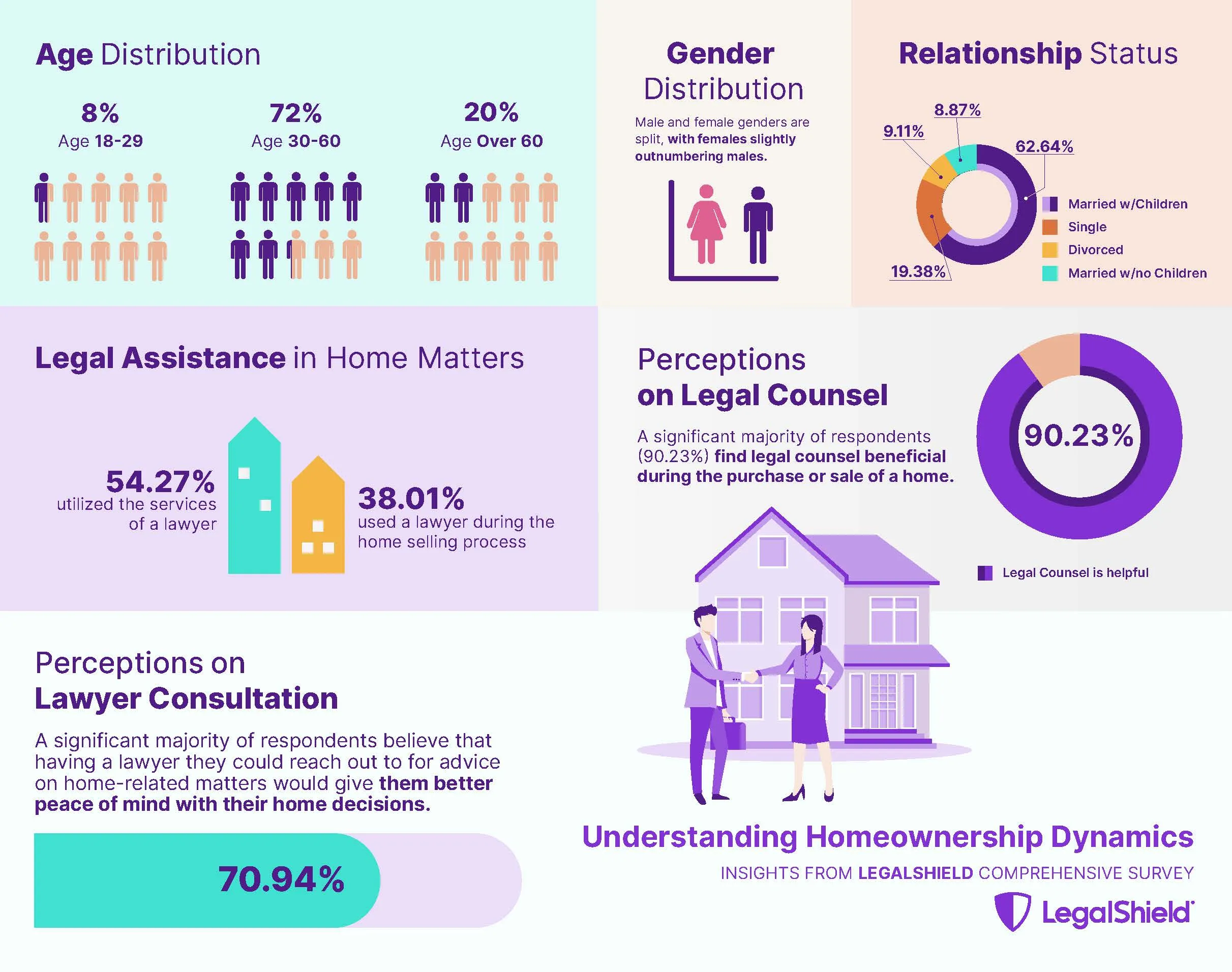
The survey paints a nuanced picture of age demographics among homeowners, revealing a predominant presence of middle-aged individuals, with significant representation from older age groups. This underscores the evolving nature of homeownership preferences across different life stages. Below is a percentage breakdown of our findings:
Most respondents, comprising approximately 72%, fall within the 30-44 and 45-60 age brackets. This suggests that middle-aged individuals are more prevalent among homeowners participating in the survey.
Those aged over 60 make up nearly 20% of respondents, indicating a significant presence of older homeowners in the survey.
Individuals aged 18-29 constitute around 8% of the population surveyed.
Gender distribution
Gender diversity among homeowners emerges as a notable aspect, with a relatively balanced representation between males and females. However, the absence of non-binary or other gender identities warrants further exploration into inclusivity within homeownership surveys. Below is a percentage breakdown of our findings:
Respondents are primarily split between male and female genders, with females slightly outnumbering males. This suggests a balanced gender distribution among homeowners participating in the survey.
Non-binary or other genders are not represented among the respondents who answered this question, indicating a binary gender representation in the survey responses. Additionally, nobody chose the option to prefer not to answer.
Relationship status
Families constitute a substantial proportion of homeowners, emphasizing the role of homeownership in providing stability and security for households. The varying relationship statuses among respondents shed light on the diverse circumstances under which individuals embark on homeownership journeys.
Most respondents, comprising approximately 62.64%, are married with children.
Around 19.38% of respondents are single, indicating a sizable proportion of unmarried individuals among homeowners.
Additionally, 8.87% of respondents are married with no children, while 9.11% are divorced. These categories represent smaller segments of respondents, but they provide additional nuances regarding the relationship status of homeowners participating in the survey.
Legal assistance in home matters
The prevalence of legal assistance sought by homeowners underscores the complexities inherent in property transactions and homeownership-related legalities. From contract negotiations to navigating the intricacies of property laws, legal guidance proves indispensable for ensuring smooth transactions and safeguarding interests. Below is a percentage breakdown of our findings:
Most respondents (54.27%) have utilized the services of a lawyer for matters related to their home. This indicates a sizable portion of homeowners have encountered situations where legal assistance was necessary or beneficial, such as dealing with contracts, buying, or selling homes, addressing repairs, or handling warranties.
Furthermore, 38.01% of respondents have used a lawyer during the home selling process.
Reasons for not seeking legal assistance
A lack of awareness, financial constraints, and self-reliance emerge as primary factors influencing homeowners' decisions regarding legal assistance. Addressing these barriers necessitates initiatives to enhance awareness about the importance of legal counsel and explore avenues for making legal services more accessible and affordable. Below is a percentage breakdown of our findings:
The primary reasons for not seeking legal assistance varied among respondents. Nearly half (49.39%) cited a lack of awareness about the necessity for legal help, indicating a potential gap in understanding the importance of legal guidance in home-related matters.
Around a quarter (24.32%) mentioned cost or financial concerns as a barrier to seeking legal assistance, highlighting the financial considerations that homeowners face when deciding whether to engage legal services.
Approximately a third (27.52%) expressed confidence in handling legal matters themselves, indicating a level of self-reliance among homeowners in managing legal aspects of homeownership independently.
Perception on legal counsel
Homeowners overwhelmingly perceive legal counsel as beneficial during home transactions, highlighting the value they attribute to professional expertise in navigating legal complexities and mitigating risks. Below is a percentage breakdown of our findings:
Over half (52.71%) consider it somewhat helpful, while around a third (37.52%) perceive it as very helpful.
Only a small percentage view it as not helpful.
Perception on realtor sufficiency
While confidence in realtors' capabilities remains high, it is essential to recognize the complementary roles of real estate agents and legal professionals in ensuring comprehensive support throughout the homeownership journey. Below is a percentage breakdown of our findings:
Most respondents (72.99%) believe that having a realtor is sufficient to handle the needs in buying or selling a home, including tasks such as handling contracts/paperwork, negotiations, inspections, appraisals, and financing.
Perception on lawyer consultation
The desire for access to legal advice reflects homeowners' quest for informed decision-making and peace of mind. Establishing channels for consultation with legal experts can empower homeowners to navigate uncertainties and make well-informed choices. Below is a percentage breakdown of our findings:
A significant majority of respondents (70.94%) believe that having a lawyer they could reach out to for advice on home-related matters would give them better peace of mind with their home decisions.
Wrapping up
As the landscape of homeownership continues to evolve, understanding the dynamics shaping homeowners' preferences, challenges, and perceptions becomes paramount. Informed decision-making lies at the heart of a fulfilling homeownership journey.
By leveraging the insights gleaned from our comprehensive survey, we’re aiming to help homeowners equip themselves with additional knowledge and resources needed to navigate the complexities of property transactions confidently.
We’ll provide more information about the trustors vs. trustees comparison, what to consider when filling these roles, and how they work together in Revocable and Irrevocable Trusts.
A power of attorney with springing powers is a legal document that grants someone else the authority to act on your behalf only after a specific event occurs.
There’s no rule that says a lawyer has to set up your Trust for it to be valid. However, Trusts are complex and doing it yourself without a lawyer's help comes with risks.
A Certificate of Trust proves your Trust is real and names who can act for it, while your beneficiaries and assets stay private. It lets your Trustee handle Trust business, like opening accounts or transferring property.
A limited power of attorney often comes in handy when you need help for a short time or for a single purpose. This legal document can help in situations like when you’re traveling, serving in the military, caring for an aging parent, or sending a child to study abroad.
We’ll cover some of the most common scams, the red flags that give them away, how to protect yourself, and what to do if you’ve already been caught out.
An executor is responsible for ensuring your final wishes get carried out, so it’s important that you choose someone who is responsible and can bear the emotional burden.
An employer identification number is a nine-digit number the IRS uses to identify a taxpayer. The estate needs its own, and getting one is usually simpler than it sounds. Learn more about estate EINs.
•
5 min read
Author Name
,
Author Title
September 16, 2026
Thank you! You're subscribed!
Oops! Something went wrong while submitting the form.







.jpg)