Every limited liability company (LLC) and corporation has to have a registered agent to receive legal and government documents and correspondence on its behalf. Understanding what they do makes it much easier to choose the right one for your business.
State laws say you must choose a registered agent when you form an LLC or corporation, but do you know what they do? Your registered agent is your business’s official point of contact, and you need one in every state where your company is formed or registered. That might sound simple, but a registered agent has important responsibilities.
They’ll receive your company’s official government notices, legal service of process, and other correspondence, and forward those documents to you. In some cases, a registered agent may perform other services. Let’s take a closer look at all the roles that a registered agent plays or can play in your business. Soon, you’ll have the information you need so that you can decide whether you’ll serve as your own registered agent, appoint someone you know, or hire a service.
Individual states may have specific laws about registered agents and what they can and cannot do. Corporate registered agents will understand these requirements before offering their services, but an individual serving as a registered agent may not. If you are serving as your own registered agent, check your state’s laws for the requirements.
Accepting legal documents
If someone files a lawsuit against your business, they must notify you. A service of process can include different legal documents:
Summons: A formal court notice that someone filed a lawsuit against you
Subpoenas: Court orders that say you need to provide evidence or appear or testify at a specific time and place
Complaints: Formal documents that explain the claims against you
A process server or sheriff usually delivers those notices. Some states, and often under specific circumstances, also allow service of process through certified or registered mail with a return receipt requested. Once your registered agent receives the legal papers, the law considers you served.
Most third-party registered agent services maintain records of what they receive and make them available to you electronically. If this is an important service to you, be sure to ask a prospective registered agent whether they offer it.
Tracking compliance notifications and deadlines
A registered agent gets official mail from the state government, among other things. Owners like you are usually busy running the company, so it’s easy to overlook notices or deadlines. Missing one can lead to big problems. If you fail to follow compliance rules, it can become a major issue. That’s why a registered agent is so important.
Some registered agent services help you stay on track by reminding you about and, in some cases, handling filings such as your annual report. These services are often an add-on for an additional fee and might include:
Business status notifications (delinquency, non-compliance, or dissolution notices)
Information or document requests
Compliance-related documents (to keep your company in good standing with the state)
Tax notices and forms (like sales tax, franchise tax, and income tax)
Official reminders for filing biennial or annual reports
Your company may need to make payments, file forms, or fix compliance errors. You need to meet deadlines to follow state laws. Using a registered agent that offers additional services, such as those described above, can help you focus on your company’s day-to-day operations.
Forwarding documents and notifying the business
Timing matters when receiving legal and government documents. You may need to respond fast. After your registered agent gets them, they send the documents to the right person in your company. That usually means promptly scanning and sending them electronically. This quick forwarding helps you stay ahead of deadlines. A registered agent service will give you a timeframe for forwarding any documents they receive, often 24-48 hours.
You might want different people to get different types of notices. Maybe you want to receive a certain notice in person. Or perhaps you would prefer your administrative assistant or a manager to handle the paperwork. You may even have an in-house legal team that you want to deal with something specific. You’ll need to give your registered agent contact information for those key people. That way, they’ll each get the documents without delay.
Providing physical presence
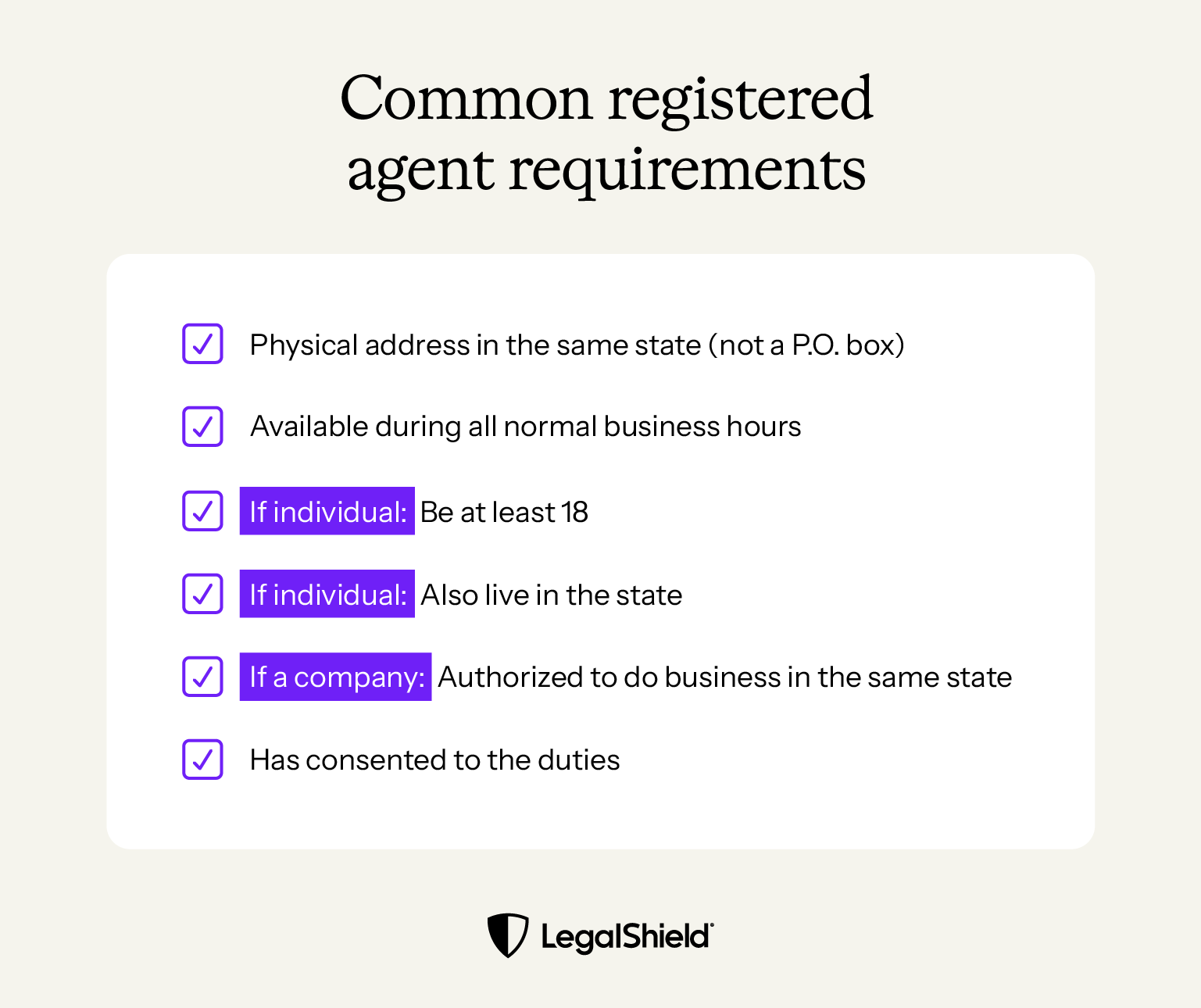
You can’t use a P.O. box as your registered agent address, whether you’re the registered agent or a third-party service. Having a registered agent provides the state with a method to get in touch with your business.
If your LLC or corporation operates in more than one state, you need a registered agent in each one, which makes serving as your own registered agent more difficult.
Being available during business hours
A registered agent must be present at the listed address during normal business hours. That way, any individual, agency, court, or organization that wants to send something to your business can do so.
For many business owners, that can be hard to manage. You might need to meet clients, travel, work irregular hours, or even run errands. If you’re not present, you could miss important deadlines. Using a professional service gives you a lot more flexibility.
The registered agent’s address is a public record. Anyone looking up your company could find it. If you run a home business, you might not want your home or office address to show up in public databases or on state websites. Using a professional registered agent keeps your personal information private.
That’s especially important for legal papers. Service of process at your home or business could embarrass you. A registered agent can receive them for you, making things more private and professional.
Sorting and prioritizing mail
Some pieces of mail are more important than others. Your registered agent looks at your documents to see if any of them need immediate attention. Tax forms and compliance documents usually have strict deadlines, so taking care of them quickly matters.
Your registered agent might:
Sort and rank your documents by deadline and urgency
Flag items that need fast action
Remind you (or the right person in your company) of upcoming deadlines
Having someone else responsible for those tasks can give you peace of mind. You’ll be able to respond to urgent issues on time instead of finding out about a lawsuit after a default judgment.
Who can be registered agents: Legal requirements
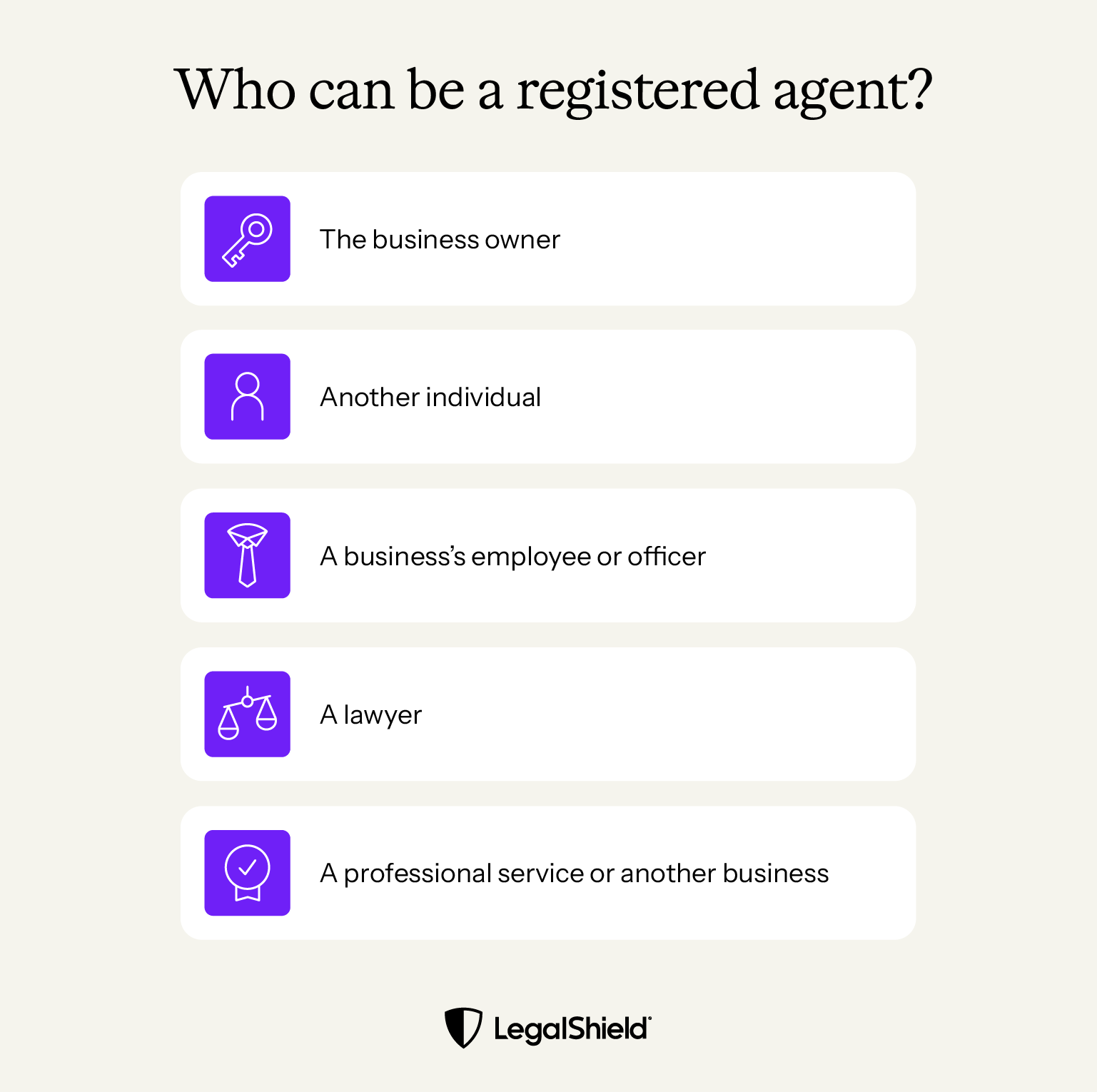
Every state has rules about who can serve as a registered agent. It’s important to look at your state-specific laws to make sure you follow them. You can choose either an individual or a professional service as your registered agent as long as they meet the criteria. Friends, employees, or family members can serve as registered agents if they qualify.
Most states require a registered agent to meet certain criteria. LegalShield can connect you with a provider law firm that can help you understand your state’s requirements. If you have more legal questions about starting your business, LegalShield can help with those, too.
Can you be your own registered agent?
All 50 states allow LLC owners to serve as their own registered agents, and that might work well for smaller companies. Benefits include lower costs, easier setup, and the ability to use your own system to organize your official documents. But there are some downsides too.
The privacy issues and availability requirements already mentioned are definite disadvantages, but they’re not the only ones:
Adding more responsibilities to your workload
The risk of missing or losing important documents
Being unable to serve as a registered agent in more than one state
Consequences of failing to maintain a registered agent
You need a registered agent to register your LLC or corporation. You also have to keep an active registered agent. If you don’t, your business could face serious problems:
Loss of good standing: Good standing means you’ve met all financial, legal, and regulatory obligations. Losing that status can lead to problems getting financing and expanding into other states. In some states, losing good standing may affect your ability to enforce contracts.
Default judgments: If your company doesn’t receive legal notices, you might lose lawsuits by default.
Your registered agent can also voluntarily withdraw from your business without permission. In many states, the Secretary of State may be added as the default registered agent in that case, though state rules vary.
Businesses are required by law to keep the information they have filed with the state, including the registered agent information, current. Failure to do so can result in fines and penalties as well as all of the points described above.
Remember that registered agents must consent to being appointed as such for your business. Sometimes you have to file a consent form when you register your business or change it later. While some states do not require a separate form, state laws may still require that you obtain consent. If consent is required but not filed, it is good practice to have your registered agent consent in writing and keep that with your other business records.
Changing your registered agent
You may need to replace your registered agent at some point. Each state has its own process, but in most states, you’ll fill out and submit a form that’s available through your Secretary of State’s office and pay a filing fee.
If your registered agent changes, you need to inform the state quickly, sometimes within a time frame set out by law.
Get assistance with business legal questions and issues from LegalShield
All LLCs and corporations need a registered agent to stay in compliance with state laws. Choosing the right agent helps organize and protect your business. It also makes it easier to know when you may need extra support.
Getting help from a lawyer can help you keep small issues from becoming big problems. LegalShield® Business Plan members get advice, document reviews, and more for a low monthly fee. Whether you're dealing with compliance deadlines, service of process, or questions about your state's registered agent requirements, a LegalShield provider law firm can help you stay on top of it without the hourly fees.
Pre-Paid Legal Services, Inc. (“LegalShield”) provides access to legal services offered by a network of provider law firms to LegalShield members through membership-based participation. Neither LegalShield nor its officers, employees or sales associates directly or indirectly provide legal services, representation, or advice. Small Business Legal Plans and certain benefits are not available in all states. See a Small Business Legal Plan contract for a specific state for complete terms, coverage, amounts, and conditions. The information made available in this blog is meant to provide general information and is not intended to provide legal advice, render an opinion, or provide a recommendation as to a specific matter. The blog post is not a substitute for competent legal counsel from a licensed professional lawyer in the state or province where your legal issues exist, and you should seek legal counsel for your specific legal matter. Information contained in the blog may be provided by authors who could be a third-party paid contributor. All information by authors is accepted in good faith, however, LegalShield makes no representation or warranty of any kind, express or implied, regarding the accuracy, adequacy, validity, reliability, availability, or completeness of such information.
Content Specialist at LegalShield, creating educational resources about legal and consumer protection topics. She focuses on making complex legal and financial concepts accessible to readers and has contributed to various educational articles on consumer rights and protections.
Dissolving an LLC can be tricky, and doing it without guidance can lead to unnecessary stress and delays. We’ve put together some helpful information so you can start the LLC dissolution process with more peace of mind.
An employment contract is an important piece of paperwork because it defines the working relationship, your expectations, and conditions. Here are some of the common components included.
Virtual business addresses can be a practical option for those forming an LLC from home, working remotely, or trying to keep their business and personal mail separate.
By the end of this blog, you’ll get a high-level summary of trademarking a name and logo, how logos differ from business names and artwork, and how much it all costs.
A DBA is a name registration that lets you run your business under a name other than your personal legal name or legal business entity. While a DBA offers branding flexibility and market expansion opportunities without creating a new legal structure, it does not provide legal liability protection, tax benefits, or function as a business license.
An indemnity agreement settles the “who is responsible” question ahead of time. One party promises, in writing, to cover certain losses tied to the work, so the other isn't left with the bill. These promises appear in construction contracts, leases, and business sales.
A certificate of good standing is official proof from your state that your business is registered and current on its requirements. Most lenders and agencies want a recent one, so it helps to know how to get it before someone asks.
Whether the goal is selling a company, bringing in a business partner, or passing it to a family member, the LLC ownership transfer often involves reviewing the LLC's operating agreement and the applicable state's rules.
•
11 min read
Thank you! You're subscribed!
Oops! Something went wrong while submitting the form.