In a business context, EINs are numbers that the IRS uses to identify businesses for tax reasons.
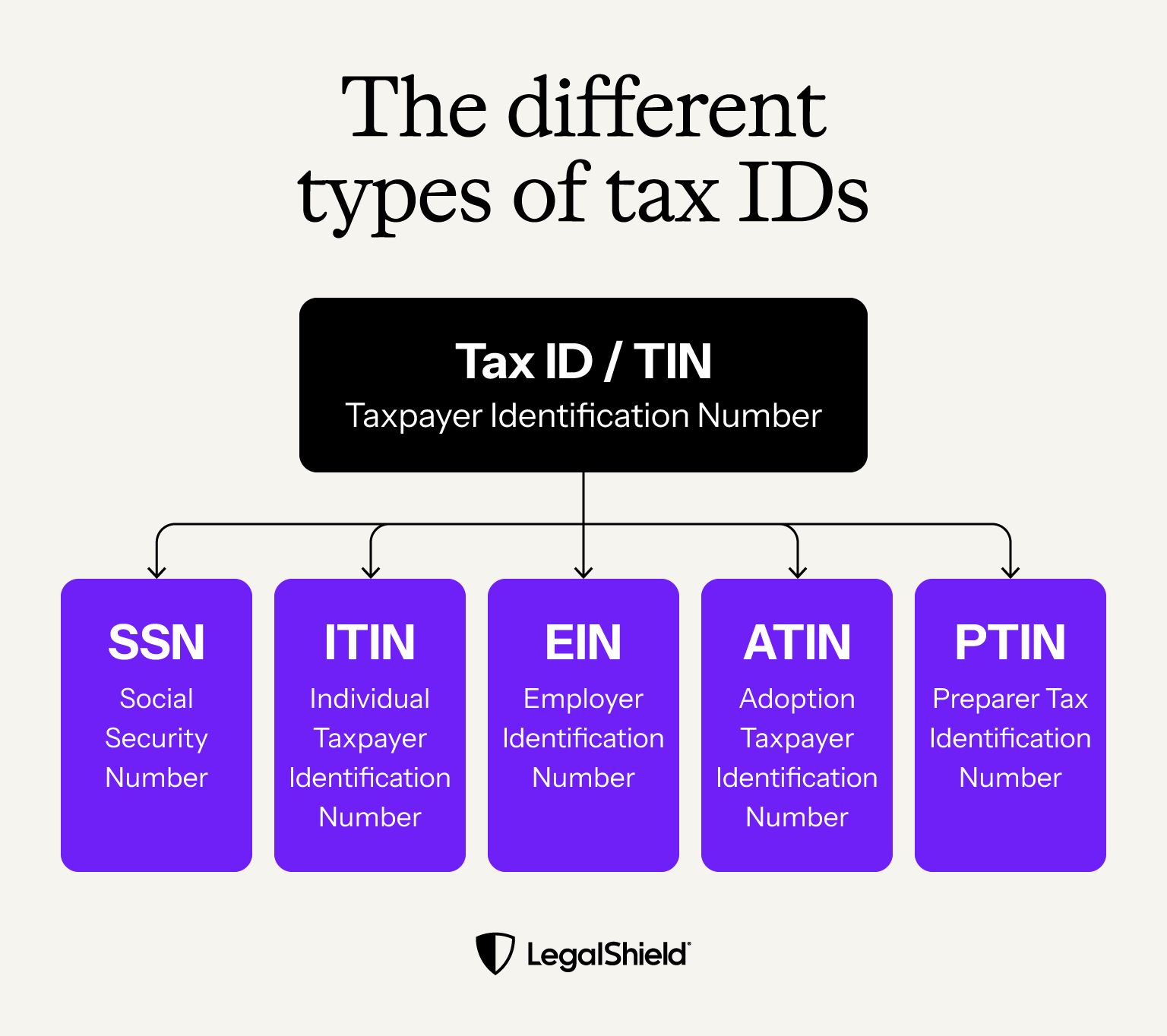
Tax ID, or taxpayer identification number (TIN), is the broader category that covers SSNs, EINs, ITINs, ATINs, and PTINs.
Business owners need an EIN once they have employees or when they want to start a partnership, multi-member LLC, or corporation.
An EIN also comes up when you open a business bank account, apply for licenses, or register a trade name.
You’re halfway through a NEC-1099 or a similar business form when it asks for your tax ID number (TIN). While you might have an employer identification number (EIN), you aren’t sure how that’s the same thing or why.
If you have a search for “EIN vs tax ID” in your other tab, we can clear things up. A TIN is the umbrella term for numbers that represent taxpayers, and an EIN is one of those TINs.
As you sort through your paperwork, more questions about business legal matters might come up, like what a vendor contract actually does or which licenses you need in your state. A LegalShield® Small Business Plan gives you access to consultations with a provider law firm on these kinds of business legal matters.
{{billboard-1}}
What is an employer identification number (EIN)?
An employer identification number (EIN) is a nine-digit number that represents the tax accounts of employers and others that file business tax returns. The IRS says to use it for business activities only, not in place of your Social Security number.
A business owner may need their EIN for a variety of reasons:
Hiring and paying employees. The IRS requires an EIN for reporting employment taxes when you have employees.
Filing certain business taxes. You also need an EIN if you owe taxes on goods like alcohol or fuel. The same goes if you pay someone who isn’t a U.S. resident and have to withhold taxes from non-wage payments.
Operating as a partnership, LLC, or corporation. Most entities need an EIN to operate, except for some single-member LLCs without employees. You may want to confirm whether your LLC needs an EIN with a tax professional before you apply.
Opening a bank account or applying for licenses. A new EIN works right away, allowing you to immediately open a business bank account and apply for local or state licenses.
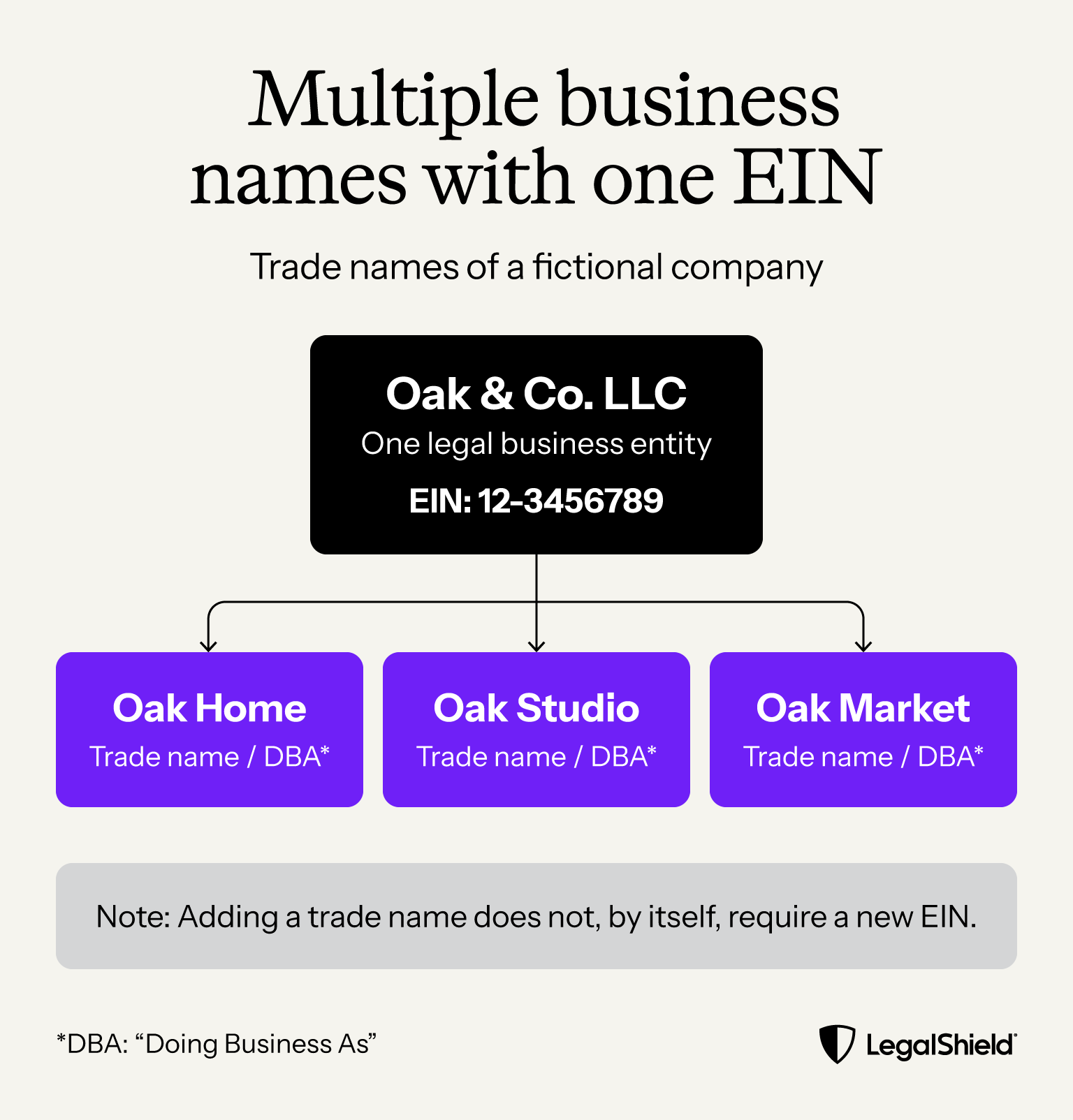
Registering a trade name. A trade name works under the EIN of the entity that owns it, so one business can use more than one name on the same number. So, for example, adding a DBA to your LLC changes only your business name, not the EIN.
Changing ownership or structure. The IRS often gives you a new EIN when either one changes. This means the business will need a different EIN when you transfer an LLC to a new owner.
What is a tax identification number (TIN)?
A taxpayer identification number (TIN) identifies a taxpayer for the IRS. Tax documents, like returns and statements, require a TIN, meaning owners will need the right type of TIN for their business to file taxes.
In many business contexts, the type of TIN you’ll need is an EIN. A financial professional can help you understand which TIN your business should use.
What is the difference between an EIN and a TIN?
An EIN is a kind of TIN. The IRS uses “taxpayer identification number” to refer to any number it uses to track taxpayers, including an EIN.
Once you have employees, or to operate a partnership, multi-member LLC, or corporation
Whenever the IRS needs to connect a filing to a taxpayer
Who asks you for it
Banks, licensing agencies, and the IRS on business filings
Anyone who must report what they paid you
This difference matters when a form asks for your TIN. In this situation, you’ll need to follow the form’s instructions or ask a professional about which TIN applies. That’s often the EIN for a business. If you run a sole proprietorship, though, you may need to put your SSN in the box.
Get legal advice for your small business from a LegalShield Provider Law Firm
The EIN vs. tax ID question is just one of many that can come up as you figure out your business’s legal and financial structures. You might also need insight into processes like registering a small business or keeping up with license requirements in your state.
With a LegalShield Small Business Preferred or Premium Plan, you can bring these kinds of questions to a provider law firm that can help you understand what applies to your situation. A Small Business Plan includes consultation on an unlimited number of business legal matters, like compliance with employment law. See what a Small Business Plan covers for hiring and employment.
Sources:
Internal Revenue Service. (2026, July 17). Employer identification number. https://www.irs.gov/businesses/employer-identification-number
Get trusted legal support for your business when you need it
An EIN is just one type of tax ID number that you may need to use to identify your business for tax purposes. An EIN is always a tax ID number, but there are multiple types of tax ID numbers.
An EIN is your business’s federal tax number, and an entity number is a state-specific identification number. Requirements for having an entity number vary by state.
The location of your EIN depends on your business’s tax structure:
Partnerships/multi-member LLCs: Box D on page 1 of Form 1065
C corporations: Box B on page 1 of Form 1120
S corporations: Box D on page 1 of Form 1120-S
Most business owners will already have some kind of TIN, like their personal SSN. However, multi-member LLCs and LLCs that sell certain types of goods must obtain an EIN, another type of TIN.
Communications Director at LegalShield overseeing content creation designed to make legal protection simple and approachable. He focuses on offering straightforward, trustworthy guidance that empowers people to make informed decisions about their legal rights and responsibilities.
Classes are how trademarks are organized, and you need to pick one or more when you apply. These can be confusing, especially when it comes to application costs. We’ll explain the system and list all of the classes to help you decide where your trademarks belong.
To help you understand this complex area of intellectual property law, we’ll walk through what trademarks mean, the specific rights they grant, and what they can apply to.
Copyright is an intellectual property right that gives the creator of a work the exclusive legal rights to it. These rights let creators sell and license the work they create, and it’s an important area of law for small business owners to understand.
Dissolving an LLC can be tricky, and doing it without guidance can lead to unnecessary stress and delays. We’ve put together some helpful information so you can start the LLC dissolution process with more peace of mind.
An employment contract is an important piece of paperwork because it defines the working relationship, your expectations, and conditions. Here are some of the common components included.
Virtual business addresses can be a practical option for those forming an LLC from home, working remotely, or trying to keep their business and personal mail separate.
By the end of this blog, you’ll get a high-level summary of trademarking a name and logo, how logos differ from business names and artwork, and how much it all costs.
•
12 min read
Thank you! You're subscribed!
Oops! Something went wrong while submitting the form.