Small Business

How Trademark Classes Work and How to Apply Them

Elyse Dillard
Content Specialist at LegalShield
November 24, 2026
•
8 min read
Two businesswomen collaborating on a laptop
Get the legal advice you need without the hourly legal fees
Explore Plans

Key Takeaways

  • There are 45 trademark classes, separated into general categories and whether they are goods or services. 
  • Classes 1 through 34 are designated for tangible products (goods), while classes 35 through 45 are designated for activities performed for others (services).
  • You must pick classes when applying for trademarks
  •  One trademark can have multiple classes
  • Classes are used for organization and searching, and can also establish the legal boundaries for protecting against infringement. 

Trademarks help you defend specific words, phrases, and designs that identify your business. When you own a trademark, you possess some legal rights to determine how it’s used in certain situations.

Classes are how trademarks are organized, and you need to pick one or more when you apply. These can be confusing, especially when it comes to application costs. We’ll explain the system and list all of the classes to help you decide where your trademarks belong.

The trademark class system

Classes help the U.S. Patent and Trademark Office (USPTO) classify trademarks and review applications. They also help organize the database when other people search for existing or pending trademarks.

The USPTO currently uses the international NICE system, which contains 45 different classes:

  • Classes 1-34 are goods.
  • Classes 35-45 are services.
  • Goods and services are never in the same class.

When you register a mark, you must identify one or more of these classes in your application.

Class Description (main inclusions, non-exhaustive)
Goods classes
Class 1: Chemicals Chemical products for use in industry, science, agriculture, and production of products in some other classes
Class 2: Paints and colorants Paints and varnishes, colorants and dyes, thinners and thickeners, preservation/anti-corrosion oils
Class 3: Cosmetics and cleaning preparations Non-medicated cosmetics, toiletries, perfumes, dentifrices, cleaning and polishing products
Class 4: Lubricants and fuels Industrial oils, greases, waxes, and lubricants, plus fuels and illuminants
Class 5: Pharmaceuticals Pharmaceutical, medical, and veterinary preparations, sanitary products, diapers, and dietary supplements
Class 6: Metal goods Common metals, their alloys, and ores, plus metal building materials and transportable metal structures.
Class 7: Machinery Machines, machine tools, power-operated tools, plus motors and engines (except for land vehicles), 3D printers, and industrial robots
Class 8: Hand tools Hand-operated tools and implements, including cutlery, personal grooming tools, and side arms other than firearms
Class 9: Electrical and scientific apparatus Scientific devices, safety apparatus, computers, smart devices, software, and recorded or downloadable media
Class 10: Medical apparatus Surgical, medical, dental, and veterinary instruments and apparatus
Class 11: Environmental control apparatus Apparatus for lighting, heating, cooling, cooking, ventilating, and water supply
Class 12: Vehicles Vehicles and apparatus for moving by land, air, or water
Class 13: Firearms Firearms, ammunition, explosives, fireworks, and projectiles
Class 14: Jewelry Precious metals and their alloys, plus jewelry, precious and semi-precious stones, and timekeeping devices
Class 15: Musical instruments Musical instruments, their parts, and accessories
Class 16: Paper goods and printed matter Paper, cardboard, printed matter, and bookbinding material, plus stationery and office supplies
Class 17: Rubber goods Unprocessed and semi-processed rubber, gutta-percha, asbestos, and mica, plus plastics in extruded form for manufacturing
Class 18: Leather goods Leather and imitation leather, plus animal skins and hides, as well as consumer products made with these materials such as handbags
Class 19: Non-metallic building materials Non-metal building materials such as wood, stone, concrete, asphalt, and building glass
Class 20: Furniture and articles not otherwise classified Furniture, mattresses, pillows, mirrors, picture frames, and non-metal containers for storage or transport
Class 21: Housewares and glass Household and kitchen utensils and containers, cookware, glassware, tableware, and personal grooming tools
Class 22: Cordage and fibers Ropes, string, nets, tents, tarpaulins, sails, and sacks for bulk materials
Class 23: Yarns and threads Yarns and threads for textile use
Class 24: Fabrics Textiles and their substitutes, household linens, and curtains made of textile or plastic
Class 25: Clothing Clothing, footwear, and headwear
Class 26: Fancy goods Lace, embroidery, ribbons, braid, buttons, hooks, pins, and needles
Class 27: Floor coverings Carpets, rugs, mats, linoleum, and other materials for covering floors
Class 28: Toys and sporting goods Games, toys, and video game apparatus, sporting articles, and certain Christmas tree decorations
Class 29: Meats and processed foods Eggs, dairy, meat, fish, poultry, and game, plus preserved, frozen, dried, and cooked fruits and vegetables
Class 30: Staple foods Coffee, tea, cocoa, rice, flour, cereal preparations, bread, pastries, and confectionery
Class 31: Natural agricultural products Raw and unprocessed agricultural, horticultural, aquacultural, and forestry products, including grains and seeds
Class 32: Light beverages Beers, non-alcoholic beverages, mineral and aerated waters, and fruit drinks and juices
Class 33: Wines and spirits Alcoholic beverages other than beers and their preparations
Class 34: Smokers' articles Tobacco and tobacco substitutes, cigarettes, cigars, and electronic cigarettes
Service classes
Class 35: Advertising and business Advertising, marketing, business management, organization, and administration
Class 36: Insurance and financial Financial, banking services, insurance underwriting, real estate services, brokerage, and payment processing
Class 37: Building construction and repair Construction, demolition, installation, and repair services, plus rental of construction equipment
Class 38: Telecommunications Services that let people communicate with each other remotely, plus the transmission of data and files such as internet service and on-demand streaming
Class 39: Transportation and storage Transport of people, animals, or goods, plus packaging and storage of goods
Class 40: Treatment of materials Treatment or transformation of objects and substances that changes their essential properties, such as metal plating or dyeing
Class 41: Education and entertainment Education, training, entertainment, events, exhibitions, sporting, and cultural services or activities
Class 42: Computer and scientific Scientific and technological research and design, software design and development, SaaS, cloud computing, and IT consulting
Class 43: Hotels and restaurants Services that provide food, drink, or accommodations
Class 44: Medical, beauty and agricultural Medical and veterinary services, plus hygienic and beauty care for people or animals
Class 45: Personal and legal Legal, security, dating, and funeral services, and online social networking

Goods classes vs. services classes

The classes separate goods, which are physical products, from services, which are non-physical activities (although they can involve physical goods or locations). For example, providing catering is a service, and the food is a good. 

A trademark can exist in both goods and services classes at the same time; the distinction is for classification.

Trademark class examples

We already talked about how catering involves both a service and goods. If you have a catering service, you might have a trademark brand logo under Class 43 – Hotels and restaurants. 

If you also produce the food, then you might have trademarks for your products under Class 29 – Meats and processed foods or Class 30 – Staple foods.

Let’s say your catering business gets popular and you decide to package your most famous hot sauce to sell in stores. If you have specialized packaging, like a uniquely designed bottle, then you might also apply for a patent to protect it.

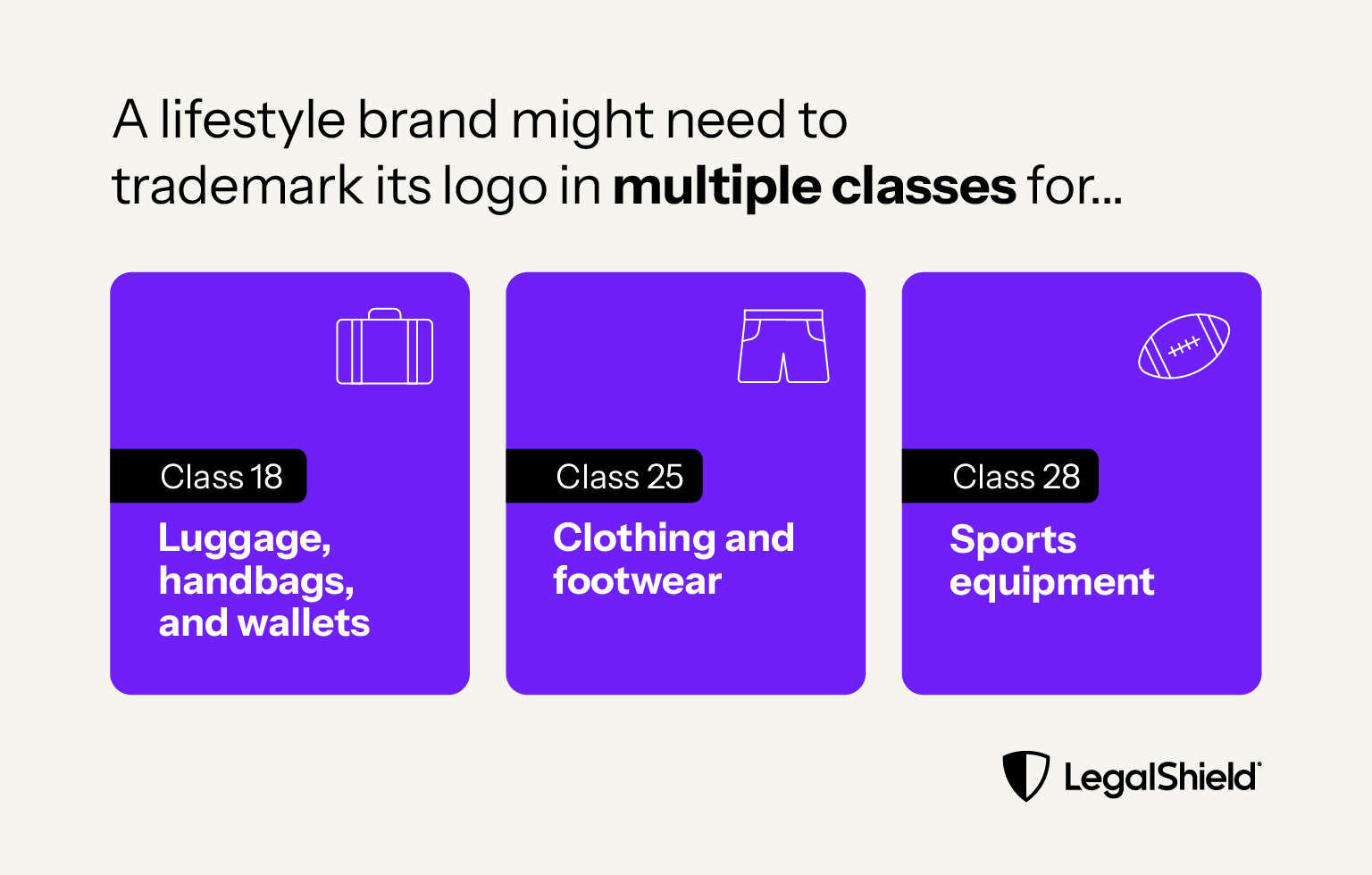
A lifestyle brand might trademark its logo in multiple classes: Class 25 for clothing and footwear, Class 18 for luggage, handbags, and wallets, and Class 26 for sports equipment

Commonly confused trademark classes

Each of the 45 classes has a large list of inclusions, and many have specific exclusions. It’s a good idea to work with a lawyer when you prepare trademark applications.

Let’s take a look at some of the classes that can sometimes cause confusion.

Software: Class 9 vs. Class 42

Both Class 9 and Class 42 include software. The software included in Class 9 runs on a device like your computer or phone. For example, apps, video games, or creative programs that you download or run on a disk.

Class 42 includes software that runs on an external server, such as a cloud service. It also includes website design as well as hardware and software development. This could include software-as-a-service that runs in a browser, AI tools, and computing services like hosting. A movie on a disc is in Class 9, while a movie streaming service is in Class 42.

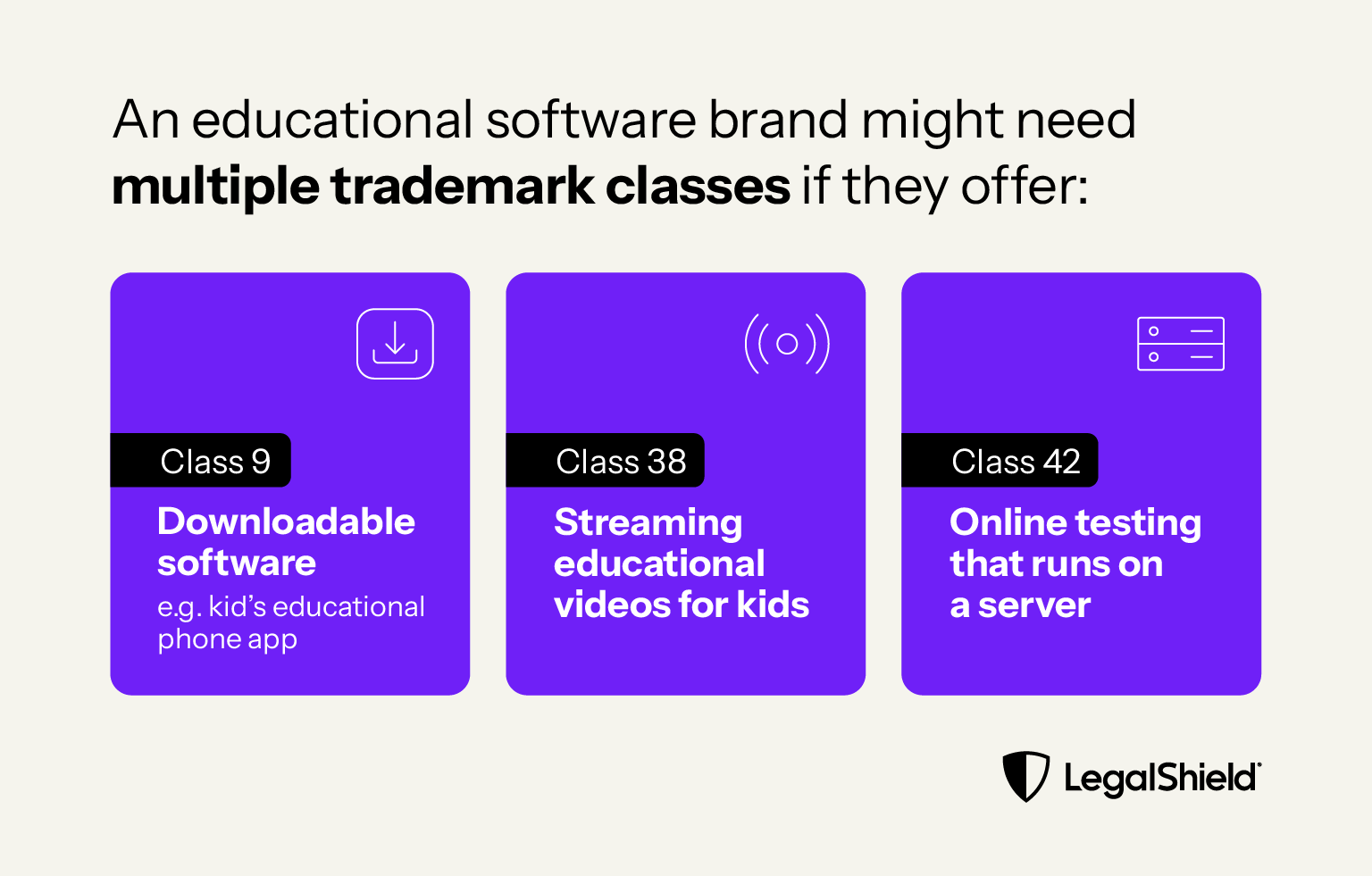
An educational software brand might need multiple trademark classes for its logo: Class 9: Downloadable software, like a kid’s educational phone app. Class 42: Online testing that runs on a server. Class 38: Streaming educational videos for kids

How to choose the right trademark class

If you’re not sure what trademark class to fall under, it’s best to get advice. Filing for the wrong class could result in your application being rejected and having to apply again (and repay the fees). Work through these tips to get started:

  • Describe exactly what you sell or provide. A mark is tied to specific goods/services.
  • Search the USPTO ID Manual for similar goods or services and look at their classes.
  • List each class that matches and decide whether you need to submit an application for multiple classes.

How trademark classes affect your filing costs

Each class you include in a trademark application comes with its own fees and, sometimes, additional requirements.

Currently, the fee is $350 per class, with additional fees if there are issues with your application, but check the USPTO website for the most up-to-date figures.

Can you change or add trademark classes after filing?

You can potentially make limited changes to an application after it’s approved. However, the USPTO places limits and conditions on changes that you’ll need to understand before requesting them.

You can potentially limit included services or remove classes from a trademark, but you can’t add new ones.

Getting legal guidance on trademark classes

Trademarks are one of many legal issues you’ll need to consider when starting or expanding a business. The applications are complex, and getting them wrong could mean additional fees. If you have questions about intellectual property and trademark classes, you can receive limited consultation with a lawyer as part of a LegalShield® Small Business Preferred or Premium Membership.

LegalShield® is a trademark of Pre-Paid Legal Services, Inc. (“LegalShield”). LegalShield provides this blog as a public service and for general information only. The information made available in this blog is meant to provide general information and is not intended to provide legal advice, render an opinion, or provide a recommendation as to a specific matter. The blog post is not a substitute for competent legal counsel from a licensed professional lawyer in the state or province where your legal issues exist, and you should seek legal counsel for your specific legal matter. All information by authors is accepted in good faith. However, LegalShield makes no representation or warranty of any kind, express or implied, regarding the accuracy, adequacy, validity, reliability, availability, or completeness of such information. The materials contained herein are not regularly updated and may not reflect the most current legal information. No person should either act or refrain from acting on the basis of anything contained on this website. Nothing on this blog is meant to, or does, create an attorney-client relationship with any reader or user. An attorney-client relationship may be formed only after the execution of an engagement letter with an attorney and after that attorney has confirmed that no conflicts of interest exist. Nothing on this website, or information contained or transmitted by this website, is intended to be an advertisement or solicitation. Information contained in the blog may be provided by authors who could be a third-party paid contributor. LegalShield provides access to legal services offered by a network of provider law firms to LegalShield members through membership-based participation. LegalShield is not a law firm, and its officers, employees or sales associates do not directly or indirectly provide legal services, representation, or advice.

Get the Answers You Need,
When You Need Them

Shop Plans
Elyse Dillard
Author
Elyse Dillard
Content Specialist at LegalShield

Content Specialist at LegalShield, creating educational resources about legal and consumer protection topics. She focuses on making complex legal and financial concepts accessible to readers and has contributed to various educational articles on consumer rights and protections.

Share this article
​
Label
​
Label
​
Label
​
Label

Related articles

​
Back to Learning Center
A man sitting in front of a computer using a design program
Small Business
9 min read
What Is a Trademark and What Rights Does It Give?

To help you understand this complex area of intellectual property law, we’ll walk through what trademarks mean, the specific rights they grant, and what they can apply to.


•
9 min read
A woman sitting in an art gallery admiring a set of three paintings
Small Business
10 min read
How Copyright Works and What Protections It Grants

Copyright is an intellectual property right that gives the creator of a work the exclusive legal rights to it. These rights let creators sell and license the work they create, and it’s an important area of law for small business owners to understand.

‍

•
10 min read
Two women discussing documents during a business meeting
Small Business
13 min read
How to Dissolve an LLC: 4 Considerations to End Your Business

Dissolving an LLC can be tricky, and doing it without guidance can lead to unnecessary stress and delays. We’ve put together some helpful information so you can start the LLC dissolution process with more peace of mind.

•
13 min read
Two people sitting at a table in a bright office environment.
Small Business
15 min read
Common Components of Employment Contracts in the US

An employment contract is an important piece of paperwork because it defines the working relationship, your expectations, and conditions. Here are some of the common components included.

•
15 min read
 Small business owner standing next to an open sign.
Small Business
6 min read
What DBAs Are and Why Businesses Use Them

A DBA is a name registration that lets you run your business under a name other than your personal legal name or legal business entity. While a DBA offers branding flexibility and market expansion opportunities without creating a new legal structure, it does not provide legal liability protection, tax benefits, or function as a business license.

‍

•
6 min read
*See your plan contract for details. Additional fees, limitations, and waiting periods may apply.