Probate legal fees depend on the estate's size and complexity and whether a person died with or without a Will. The estate pays these fees, not the executor personally.
When a loved one dies with or without a will, their estate must go through probate. Probate legal fees can catch families off guard, especially when they're already dealing with a loss. Knowing what to expect helps you plan ahead and avoid surprises. Your state, the size of the estate, and your lawyer bills all affect the final number.
A probate estate includes everything the deceased owned in their name alone without a named beneficiary. The cost of probate only applies to assets that require court supervision to transfer.
Let’s learn more about the cost behind probate and estate planning legal services, including pricing models and individual service prices.
Common ways lawyers charge for estate planning legal services
Lawyers use three main billing methods. The method often depends on how predictable the workload is. Some lawyers let you choose. Others require a specific structure based on the estate's complexity.
Hourly rates
Many lawyers bill by the hour. You pay for all of the time they spend on your case. Hourly rates vary widely depending on where you live and how much experience your lawyer has.
Nationally, lawyers charge an average of $300 an hour. Location matters as much as experience when it comes to the hourly rate lawyers charge.
Your lawyer may ask you to pay a retainer that covers several hours of work. They will put your fees in a trust account, and as they work, the retainer will draw from that account. When it runs low, you'll need to replenish it.
Flat fees
A flat fee means one fixed price for the entire probate from start to finish. You know the cost upfront.
Here's what a flat fee may cover:
Filing court petitions and required forms
Identifying and documenting estate assets
Standard creditor notifications
Routine court appearances
Standard asset transfers to beneficiaries
Flat fees often do not cover court filing costs, appraiser or accountant fees, or publication expenses. Those get billed separately. Always ask your lawyer exactly what the flat fee includes before you sign anything.
Percentage of the estate value
Some states allow lawyers to charge a percentage of the estate's gross value. Gross value means the total before subtracting any debts. Many states use a "reasonable compensation" standard rather than a fixed schedule. That gives more flexibility but less predictability.
Legal plan subscription service
A legal plan subscription service is a membership-based offering that provides individuals with access to legal advice and services from qualified attorneys in exchange for a recurring fee.
Hourly rates add up fast. A LegalShield membership gives you a more affordable way to access lawyers for guidance throughout the probate process.
With a LegalShield plan, you can consult with a lawyer and have your legal documents reviewed. You'll have a resource to call when questions come up, without the stress of an hourly bill every time you pick up the phone.
Ancillary probate can extend the property transfer timeline and add costs. If the deceased owned real estate in more than one state, each requires a separate filing. Complex tax situations or litigation also lead to greater expenses.
Here are more common factors that drive probate costs higher:
Missing heirs require a professional search service
Beneficiaries dispute how assets should be distributed
The deceased owned a business that needs to continue or be sold during probate
Lawsuits filed against the estate
A lawyer’s travel time to attend court
Unusual assets like cryptocurrency, intellectual property, or international holdings
Lawyers who regularly handle probate matters often resolve issues faster than general practitioners. Affordable LegalShield plans connect members with lawyers for consultations and document review.
Other costs you might see during probate
Lawyer fees are the biggest variable in probate. But they are not the only cost. Every estate pays a predictable set of administrative expenses on top of legal fees.
You will need a dedicated estate bank account to manage and pay these expenses. Setting up an estate account is one of the first practical steps after the court appoints an executor.
Here's what to budget for beyond your lawyer's fee:
Court filing fees: Varies significantly, depending on your state. The national average is $400.
Professional appraisals: Expect to pay a variable appraisal fee for valuables like jewelry, art, and collectibles. Real estate is typically more, and business valuations can be as much as $10,000 or more depending on complexity.
Notice to creditors publication: Rates vary by state and publication.
Certified death certificate copies: Death certificate copy fees vary by state, so check your county vital records office or the funeral home for current rates. Most estates need e to 12 copies.
Surety bond premiums: Bond premiums vary depending on the value and type of property covered by the bond. Some Wills waive this requirement.
Postage and administrative expenses: These ordinary overhead costs vary with the complexity of the estate.
Who pays the probate legal fees?
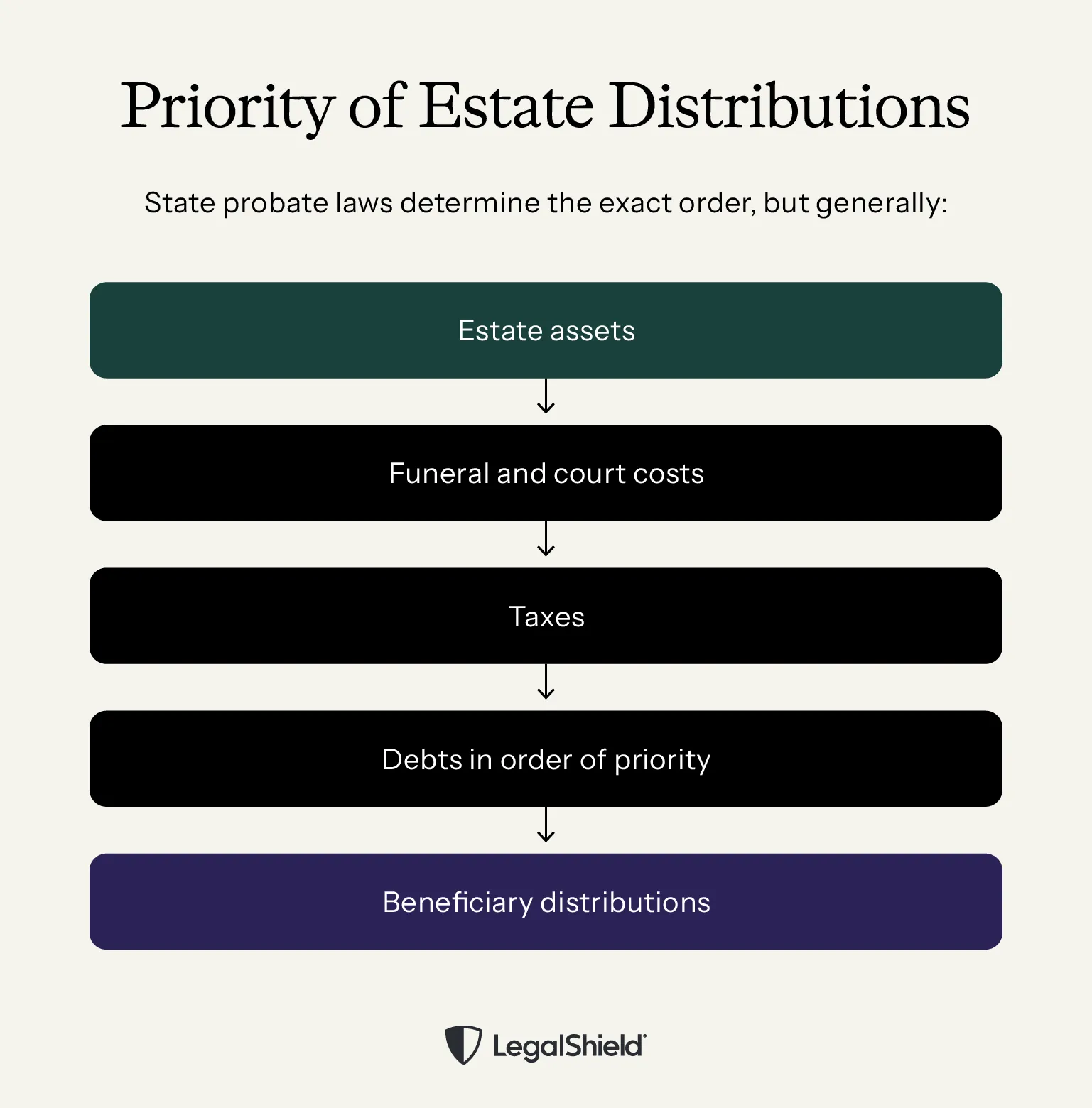
When probate is necessary, the lawyer's fees come out of estate assets before the court distributes anything to beneficiaries. As executor, you manage that process but do not fund it from your own pocket. Most lawyers collect their full fee at the end of the process after a judge approves the final accounting. A judge will often require the lawyer to submit an itemized invoice to the court for approval. Lawyers who routinely practice in estate administration understand what a probate court will allow.
If the estate is insolvent (meaning debts exceed assets), creditors are paid in priority order and beneficiaries may receive nothing.
Probate legal fees vary widely, but understanding how billing works helps you protect the estate's value. Whether a lawyer charges by the hour, a flat fee, or a percentage, knowing what to expect prevents costly surprises. Getting legal guidance early makes the entire process smoother for everyone involved.
LegalShield provider lawyers provide consultations and guidance on Wills and Trusts, so get estate planning guidance today. All of the LegalShield plans provide Will preparation services, and the LegalShield Personal Premium Plan provides assistance with a simplified probate.
H2: Frequently asked questions
Knowing how much probate legal fees cost helps you plan before the process begins. Here are answers to some of the more common questions concerning probate legal fees and expenses.
Can an executor get paid for their time?
Yes, executors can receive compensation for their work. Every state allows it.
Do I have to pay a retainer fee up front for probate?
It depends on what the lawyer requires based on their impression of the probate complexity and state law. A retainer is used for hourly billing, whereas a flat fee covers a certain scope of tasks. Anything in excess might be at the lawyer’s hourly rate.
Is a lawyer legally required for probate?
A lawyer is not legally required for probate in most states, but is recommended due to the complexity of probate matters. Even simple, uncontested estates are still required to be heard in court, with strict deadlines and requirements.
Can you avoid probate?
Good estate planning is the most effective way to avoid probate. Common strategies include a living Trust, joint ownership, and named beneficiaries on accounts and retirement plans. Avoiding probate can save money and significantly speed up asset distribution. Talk to a lawyer about the right strategy for your situation.
Content Specialist at LegalShield, creating educational resources about legal and consumer protection topics. She focuses on making complex legal and financial concepts accessible to readers and has contributed to various educational articles on consumer rights and protections.
We’ll provide more information about the trustors vs. trustees comparison, what to consider when filling these roles, and how they work together in Revocable and Irrevocable Trusts.
A power of attorney with springing powers is a legal document that grants someone else the authority to act on your behalf only after a specific event occurs.
There’s no rule that says a lawyer has to set up your Trust for it to be valid. However, Trusts are complex and doing it yourself without a lawyer's help comes with risks.
A Certificate of Trust proves your Trust is real and names who can act for it, while your beneficiaries and assets stay private. It lets your Trustee handle Trust business, like opening accounts or transferring property.
A limited power of attorney often comes in handy when you need help for a short time or for a single purpose. This legal document can help in situations like when you’re traveling, serving in the military, caring for an aging parent, or sending a child to study abroad.
We’ll cover some of the most common scams, the red flags that give them away, how to protect yourself, and what to do if you’ve already been caught out.
An executor is responsible for ensuring your final wishes get carried out, so it’s important that you choose someone who is responsible and can bear the emotional burden.
An employer identification number is a nine-digit number the IRS uses to identify a taxpayer. The estate needs its own, and getting one is usually simpler than it sounds. Learn more about estate EINs.
•
5 min read
Author Name
,
Author Title
September 16, 2026
Thank you! You're subscribed!
Oops! Something went wrong while submitting the form.








.jpg)