Trusts and estates aren’t directly comparable. An estate is the property and debts someone has when they pass away. Everyone has an estate. A Trust is a legal instrument that helps transfer property within an estate.
Thinking about what happens to your belongings after you're gone isn't easy, but planning ahead is one of the best things you can do for your family. Estates are complicated, and they’re resolved according to a combination of state law and documents that you leave, like your Will.
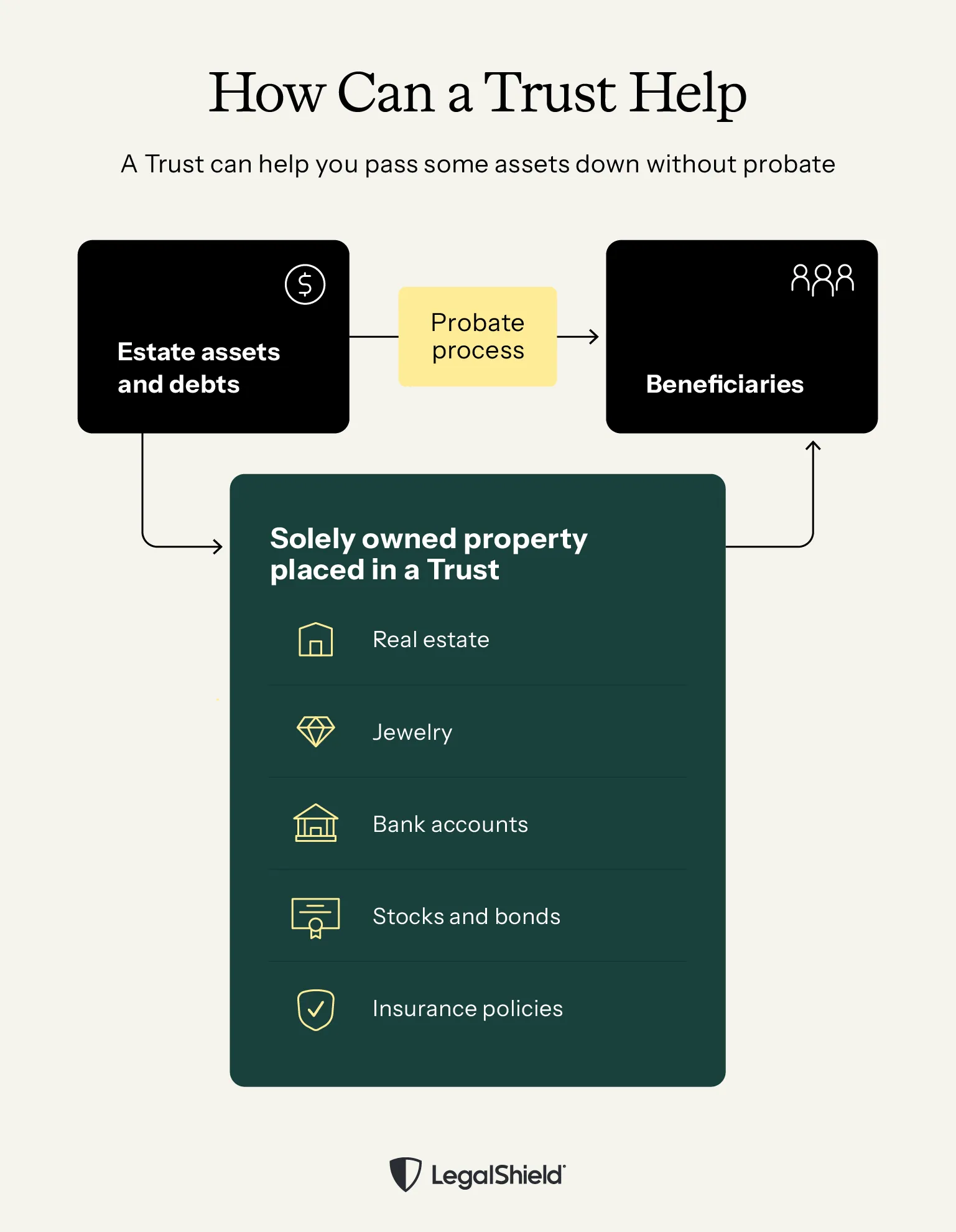
A Trust is like a bridge between a person and their estate. A Trust can make it easier for your family to manage your estate when the time comes. In some cases, setting up a Trust lets estate property transfer without going through probate.
What is an estate?
An estate is everything someone owns when they die, minus any debts and liabilities. Everyone has an estate, and there are laws governing how estates get handled. An estate can include property like these items:
Personal belongings, like books, electronics, furniture, jewelry, clothing, and collectibles.
Real estate, which may or may not include your house or other structures, and time shares.
Vehicles, boats, RVs and ATVs.
Financial accounts, such as retirement, pensions, and investment funds, as well as bank accounts.
Business ownership, like in an LLC or corporation that does not have a document that says what happens if one of the owners dies.
Where the probate process comes in
The probate process is required to oversee the determination of an estate. This includes using estate property to pay a deceased person’s bills and other debts. The probate court also oversees the distribution of the remaining property to heirs as instructed by the deceased’s Will.
If there’s no Will, the probate court uses the state’s intestate laws to decide how to distribute the property. You can sometimes avoid the probate process (or have an estate go through it more quickly) with the help of a Trust.
What is a Trust?
A Trust is a legal arrangement to benefit someone else by transferring property. You can better understand how a Trust works by knowing its four basic components:
The grantor: The creator of the Trust.
The Trust property: This is the property in the Trust
The Trustee: Manages the Trust property and distributes it to beneficiaries.
The beneficiary: The person who receives the benefits from the Trust.
Unlike an estate, a Trust only exists when someone deliberately creates one. It’s one of several tools available when creating an estate plan and doesn’t replace the estate itself. If property is placed in a Trust, it usually avoids probate.
When should you use a Trust?
There are three general ways that your representatives will manage your estate:
Probate: A court-supervised process for executing your Will, transferring your property, and paying your debts
Direct distribution: Certain assets with named beneficiaries, like life insurance, are distributed directly
Trusts: Property placed in a Trust can potentially be distributed outside of probate. Many people use Trusts specifically to try to avoid probate
Everyone should create a Will, and often, a Will is enough to execute your estate. But there are times when your Will on its own may not be enough to take care of your family in exactly the way you want. Trusts can be useful when dealing with these situations:
You need to provide direction or support to your family should you become incapacitated. Wills don’t cover this, but a Living Will and a Trust can clarify your wishes and support your dependents.
You own significant assets. A Trust can keep more of your estate out of the probate process. Probating an estate can often cost more than creating and managing a Trust. Talk to a lawyer to understand the potential cost comparisons.
You have complex distribution wishes. The amount of control is one of the biggest differences between a Trust and a Will. Wills can be complex with additional structure, but are often simpler documents. Trusts can help you manage multiple or minor beneficiaries, release your assets on set schedules, or reserve your assets for specific uses.
You have family members with care requirements. A Will is where you determine guardianship for minor children. But Trusts can help you set funds aside for your children when they become adults, or ensure that other dependent family members can receive care without interruption.
You want privacy. Probate is a public process, but Trusts don’t need to be public. This can help your family maintain some privacy during an emotional and difficult time.
How LegalShield® provider lawyers help simplify estate planning
Planning for the future isn’t easy and can involve difficult decisions. If you’re thinking about preparing a Will or setting up a Trust, it helps to know as much about estate planning as possible.
Our legal plans give you access to provider lawyers who can answer your legal questions. They can also help you prepare a Will or, with a Premium Plan, a Trust. They’ll also confirm that these documents comply with state-specific laws. Learn more about our LegalShield Personal Plans today.
Content Specialist at LegalShield, creating educational resources about legal and consumer protection topics. She focuses on making complex legal and financial concepts accessible to readers and has contributed to various educational articles on consumer rights and protections.
Yes, an HOA can foreclose on your house. If you fall behind on dues, it can put a lien on the house and, depending on your state, sell it, sometimes without a judge. Losing the house doesn't erase your mortgage, so you can still owe the bank. If you get a lien or foreclosure letter, call a lawyer that day.
We’ll provide more information about the trustors vs. trustees comparison, what to consider when filling these roles, and how they work together in Revocable and Irrevocable Trusts.
A power of attorney with springing powers is a legal document that grants someone else the authority to act on your behalf only after a specific event occurs.
There’s no rule that says a lawyer has to set up your Trust for it to be valid. However, Trusts are complex and doing it yourself without a lawyer's help comes with risks.
A Certificate of Trust proves your Trust is real and names who can act for it, while your beneficiaries and assets stay private. It lets your Trustee handle Trust business, like opening accounts or transferring property.
A limited power of attorney often comes in handy when you need help for a short time or for a single purpose. This legal document can help in situations like when you’re traveling, serving in the military, caring for an aging parent, or sending a child to study abroad.
We’ll cover some of the most common scams, the red flags that give them away, how to protect yourself, and what to do if you’ve already been caught out.
An executor is responsible for ensuring your final wishes get carried out, so it’s important that you choose someone who is responsible and can bear the emotional burden.
•
8 min read
Author Name
,
Author Title
September 17, 2026
Thank you! You're subscribed!
Oops! Something went wrong while submitting the form.








.jpg)